The Prompt Engineering Stack —The Mistake Costing You Results Every Single Month

BestPrompt.art
·
Prompt Engineering
·
May 2025
Most people think their AI results are bad because of the model. The actual culprit is almost always the same structural mistake buried inside their prompt stack — one that compounds quietly, draining quality, wasting tokens, and burning time every month.
There’s a quiet misconception spreading through teams that use AI tools every day. It goes roughly like this: the model is the variable, so if your results are inconsistent, you need a better model. Swap GPT-4 for Claude. Or vice versa. Or try the new one that just shipped. That thinking gets expensive fast — and usually doesn’t fix anything.
The model is rarely the bottleneck. What you’re feeding it is. And the way most people structure that input — what researchers and practitioners now call the prompt engineering stack — is broken in ways that aren’t obvious until you’re months deep and wondering why the same tool produces brilliant results one day and garbage the next.
This piece will walk through the full stack: what it is, how it’s actually layered, which techniques belong where, and — most importantly — the single structural mistake that shows up again and again in failed deployments. That mistake doesn’t announce itself. It compounds quietly, costing quality, burning tokens, and making your AI investment look shakier than it is.
When people say “prompt engineering,” they usually picture someone carefully choosing words to type into a chat window. That image was never complete, but it’s especially misleading now. Modern AI deployments don’t run on a single prompt. They run on a layered system — a stack — where each layer shapes what the model sees, what it can remember, and what it’s allowed to do.
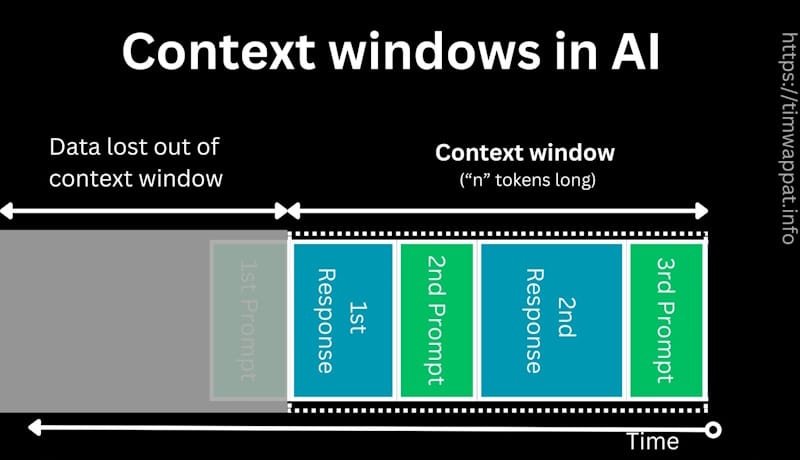
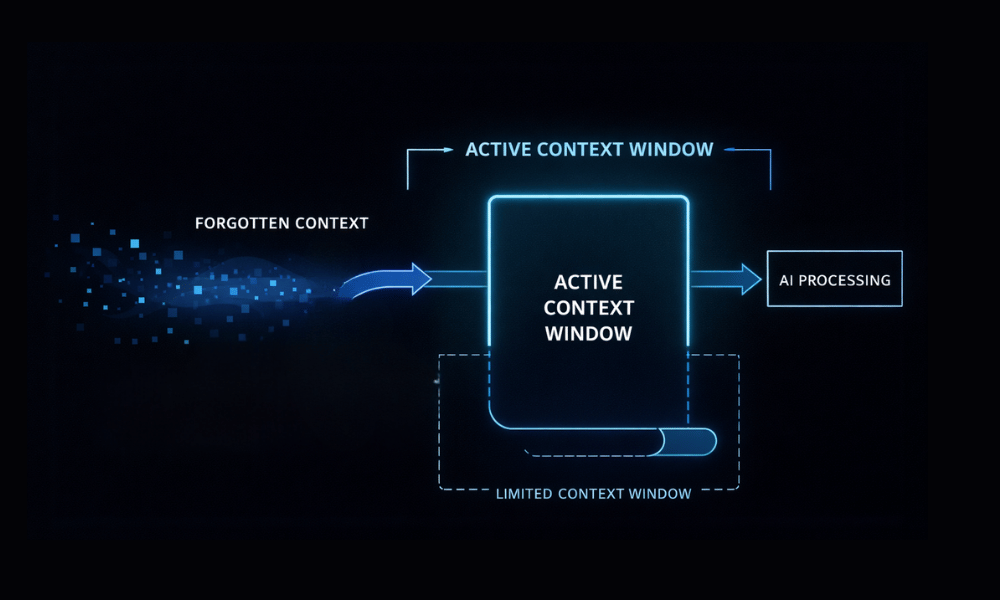
Andrej Karpathy put it well: context engineering is “the delicate art and science of filling the context window with just the right information for the next step.” In every production AI application, this goes far beyond what people think of as prompting. It includes task descriptions, few-shot examples, retrieved documents, tool definitions, session history, and memory — all of it assembled before the model generates a single token.
The prompt is only part of what the model reads. When an agent behaves badly, it’s often because the rest of the input is messy — old messages, the wrong retrieved doc, missing tool details, or a vague system rule.
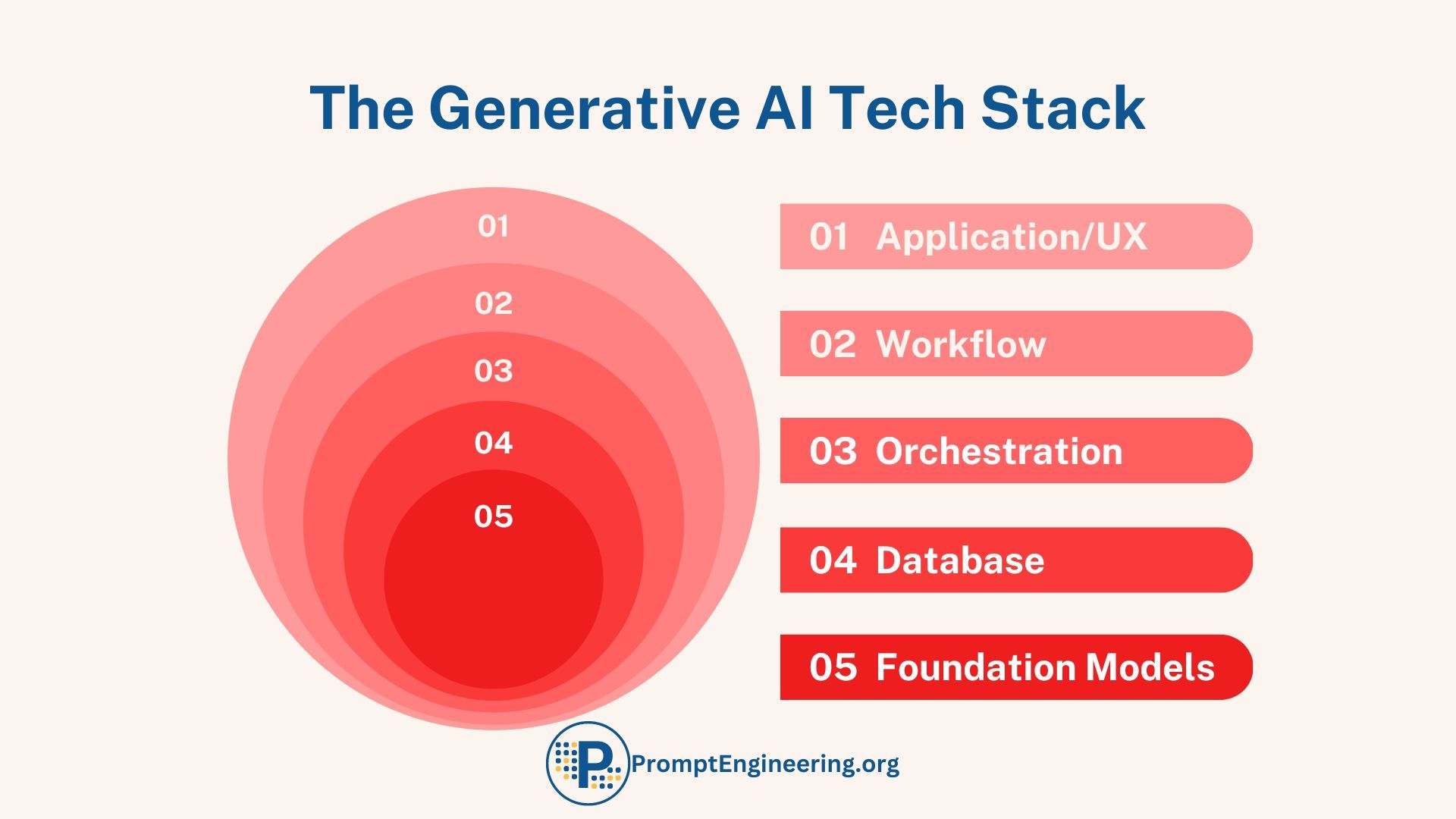
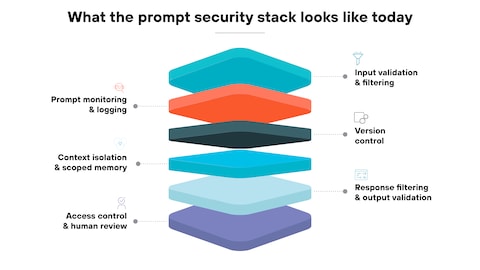
— Anthropic Engineering Notes, November 2025Here’s the architecture most production systems are (or should be) running. Think of it as six distinct layers, each with a different rate of change and a different job:
L1
System Layer
The stable, foundational rules your model operates under. Role definition, behavioral constraints, output format requirements, and core operating policies. Changes rarely — maybe monthly.
L2
Memory Layer
Persisted facts about the user or context that need to carry across sessions. User preferences, past decisions, relevant background. Retrieved selectively, not dumped wholesale.
L3
Knowledge Layer
Dynamically fetched documents, database records, or search results relevant to the current query. This layer is where hallucinations are prevented or introduced, depending on retrieval quality.
L4
Capability Layer
What the model can call, search, read, or write. Tool schemas, available APIs, constraints on when to use them. Common mistake: defining too many overlapping tools — the model wastes tokens choosing.
L5
History Layer
Recent turns in the current session. Needs active management — if token count exceeds 50% of the context window, summarize or truncate older turns. Recency matters: models prioritize the end of the context.
L6
Task Layer
The actual prompt — what the user is asking right now. Should always appear at the end of the assembled context. Restate critical constraints here if they appeared earlier, because the model degrades for information buried in the middle.
Most people who complain that AI “isn’t consistent” are running a one-layer system — just L6, sometimes with a rough L1 — and then trying to compensate by writing ever-longer, more detailed prompts. That strategy runs into a hard physical limit.
The Prompt Report (Schulhoff et al., 2025) catalogued 58 distinct prompting techniques — a number that would have seemed absurd a few years ago. That taxonomy now organizes into six meaningful categories: zero-shot, few-shot, thought generation, ensembling, self-criticism, and decomposition. You don’t need all 58. But you do need to understand which problem each family solves.
Zero-Shot and Few-Shot: Still the Foundation
Zero-shot prompting — giving clear instructions without any examples — works surprisingly well for modern models on well-defined tasks. The key word there is well-defined. If there’s ambiguity in the task, the model defaults to its training distribution. That distribution is averages — average writing style, average analysis depth, average formatting. If average is fine, zero-shot is efficient.
Few-shot prompting changes the game for tasks where you care about specificity. Showing three strong examples of previous output that matches your desired tone teaches the model “what good looks like” for your specific context. The main mistake practitioners make here is including examples that are “close enough” rather than exact — if your examples contain a format you don’t actually want, the model will replicate it faithfully.
⚠ Research Finding
Few-shot prompting with reasoning models like OpenAI o1 and DeepSeek R1 can actually hurt performance. These models are sophisticated enough to figure out tasks independently — adding examples introduces noise. The conventional wisdom of “always include examples” comes from early GPT-3 experiments and doesn’t universally apply in 2025.
Chain-of-Thought: Powerful but Misapplied
Chain-of-Thought (CoT) prompting, introduced in Wei et al. (2022), has generated more academic excitement than almost any other technique. The core idea — asking the model to reason step-by-step before giving a final answer — genuinely improves performance on complex reasoning tasks. Few-Shot CoT consistently outperformed other approaches across the benchmarks in The Prompt Report analysis, making it one of the more reliable techniques at scale.
The problem is that CoT gets applied to everything, including tasks where it adds no benefit. Asking a model to “think step by step” before summarizing a bullet list is token waste — you’re paying for reasoning traces on a task that doesn’t require reasoning. Reserve CoT for genuinely complex tasks: multi-step arithmetic, logical deductions, legal or medical reasoning chains, multi-variable comparisons.
A practical approach that several production teams have found useful: generate reasoning chains with a stronger model, then pass those chains to a cheaper, faster model for the final answer. The reasoning cost stays manageable; the quality benefit carries through.
Tree of Thought and ReAct: For Agent Workflows
Tree of Thought extends CoT by having the model explore multiple reasoning paths before committing to one, backtracking when a branch fails. This matters for open-ended problems where the solution space is wide. It’s computationally expensive, though — something to reach for when accuracy is more important than speed or cost.
ReAct (Reasoning + Acting) is increasingly important for anything agentic. The pattern: alternate between reasoning about what to do and actually doing it — calling a tool, querying a database, running a search. The model checks its results, updates its reasoning, then acts again. This structure makes the model’s decision trail visible and debuggable, which matters a lot in production. When something goes wrong in a ReAct pipeline, you can trace exactly where the reasoning diverged.
Self-Consistency and Verification
Self-consistency — sampling the same prompt multiple times with higher temperature and then taking a majority vote — sounds clever. In practice, The Prompt Report found it showed “limited effectiveness” compared to its popularity. It’s expensive to run repeatedly, and the gains depend heavily on the task type. For well-defined classification or math problems it helps; for open-ended generation it’s mostly overkill.
The simpler version — just having the model review and critique its own output before finalizing — works well as a standard practice. A two-pass approach (generate → review → refine) doesn’t require multiple API calls and catches a surprising number of silent mistakes: missed constraints, broken formats, unnecessary complexity, unsupported claims.
The Mistake: What’s Costing You Results Every Month
Here it is. After everything written above about techniques and layers, the mistake that actually costs people results month after month isn’t a missing technique. It’s a missing habit. Specifically: not treating prompts like code.
Think about what happens in software development. Code is versioned. Changes are tracked. Deployments are tested. When something breaks in production, there’s a history to review. Failures leave evidence. You can roll back.
Now think about how most teams handle prompts. They’re written once, maybe stored in a document, then tweaked informally — a word changed here, an instruction added there — with no record of what changed or why. Results get worse, or better, and no one quite knows which modification caused what. The same prompt variants exist in three different team members’ notebooks. There’s no test suite. There’s no version history.
The companies that win with AI won’t be those following the loudest voices on social media. They’ll be the ones following the evidence — even when it contradicts popular opinion.
— Aakash Gupta, after reviewing 1,500+ prompt engineering research papers, 2025This is what “not treating prompts like code” looks like in practice — and it has measurable consequences. Research published by Maxim AI (2025) shows accuracy differences of up to 76 points across formatting and structural changes in few-shot settings. That’s not a rounding error. That’s the difference between a useful AI product and a broken one — caused entirely by how the prompt is structured, not which model you chose.
And here’s the compounding part: this sensitivity to prompt structure persists even with larger model sizes, additional few-shot examples, and instruction tuning. Throwing more compute at the problem doesn’t fix it. You need to fix the prompt, and you need to know whether what you changed helped or hurt.
Seven Specific Mistakes That Compound Every Month
Let’s make this concrete. Below are the most common prompt engineering errors that show up in production systems — the ones that quietly erode quality over time, often without anyone pinpointing the cause.
Assuming the model has context it doesn’t have
Consequence: Generic, unhelpful, or wrong outputs on first attempt
The most common mistake in the field: you write a prompt assuming certain background knowledge, constraints, or preferences — and the model has none of it. It fills the gap with its training distribution average, which is rarely what you wanted.
The fix isn’t always more words. It’s specific, structured context: what are you building, who will use this output, what’s the tech stack, what’s the scale, what constraints apply. The second prompt in each pair below illustrates this:
✗ Missing Context
“How should I structure my database?”
✓ Sufficient Context
“I’m building a SaaS project management tool targeting 10,000 users in year one. How should I structure a PostgreSQL database to handle projects, tasks, and team members with good read performance? The team uses Node.js on the backend.”
Bloating the system prompt until it hurts performance
Consequence: Slower responses, missed constraints, higher API costs
Long system prompts feel thorough. They’re often damaging. Research on context window behavior shows a consistent pattern called the “lost in the middle” effect — models retrieve information best from the beginning or end of a long input and degrade for anything buried in the middle. A 3,000-token system prompt with 200 tokens of genuinely useful instruction buries the important parts in noise.
There’s also a computational cost. Long prompts slow down the prefill phase (the time before the model generates its first output token), which compounds across thousands of daily API calls. A well-designed system prompt is short and sharp. Details that don’t need to be there go into retrieved memory or structured tool schemas — not the system prompt.
No version control for prompts
Consequence: Unknown regressions, duplicated work, inconsistent outputs across teams
Prompt version control treats prompts like code — tracking changes, enabling rollback, ensuring consistency across deployments. Without it, teams that improve a prompt in one place often don’t propagate the fix to other uses of the same template. When results degrade after a change, there’s nothing to diff. The organizations that maintain versioned prompt libraries aren’t being pedantic; they’re protecting their ROI. Optimized prompting through compact, versioned instructions often yields 30–50% token savings in batch operations alone.
Using CoT on tasks that don’t need it
Consequence: Wasted tokens, slower responses, no quality benefit
Chain-of-thought prompting is genuinely powerful for complex reasoning. It’s also reflexively applied to tasks where it adds nothing — simple extraction, classification with clear categories, reformatting structured data. The token cost of “let’s think step by step” on a task the model handles trivially in zero-shot is real money, compounded daily across a production deployment. Match the technique to the task complexity, not to a blanket policy.
Not separating rules from input data with delimiters
Consequence: Prompt injection vulnerabilities, unpredictable behavior on adversarial inputs
When instructions and input data are mixed in the same block of text, the model can’t reliably distinguish between “what I’m supposed to do” and “content to process.” This matters most when the input could contain instruction-like language — quoted policies, email content, user-submitted text. XML-style tags or clearly marked delimiters solve this cleanly. They’re human-readable, stable across model versions, and make chunking long inputs straightforward. A poorly specified prompt mixing instructions and data is also a security surface — a maliciously crafted input can override system instructions.
Expecting brand voice without examples
Consequence: Generic AI-sounding content that fails content quality standards
“Write in a professional but conversational tone” is not a style guide. The model has no idea what “professional but conversational” means in your specific context, for your specific audience. Asking for a “professional blog post” without examples results in content that sounds like every other AI-generated article — because it’s averaging across all of them. Show three examples of content that matches your desired style. Explicitly forbid the clichés you’re tired of seeing. If you want good content, you have to teach the model what “good” means for you specifically.
No evaluation pipeline — just vibes
Consequence: Unknown performance degradation, no ability to improve systematically
According to LangChain’s 2025 State of Agent Engineering report, 57% of organizations have AI agents in production — but only 52% run offline evaluations on test sets. The other 48% are essentially flying blind. Without evaluations, you can’t tell whether a prompt change improved or hurt performance. You can’t catch quality regressions before they reach users. You can’t prioritize which part of the stack to fix. “Our AI outputs feel worse lately” is not actionable without something to measure against.
Verified Case Evidence
Abstract advice is fine, but concrete examples show what actually happens when prompt engineering is done — or not done — systematically.
| Organization / Context | Prompt Change | Measured Result | Source |
|---|---|---|---|
| Bolt.new (AI coding tool) | Built a highly detailed, rigorously versioned system prompt with error-handling specifics, format controls, and explicit behavioral rules | Reached $50M ARR in 5 months — with the system prompt identified as a key contributor to product reliability | Product Growth Newsletter, July 2025 |
| Financial institution (compliance docs) | Created compliance-aware prompt with built-in regulatory terminology management and structured output format | 72% reduction in legal review time; 94% first-pass compliance rate | ProfileTree case study, 2025 |
| E-commerce retailer (content scaling) | Structured prompt framework incorporating brand guidelines, product attributes, and output constraints | 87% reduction in content creation time; 34% improvement in conversion rates | ProfileTree case study, 2025 |
| JPMorgan Chase (financial services AI) | Structured prompt engineering integrated into financial workflows | 10–20% productivity gains; significant training investment required for sustained results | Articsledge analysis, 2025 |
| Medical QA benchmark (ScienceDirect, 2025) | Adding Chain-of-Thought and few-shot techniques to OpenAI o4-mini-high on medical questions | Corrected over half of initial reasoning errors; model achieved 94% overall accuracy vs. 38.5–70.5% for human clinicians | ScienceDirect, July 2025 |
| Anthropic multi-agent research | Giving each subagent its own isolated context window rather than sharing one large context | Outperformed single-agent setups by over 90% on complex tasks | BigData Boutique analysis of Anthropic research, 2026 |
✓ Note on Case Evidence
All cases above are drawn from named organizations with named outcomes reported in linked primary or secondary sources. They are not illustrative hypotheticals. Use them as directional evidence, not as guaranteed benchmarks for your context.
The Practical Prompt Engineering Stack for 2025
Based on what research actually shows — not what’s popular on social media — here’s the operational approach that consistently outperforms ad-hoc prompting at production scale.
Layer 1: Define objectives as business metrics, not model metrics
Before writing a single word of a prompt, answer this question: what user behavior or business outcome does this AI interaction need to drive? “Improves response quality” is not an objective. “Reduces customer support escalations by 15%” is an objective. The prompts that work best in production are built backward from a measurable outcome, not forward from a model capability.
Layer 2: Match technique to task type
Chain-of-thought for complex reasoning. Chain-of-Table for structured data analysis. Direct instructions for most other things. Few-shot examples for tasks with brand-specific style requirements. ReAct for anything agentic. Stop reaching for the most sophisticated technique by default — match the tool to the problem.
Layer 3: Format for the model you’re using
Claude responds well to XML-style tags and structured formatting. GPT models tend to perform better with structured templates and numbered sections. Reasoning models (o1-class, R1) often don’t need — and can be hurt by — extensive few-shot examples. Read your model’s documentation. The formatting choices that work on one model don’t always transfer cleanly to another.
Layer 4: Build automated testing before you think you need it
The organizations running the strongest AI products run automated evaluation pipelines. This doesn’t require complex tooling to start — a test set of 20–30 real examples with expected outputs, run against every prompt change, catches most regressions before they reach users. The step up from there is tools like PromptFoo, which 45% of AI engineering teams have adopted, or Maxim AI for full production prompt management.
Layer 5: Version and track everything
Every significant prompt should live in a repository or prompt management system, not in someone’s personal document. Every change should have a record. Every deployment should be traceable. This is not bureaucratic overhead — it’s the thing that makes systematic improvement possible instead of accidental.
Layer 6: Treat context as a budget, not a dumping ground
Every token in the context window has a cost — in latency, in API spend, and in model attention. Ask for each piece of information: does this change the answer? If not, it probably shouldn’t be there. Shorter, well-structured prompts often outperform longer, detailed ones while costing dramatically less. The sweet spot is information density and structural clarity, not word count.
Tools That Actually Belong in Your Prompt Stack (2025)
| Tool / Framework | Primary Use Case | Best For | Notes |
|---|---|---|---|
| LangChain / LangGraph | Multi-step LLM chains and agent orchestration | Teams building complex workflows with tool use | Open source; strong community; LangGraph adds stateful agent management |
| LlamaIndex | RAG pipeline construction and retrieval optimization | Any system that needs to ground model responses in external data | Pairs well with vector databases; active development as of 2025 |
| PromptFoo | Prompt testing and evaluation | Engineering teams who need automated test coverage for prompts | Adopted by 45% of AI engineering teams; open source core |
| Maxim AI | Full-stack prompt management, versioning, evaluation | Production systems requiring collaborative prompt governance | Goes beyond simple storage; includes observability and performance tracking |
| PromptLayer | Prompt versioning and request logging | Teams that need a history of prompts and outputs without heavy tooling | Lightweight wrapper around OpenAI/Anthropic APIs |
| DSPy | Automated prompt optimization | Tasks where manual prompt engineering has plateaued | In one documented test, DSPy-generated prompt outperformed a human engineer who spent 20 hours on the same task — in 10 minutes |
A Structural Prompt Template That Works
The following template isn’t a magic formula. It’s a repeatable starting point that forces you to fill in the things models actually need, rather than leaving them to guess. Adapt it to your specific use case.
# ROLE
You are a [specific role] with expertise in [relevant domain].

# CONTEXT
[What is the situation? What system are you part of?
Who will use or see this output? What constraints apply?]

# TASK
[Specific, unambiguous instruction. Use active verbs.
One task per prompt wherever possible.]

<INPUT_DATA>
[Separate input data clearly from instructions.
This prevents the model from treating content as directives.]
</INPUT_DATA>

# OUTPUT FORMAT
[Exact structure expected: JSON schema, markdown headers,
numbered list, prose with specific sections, etc.]

# EXAMPLES
[2–3 examples of ideal input → output pairs.
Make these exact, not approximate.]

# CONSTRAINTS
[Hard limits: length, forbidden topics, required terminology,
regulatory requirements, tone rules.]
✓ Practical Tip
You won’t need every section every time. A simple extraction task might need ROLE, TASK, and OUTPUT FORMAT. A brand-voice content task will need EXAMPLES. A regulated-industry task will need CONSTRAINTS. The template is a checklist, not a mandatory form.
Where Prompt Engineering Is Heading in 2025 and Beyond
A few honest observations about where things are going, without the hype.
The transition from “prompt engineering” to “context engineering” is real and worth paying attention to. The term shift matters because it forces a more accurate mental model: you’re not just writing a clever instruction, you’re assembling a context window from multiple data sources, each with different update frequencies and relevance signals. Teams that get this right build better products.
Automated prompt optimization — tools like DSPy that generate and test prompt variations systematically — will increasingly compete with, and often outperform, manual prompt crafting. This doesn’t mean human judgment becomes irrelevant. It means the judgment moves upstream: defining good evaluation criteria, curating test sets, and setting the business objective the automated system is optimizing toward.
The “prompting inversion” phenomenon documented in a 2025 arXiv paper (Khan, 2025) is worth watching: as models become more capable, the prompting techniques that help on older models sometimes hurt on newer ones. Sculpting (a constrained, rule-based prompting approach) improved performance on GPT-4o but degraded results on GPT-5. This means prompt stacks need to be model-versioned, not just prompt-versioned. What works today may not work after the next model release.
And despite all the talk about “prompting dying” as models become smarter, the prompt engineering market is projected at $1.13 billion in 2025, growing at a 32.1% CAGR. Demand for prompt engineers rose 135.8% in 2025. The discipline isn’t going away — it’s maturing, which means the bar for “doing it well” is rising.
The Shortest Summary of Everything Above
The prompt engineering stack is a layered system, not a single text field. Each layer — system prompt, memory, retrieved knowledge, tool definitions, conversation history, and the task itself — has a different job and needs different care. The mistake that costs people results every month isn’t missing a clever technique. It’s treating prompts as throw-away one-offs rather than versioned, tested, structured assets that compound in value over time.
The research is clear about what works: specificity over vagueness, structure over verbosity, examples over instructions-only for style tasks, evaluation pipelines over gut-feel assessment. The companies extracting the most value from AI in 2025 aren’t using secret techniques — they’re applying basic software engineering discipline to a thing most teams still treat like an informal art project.
Fix the stack. Version the prompts. Test them. The results follow.
References & Key Sources
- Schulhoff et al. (2025). The Prompt Report: A Systematic Survey of Prompting Techniques. — catalogues 58 prompting techniques across 6 categories
- Maxim AI (2025). Advanced Prompt Engineering Techniques. — on the 76-point accuracy gap from formatting changes
- Khan (2025). You Don’t Need Prompt Engineering Anymore: The Prompting Inversion. arXiv:2510.22251 — GPT-4o vs GPT-5 prompting divergence data
- ScienceDirect (2025). Chain-of-thought prompting for medical question answering. — o4-mini-high achieving 94% accuracy, CoT correcting errors
- Learn Prompting (2025). The Prompt Report: Insights. — DSPy vs human prompt engineer comparison
- BigData Boutique (2026). From Prompt Engineering to Context Engineering. — LangChain 2025 agent report data, Anthropic multi-agent findings
- Valbuena (2025). Why Long System Prompts Hurt Context Windows. — lost-in-the-middle effect, prefill latency data
- SQ Magazine (2025). Prompt Engineering Statistics 2026. — market size data, CAGR, demand growth figures
- DataStudios (2025). Prompt ROI: Measuring Real Value in AI Workflows. — token savings from optimized prompting, ROI formula
- Anthropic (2025). Prompt Engineering Overview. — official guidance on XML formatting, system prompts, Claude-specific best practices
More from BestPrompt.art
The Prompt Library
Vetted, categorized prompts for writing, code, analysis, and business tasks — tested and versioned.
Chain-of-Thought: When It Helps and When It Doesn’t
A practical breakdown of CoT prompting with real benchmark comparisons across task types.
System Prompt Templates by Industry
Structured, field-tested system prompts for legal, marketing, software development, and customer support.
Retrieval-Augmented Prompting (RAG) Explained
How to build prompts that connect reliably to external knowledge without hallucination risk.
How to Test and Evaluate Prompts Systematically
Build an evaluation pipeline, even with limited resources. Tools, test set design, and what to measure.
Few-Shot Prompting: The Complete Practitioner’s Guide
Example selection, ordering, format alignment, and when reasoning models don’t need examples at all.
Context Engineering vs. Prompt Engineering
What changed, why it matters, and how to architect context pipelines for production-grade AI.
Defending Against Prompt Injection
How adversarial inputs override system instructions — and the structural patterns that prevent it.
Prompt Tools Compared: PromptFoo, Maxim AI, DSPy & More
Side-by-side breakdown of the leading prompt management and testing platforms as of 2025.
https://www.bestprompt.art/5-prompt-engineering-mistakes/
https://www.bestprompt.art/making-ai-art-with-midjourney-2026/
https://www.bestprompt.art/ai-prompt-tools-compared/
https://www.bestprompt.art/grok-prompt-hacks-that-10x-productivity/
https://www.bestprompt.art/are-you-making-these-ai-prompt-mistakes-in-2025/
https://www.bestprompt.art/common-ai-prompting-pitfalls/
https://www.bestprompt.art/best-ai-image-prompts-2025-2026/
https://www.bestprompt.art/ai-prompts-that-generate-python-code/
https://www.bestprompt.art/prompt-engineering-courses-in-2026/
https://www.bestprompt.art/building-production-ai-systems/
https://www.bestprompt.art/7-common-prompt-engineering-mistakes/
https://www.bestprompt.art/chatgpt-vs-claude-vs-gemini/
https://www.bestprompt.art/ai-prompting-mistakes/
https://www.bestprompt.art/artificial-intelligence-and-agentic-automation-trends/
https://www.bestprompt.art/ai-coding-prompts-programmers-use/
https://www.bestprompt.art/cost-performance-tradeoff-techniques/