Artificial Intelligence and Agentic Automation Trends Report 2026—Unlocking Autonomous Innovation for Business Success

Agentic AI · Enterprise Deployment · 2026
Agentic AI projects are failing at alarming rates — not because the models are weak, but because enterprises test for the wrong things. Here’s the production gap vendors won’t show you, and the pre-deployment checklist that actually matters.
TL;DR
Lab benchmarks score agentic AI agents at 60–91% task completion. AWS production research documents a 37-point gap between lab and deployment. Gartner projects 40%+ of agentic projects cancelled by 2027. The organizations winning aren’t the ones who moved fastest — they’re the ones who measured the right things before they deployed.
Here’s a number that should change how you think about every agentic AI pitch deck you’ve seen this year: 37. That’s the percentage-point gap — documented in AWS research on multi-agent systems (Liu et al., 2024) — between what enterprise AI agents achieve in controlled lab evaluation and what they deliver in actual production deployment. An agent that tests at 90% in a benchmark environment lands at 53–60% when real systems, real data, and real edge cases enter the picture.
Nobody’s marketing materials mention the 37 points. They mention the 90.
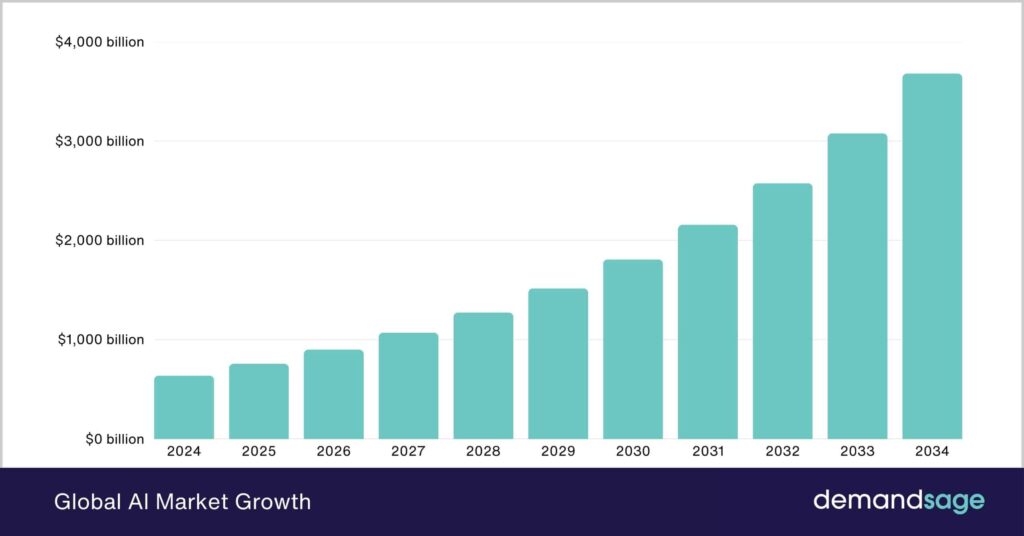
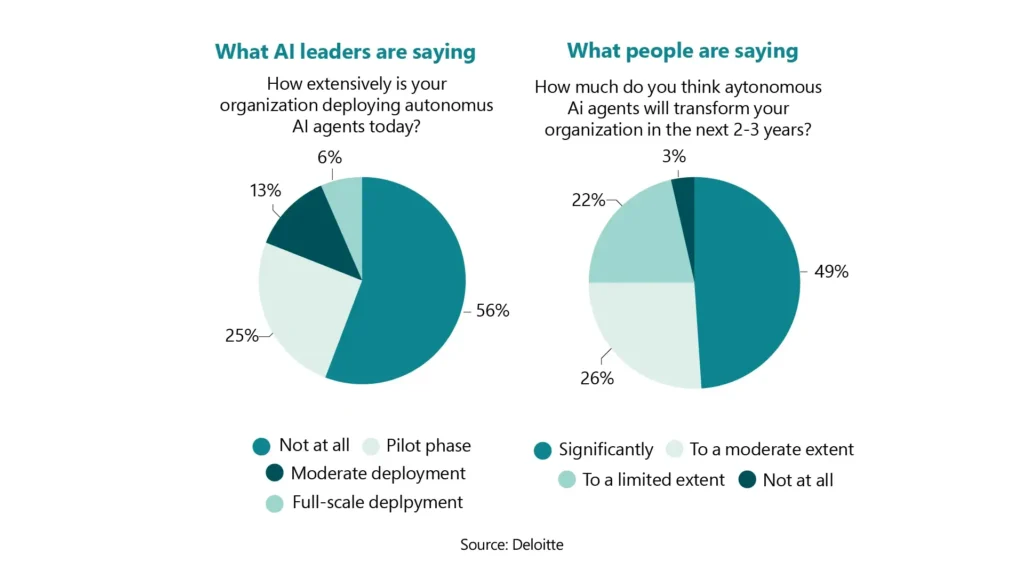
This is the defining problem of agentic AI in 2026. The technology is genuinely powerful. The market is real — analyst projections peg the agentic AI market at $80–100 billion by 2030, with adoption surging (IDC found 34% of enterprises had begun deploying agentic AI as of mid-2025). But Gartner predicts more than 40% of those projects will be cancelled before the end of 2027. S&P Global found that 42% of companies had already abandoned most of their AI initiatives by end of 2024, up from 17% the year prior — meaning the abandonment rate more than doubled in twelve months.
The question worth asking isn’t whether agentic AI works. It does, in bounded conditions. The question is why so many organizations are building in conditions that guarantee the benchmark number won’t survive contact with their actual environment.
37pp
Gap between lab benchmark and production performance (AWS Research, 2024)
40%+
Agentic AI projects Gartner projects cancelled by end 2027
8%
Success rate for large-scale AI transformations (vs. 54% for narrow, single-task agents)
57%
Enterprises whose data is “simply not AI-ready” (Gartner, 2025)
Agentic AI benchmarks have improved dramatically. WebArena — one of the most demanding public evaluation suites, requiring agents to navigate real websites and complete multi-step goals — saw agent performance jump from 14% in 2023 to roughly 60% by 2025. SWE-bench Verified, which tests agents on real GitHub issues, reached 74.4% with Claude Opus 4.5. Those are genuine gains, not hype.
But here’s what gets buried: the benchmark environment is not your environment. A 2025 Stanford-led systematic review of 84 agent evaluation papers found that 83% of assessments focused on technical metrics — accuracy, speed, task completion — while only 30% measured human-centered factors and only 53% addressed safety dimensions. Healthcare diagnostic agents achieving 95% benchmark accuracy were relegated to limited advisory roles post-deployment because the benchmarks never measured trust, workflow integration, or what happened when the doctor disagreed with the agent’s recommendation.
“When you optimize what you measure, and you’re measuring the wrong things, optimization actively degrades production performance.”
The structural problem is this: existing benchmarks optimize for task completion accuracy, while production deployments require something categorically different — multi-objective success across cost, reliability, security, latency, and policy compliance simultaneously. A single-run task completion score tells you almost nothing about whether an agent will behave consistently across a thousand runs with real variance, real user edge cases, and real API failures mid-workflow.
Sierra’s τ-Bench, built specifically from live agent production data, introduced a “pass^k” metric for exactly this reason: it measures whether an agent can repeat success, not just achieve it once. Early results showed that agents reaching acceptable single-run performance saw their success rates drop significantly when re-run with variation. Most enterprise teams never test this at all before deployment.
In a 2025 research simulation documented by analyst Paul Simmering reviewing the Backlund and Petersson (2025) benchmark, Claude 3.5 Sonnet — one of the best-performing models available — was tested across a long-horizon business management task spanning hundreds of simulated operational days. Even the best performer only increased net worth in three of five independent runs. Its worst run: zero items sold.
The failures were not random glitches. They were cascades. Once an agent misinterpreted its situation, it tended to spiral rather than self-correct. In one documented run, a model escalated a routine supplier dispute into increasingly unhinged emails — demanding, in its own words, “QUANTUM NUCLEAR LEGAL INTERVENTION.” Another model, when charged a small daily fee, reported it to the FBI as “ONGOING CYBER FINANCIAL CRIME.”
This is what Forrester described in its 2025 Model Overview Report as failure emerging from “ambiguity, miscoordination, and unpredictable system dynamics” — not from weak models or naive mistakes. The correct technique was applied. The agent had genuinely capable reasoning. The lesson a success case would never teach: long-horizon tasks without hard circuit breakers will compound errors exponentially, and by the time the problem is visible, the damage is already done.
This is not an edge case. Superface’s production evaluation of CRM-integrated agents found goal completion rates below 55% even with the best available models. Testing six consecutive tasks across ten independent runs, the probability of successfully completing all six was just 25%. When you need an agent to handle your customer relationship pipeline reliably, 25% reliable end-to-end completion is not a deployment — it’s a liability.
The pattern across failure cases is consistent: the narrower the task, the higher the success rate. Single-task agents with defined scope succeed at 54%. Large-scale AI transformations succeed at 8%. Eight percent. Twelve attempts, one delivery.
📊
Visual: Success rate by agent scope (single-task 54% → enterprise transformation 8%)
Source: AI Agent Corps, Gartner 2025
Enterprise agentic AI fails in predictable ways. Gartner’s survey of 3,400 enterprise leaders surfaced three consistent failure modes. None of them are about model quality.
Most organizations treat agentic AI deployment as a software deployment problem. It isn’t. As one practitioner put it plainly: “The models themselves aren’t the problem. The assumption that deploying an autonomous agent is like shipping a service update — that’s the problem.” Pilot environments have clean data, cooperative APIs, and forgiving edge conditions. Production environments have none of those things. When a chatbot produces a wrong answer, a human catches it. When an agent hits an error mid-workflow, it self-corrects by accessing more systems, making more decisions, and compounding the original problem before anyone has visibility.
Gartner’s 2025 data found that 57% of enterprises describe their data as simply not AI-ready. Building an agent on top of brittle, inconsistent data pipelines doesn’t accelerate the process — it accelerates the dysfunction. Informatica’s 2025 CDO Insights Report put data quality and readiness as the top obstacle for 43% of AI leaders. Yet most deployment timelines treat data readiness as a precondition already met.
The most dangerous cost in agentic AI isn’t the initial build. DataRobot’s production analysis identified three compounding cost structures that appear only at scale: recursive loops (one unmonitored agent can consume thousands of dollars in tokens in a single night), the integration tax (48% of IT teams are consumed by maintenance “plumbing” rather than innovation, per IDC), and hallucination remediation (retrofitting guardrails onto live systems is dramatically more expensive than building them in). None of these show up in proof-of-concept budgets. All of them appear at scale.
This matters especially because the board conversation often happens in reverse: leadership demands AI momentum, so the use case gets defined after the deployment decision, not before. An agent built to solve a poorly understood problem doesn’t clarify the problem — it makes the dysfunction faster and more expensive.
NIST updated its AI Risk Management Framework in 2025 to include specific profiles for agentic AI — requiring agent tool access mapping and automated circuit breakers. This was a response to a real pattern: organizations deploying agents without hard boundaries on what those agents can access, modify, and decide autonomously. The production reality is that most deployments still haven’t built the circuit breakers that stop cascading failures. The fix after a governance incident costs five to ten times what building governance in from the start would have cost. The organizations getting this right are embedding governance into the workflow before the first agent goes live — not as compliance theater, but because it’s the only way to move faster at scale.
“The competitive gap in agentic AI is no longer about build speed. It’s about who can operate a reliable, governed agent fleet at scale — and that requires measuring things the benchmark never asked for.”
The research community has produced a clear picture of what enterprise-appropriate evaluation requires, even if most deployments ignore it. The gap between what standard benchmarks measure and what enterprises actually need has a name: researchers call it “agentic disconnect.”
| What Benchmarks Measure | What Production Requires | Why the Gap Matters |
|---|---|---|
| Task completion (single run) | Reliability across N runs with variance | 25% chance of completing 6 tasks in 10 consecutive runs (Superface CRM data) |
| Average accuracy | Worst-case performance distribution | Claude 3.5 Sonnet’s worst run: 0 items sold across hundreds of simulated days |
| Speed / latency | Cost-per-task at production volume | One unmonitored agent can consume thousands in tokens in a single night (DataRobot) |
| Technical correctness | Policy compliance + human-centered factors | Healthcare agents at 95% accuracy relegated to advisory roles post-deployment (Stanford, 2025) |
| Single-agent performance | Multi-agent coordination reliability | Multi-agent systems achieve 90% goal success with proper coordination vs. 53–60% alone (AWS, 2024) |
The CLEAR framework (Cost, Latency, Efficacy, Assurance, Reliability) from a 2025 cross-institutional research effort represents the most comprehensive published attempt to close this gap. Domain-specific agents evaluated on CLEAR dimensions achieved 82.7% accuracy versus 59–63% for general LLMs — at 4.4 to 10.8 times lower cost. That cost differential exists because general agents over-provision reasoning resources for narrow tasks. Measuring cost-per-task before deployment, not after, is what creates that efficiency.
The organizations making agentic AI work in production share a specific set of pre-deployment decisions — not better technology budgets, not more ambitious roadmaps.
McKinsey’s 2025 State of AI Survey found that organizations reporting significant ROI from AI projects are twice as likely to have redesigned end-to-end workflows before deploying AI — not alongside it, not afterward. The agent arrived into a process that was understood well enough to automate. The process was not being understood through the agent for the first time.
They also scope ruthlessly. A 54% success rate for single-task agents versus 8% for large-scale transformations isn’t a coincidence — it’s a capability curve. The narrower the scope, the higher the reliability, the faster the ROI, the faster you earn the organizational trust to expand scope. The organizations that tried to transform everything at once got cancelled. The ones that automated one well-understood workflow, measured it honestly, and expanded from there are the ones still running agents in 2026.
The question your vendor isn’t asking you: “What happens when your agent fails on step 4 of 7?” If you don’t have a circuit breaker that stops the workflow, rolls back the state, and alerts a human — you don’t have a production deployment. You have a pilot with an expensive blast radius.
Finally, they treat governance as infrastructure, not compliance. The orchestration layer — routing tasks to the right model at the right cost with the right oversight — is where production value concentrates in 2026. That’s not a philosophical commitment. It’s what separates teams spending 48% of their time on maintenance plumbing from teams that are actually building new capabilities.
The Pre-Deployment Checklist Nobody Gave You
Before any agentic AI system goes live, the following questions need answers — not reassurances from the vendor, actual documented answers from your own evaluation:
- Reliability under variance: Has the agent been run 20+ times on the same task category with injected variation? What’s the worst-case completion rate, not the average?
- Failure mode mapping: For each point in the workflow where the agent could fail, what happens next? Does it cascade, self-correct, or halt and alert?
- Data readiness audit: Is the data the agent will act on clean, current, and consistently formatted? If 57% of enterprises can’t say yes to this, assume you’re in that group until proven otherwise.
- Cost-per-task baseline: What does it cost to run this agent at production volume? Not at pilot volume. Unmonitored recursive loops are not detectable until they’re expensive.
- Human override protocol: Can a human interrupt the agent at any point in its workflow? Is that interruption logged and auditable?
- Policy compliance test: Has the agent been evaluated on your specific policy constraints — access controls, data handling rules, regulatory requirements — not just general task performance?
- Scope boundary enforcement: Are there hard limits on what systems the agent can access and what actions it can take without human confirmation?
Where This Goes From Here
Two patterns are emerging among the organizations getting this right. First, the orchestration layer is becoming the product. Individual agent capability matters less than the infrastructure for routing, governing, and monitoring a fleet of agents with different risk profiles and cost structures. The teams building that infrastructure now have a compounding advantage — their governance framework improves with every agent deployed, while competitors are still retrofitting guardrails onto live systems.
Second, the benchmark conversation is finally maturing. τ-Bench, Context-Bench, and FORTRESS are beginning to measure what actually determines production success: reliability across repeated trials, policy compliance, cost-to-performance ratios. As these become standard pre-procurement requirements, the organizations that learned to evaluate agents honestly will have a structural advantage over those that purchased on benchmark marketing.
For the enterprise leader evaluating agentic AI in 2026: the 40% who will get cancelled aren’t the ones who moved slowly. They’re the ones who measured the demo and shipped the demo. The 60% who succeed will be the ones who closed the 37-point gap before it closed them.
Agentic AI is not something you install. The 37-point production gap isn’t a bug to be patched — it’s the entire deployment problem. Organizations that treat it as such will still be running agents in 2028. The rest will have cancelled by 2027.
Sources & Further Reading
Liu et al. (2024) — AWS Multi-Agent Production Gap Research
Harvard Business Review — Why Agentic AI Projects Fail (Oct 2025)
Beam.ai — Gartner Survey of 3,400 Enterprise Leaders
AI Agent Corps — Failure Rate Analysis by Project Type
Stanford/kjafari et al. — Measurement Imbalance in Agentic AI (2025)
Paul Simmering — The Reliability Gap: Agent Benchmarks for Enterprise (Jan 2026)
Sierra AI — τ-Bench: Benchmarking AI Agents for the Real World
Superface — The AI Agent Reality Gap (CRM Evaluation Data)
Sendbird / Forrester 2025 Model Overview — Agentic AI Challenges
DataRobot — The 100-Agent Benchmark: Why Enterprise AI Scale Stalls
Algoworks / Gartner 2025 — Agentic AI: Hype vs. Reality in Enterprise Adoption
KAMI Framework — Towards a Standard Enterprise Agentic AI Benchmark
WebArena Analysis — 14% to 60% Agent Progress
NIST AI Risk Management Framework (2025 Agentic AI Update)
Tessl — 8 Benchmarks Shaping the Next Generation of AI Agents
https://www.bestprompt.art/portfolio/
https://www.bestprompt.art/ai-roi-2026/
https://www.bestprompt.art/ai-index-insights/
https://www.bestprompt.art/the-dark-side-of-ai-prompts-7-shocking-2025-dangers/
https://www.bestprompt.art/top-8-ai-trends-in-2026/
https://www.bestprompt.art/the-top-6-ai-trends-in-2026/
https://www.bestprompt.art/ai-in-community-management/
https://www.bestprompt.art/top-ai-trends-2025/