AI Coding Prompts Developers Use to Save Hours: Best Guide


Prompt Engineering · Developer Productivity
Battle-tested prompts for debugging, code review, refactoring, architecture, documentation, and testing — with honest notes on what works, what doesn’t, and why the wording matters.
- The problem: 84% of developers now use AI tools daily, but only 29% trust the output (Stack Overflow 2025). The gap is almost never the model — it’s vague prompting.
- Core framework: The best prompts follow a Role → Context → Task → Constraints → Output Format structure. Short prompts produce generic code. Specific prompts produce production-grade code.
- Biggest time savers: Debugging with full stack traces (#5), test generation with edge cases (#31–34), and “explain then fix” refactoring (#16–20) consistently cut hours out of real workflows.
- What doesn’t work: Open-ended “write me a function to…” prompts. Code generated this way compiles but routinely misses error handling, security edge cases, and your project’s conventions.
- Honest caveat: GitHub’s 2024 research found task completion 55% faster with AI assistance — but that figure applies to clearly defined, isolated tasks. Complex multi-file refactors are still messy.
- Tested on: All 50 prompts here were validated across at least two models. Where a prompt works significantly better on one model, we say so.
⚠ Warning: 45% of developers say debugging AI-generated code takes longer than writing it themselves (Stack Overflow 2025). The prompts below are designed to reduce that problem — but always review security-sensitive output manually, every time.
- Why the Prompt Is the Bottleneck, Not the Model
- The Anatomy of a Prompt That Actually Works
- Debugging & Error Analysis (Prompts 1–10)
- Code Review & Security Audits (Prompts 11–17)
- Refactoring & Modernization (Prompts 18–24)
- Testing & QA (Prompts 25–32)
- Architecture & System Design (Prompts 33–38)
- Documentation & Explanation (Prompts 39–44)
- Performance & Optimization (Prompts 45–50)
- Building Your Personal Prompt Library
- Frequently Asked Questions
- Final Thoughts
There’s a frustrating thing that happens when developers first start using AI for code. They type “write me a REST API endpoint,” get back something that looks reasonable, paste it in, and thirty minutes later they’re debugging a function that has no error handling, ignores their database conventions, and uses a pattern their team deprecated two years ago.
The reaction is usually “the AI isn’t good enough yet.” But that’s not what’s happening. The model is doing exactly what you asked — making assumptions about every dimension you left unspecified, defaulting to whatever it saw most in training data.
84% of developers use or plan to use AI tools Stack Overflow Developer Survey 2025 (49,000+ respondents)
29% trust the output — down from 40% the prior year Stack Overflow 2025
55% faster task completion with GitHub Copilot on isolated tasks GitHub Research, 95 developers, 2024
45% say debugging AI code takes longer than writing it themselves Stack Overflow 2025
That 45% statistic is worth sitting with. Nearly half of developers who use AI regularly are sometimes losing time, not saving it. This isn’t a condemnation of AI coding tools — it’s a measurement of the gap between vague prompts and useful output.
The developers who consistently save hours with AI aren’t using a different model. They’ve built a mental framework for what information a model needs to produce code that actually fits their context. That’s what this guide is about.
Observation from real usage The single highest-leverage change most developers can make isn’t switching from ChatGPT to Claude or Copilot to Cursor. It’s learning to include the five pieces of context that let any model skip guessing: language version, framework, existing patterns, constraints, and expected output format.
Before the prompts themselves, it’s worth spending a moment on structure. The most effective AI coding prompts I’ve seen — after working through hundreds of them across production codebases — tend to follow a consistent pattern, even when the specific task varies wildly.
| Layer | What to Include | Example |
|---|---|---|
| Role | Tell the model its expertise level and domain | “Act as a senior Go engineer familiar with distributed systems” |
| Context | Language, framework, version, existing patterns | “Node.js 22, Express 5, TypeScript strict mode, PostgreSQL” |
| Task | The specific thing you need done — precisely | “Refactor this function to use async/await and add input validation” |
| Constraints | What to avoid, style guides, performance needs | “No external libraries beyond what’s already imported. Keep under 40 lines.” |
| Output Format | Code only, with explanation, with tests, etc. | “Return the refactored function followed by a brief explanation of changes” |
Not every prompt needs all five layers. A quick “what does this error mean?” doesn’t need a Role declaration. But when you’re asking for production code, skipping Context and Constraints is where you pay the price later.
One more thing worth noting: models in 2025–2026 follow instructions more reliably than they did two years ago. You don’t need to repeat yourself or be excessively verbose. Clear and specific is better than long and repetitive.
01
Debugging & Error AnalysisPrompts 1–10 · Saves 1–4 hours per session
Debugging is where most developers first notice a meaningful difference with AI. Not because the AI is magic — but because explaining a problem clearly, even to a machine, forces you to structure it in a way that often surfaces the issue yourself. When it doesn’t, the model brings pattern recognition across more error types than any one person will encounter in a career.
Prompt #01 Debugging
Full Stack Trace Analysis with Root Cause
You are a senior [LANGUAGE] engineer. I'm getting this error in production:[ERROR MESSAGE / STACK TRACE]Here is the relevant code:[CODE BLOCK]Environment: [framework version, OS, relevant dependencies]Don't just tell me what the error message says — I can read that. I need:1. The actual root cause (not the symptom)2. Why it's happening in my specific code3. The fix, with any alternative approaches worth knowing4. What I should check to make sure this doesn't recur
Why this works: “Don’t just tell me what the error message says” is a small but meaningful instruction. Without it, models frequently restate the error in different words before offering anything useful. Asking for root cause vs. symptom pushes the model toward mechanism-level reasoning.
Works particularly well with Claude when you include the full stack trace including frames above the immediate error — it traces the call chain backward and often spots the upstream cause.
Prompt #02 Debugging
Intermittent / Race Condition Debugging
This bug only reproduces about 1 in 10 runs. It doesn't crash — it produces wrong output silently.Language: [LANGUAGE]Context: [async/concurrent/multi-threaded code description]Code:[CODE BLOCK]Symptoms: [describe what you observe]What I've already ruled out: [list your attempts]Analyze this for:- Race conditions or shared state issues- Non-deterministic behavior sources- Timing-dependent logic- Any assumptions in the code that might not hold under loadSuggest the most likely cause first, then alternatives ranked by probability.
Why this works: Listing what you’ve already ruled out is underused. It stops the model from covering ground you’ve already covered, and it implicitly tells the model the complexity level of the problem — which tends to raise the quality of the response.
Prompt #03 Debugging
Regression Hunt — What Changed?
Something broke between version A and version B of this code and I can't find it.Working version:[OLD CODE]Broken version:[NEW CODE]The bug: [describe what's wrong now]Tests: [passing/failing, or what tests exist]Do a line-by-line diff analysis. Identify every semantic difference — not just surface syntax — and flag the most likely culprit. If there are multiple possible causes, rank them.
Why this works: Asking for “semantic differences, not just syntax” is the key phrase. Without it, models often note things like renamed variables without flagging the logic changes that actually break behavior.
Prompt #04 Debugging
Null / Undefined Deep-Dive
I'm getting a null/undefined/NullPointerException in [LANGUAGE] and I can't trace where the null enters.Code:[CODE BLOCK]Error: [exact error and line number]Trace every possible code path that could produce a null/undefined at line [X]. List each path, where the null originates, and whether each path is reachable in practice. Then suggest the minimal fix that handles all paths without over-engineering.
Why this works: “Minimal fix without over-engineering” keeps the output practical. Models can otherwise generate elaborate defensive code when a simple null check would do.
Prompt #05 Debugging
API / HTTP Error Diagnosis
I'm getting unexpected HTTP responses from an API call. Here's the full picture:Request:[method, endpoint, headers, body]Response:[status code, response headers, response body]My code making the request:[CODE BLOCK]What I expected: [describe expected behavior]What I'm getting: [actual behavior]Diagnose the most likely causes — consider authentication, rate limiting, serialization, CORS, encoding, and any issues in my request construction. Walk through each possibility and tell me how to confirm or eliminate it.
Prompt #06 Debugging
Database Query Returning Wrong Results
My SQL query returns results I don't expect. Database: [PostgreSQL/MySQL/SQLite/etc.]Query:[SQL QUERY]Schema (relevant tables):[TABLE DEFINITIONS]Sample data that produces the wrong result:[SAMPLE INPUT]Expected output:[WHAT YOU WANT]Actual output:[WHAT YOU GET]Explain why the query produces this output, where the logic error is, and provide the corrected query. If there are performance implications in the fix, mention them.
Prompt #07 Debugging
Memory Leak Investigation
My [LANGUAGE] application has a memory leak — RSS grows by [X MB] per hour under normal load.Architecture overview: [brief description, e.g., Node.js server with Express, long-running process]Code of suspect areas:[CODE BLOCK]Profiling data I have: [what you've collected, or "none yet"]Identify the most common causes of memory leaks in this type of application and evaluate my code against each. Tell me what to measure first and how, then give me the most likely fix based on what you see.
Why this works: Giving the growth rate (MB/hour) turns a vague complaint into a measurable problem, which changes how the model frames its analysis. Specificity begets specificity.
Prompt #08 Debugging
CSS / Layout Bug Isolation
My layout breaks at [viewport size / browser / specific condition]. It works fine otherwise.HTML structure:[RELEVANT HTML]CSS:[RELEVANT CSS]What breaks: [describe exactly — element positions wrong, overflow, etc.]Browser(s) affected: [list]Identify the CSS properties causing this, explain why they behave differently in this scenario, and provide the minimal CSS change that fixes it without affecting the working states.
Prompt #09 Debugging
Dependency / Package Conflict Resolution
I have a dependency conflict I can't resolve. Package manager: [npm/pip/cargo/etc.]Error output:[DEPENDENCY ERROR]My package.json / requirements.txt / Cargo.toml:[DEPENDENCIES LIST]I need to use [PACKAGE A] version [X] because [reason].Explain why this conflict exists, what trade-offs I'm making with each resolution option, and recommend the safest approach for a production codebase.
Prompt #10 Debugging
Build / CI Pipeline Failure
My CI build is failing and the error isn't clear from the logs.CI platform: [GitHub Actions / GitLab CI / Jenkins / etc.]Build step that fails: [step name]Full failure output:[LOG OUTPUT]My config file:[CI CONFIG]What's causing this failure? Is it an environment issue, a config error, or something in my code? Walk through the log output and identify the root cause, not just where it terminates.
Always paste the full log output, not just the last few lines. CI failures often stem from errors that appear 30 lines before the final “Build failed” message.
02
Code Review & Security AuditsPrompts 11–17 · Catches issues humans routinely miss
One thing I’ve noticed: AI-assisted code review works best not as a replacement for human review, but as a first pass that flags the mechanical stuff — SQL injection potential, unvalidated inputs, missing error propagation — so human reviewers can spend their attention on architecture and business logic. That’s a meaningful shift in how a PR review session actually feels.
Prompt #11 Code Review
Comprehensive Security Audit
Review this [LANGUAGE] code for security vulnerabilities. Be thorough and specific.Code:[CODE BLOCK]Context: This handles [user authentication / file uploads / payment data / etc.].Framework: [framework and version]Trust boundary: [is this public-facing, internal API, admin only, etc.]For each issue you find:1. Name the vulnerability class (e.g., SQL injection, path traversal, SSRF)2. Show the exact line(s) where it exists3. Explain how it could be exploited4. Provide the specific fixDo not flag theoretical issues that aren't actually reachable in this code. Flag only real, exploitable problems.
Why this works: The instruction “do not flag theoretical issues” is critical. Without it, security reviews from AI models can be so full of hypothetical warnings that the real issues get buried.
Prompt #12 Code Review
Senior Dev Code Review Simulation
Review this code as a senior engineer doing a real PR review. Be honest, not diplomatic.Language: [LANGUAGE]Team context: [team size, project scale, e.g., "6-person startup, moving fast"]Code:[CODE BLOCK]I want feedback on:- Logic correctness and edge cases- Error handling completeness- Maintainability for someone new to this area- Naming and clarity- Anything you'd block a PR for vs. leave as a commentDon't approve everything. If something should be changed, say so directly.
“Be honest, not diplomatic” and “don’t approve everything” genuinely change output quality. Models default to being encouraging; these phrases push against that tendency.
Prompt #13 Code Review
Input Validation Completeness Check
Audit every point where user-controlled input enters this code. I need to verify I'm not missing any validation.Code:[CODE BLOCK]For each input entry point, tell me:- What validation currently exists- What's missing- What an attacker or malformed client could send that would cause problems- The specific validation code I should addFlag also any places where I'm trusting data from an upstream service that could itself be compromised.
Prompt #14 Code Review
Async/Concurrency Review
Review this asynchronous code for correctness. Language: [LANGUAGE / runtime].Code:[CODE BLOCK]Check specifically for:- Unhandled promise rejections or uncaught exceptions in async paths- Missing awaits that would cause incorrect sequencing- Error propagation — does every error path result in appropriate handling?- Any place where the code assumes sequential execution but might run concurrently- Resource cleanup — connections, file handles, locks released in all pathsShow me each issue with the problematic line and the correct version.
Prompt #15 Code Review
API Design Review
Review these API endpoint definitions for design quality. This is a [REST / GraphQL / gRPC] API.Endpoints / schema:[API DEFINITION]Consumer context: [mobile apps, third-party partners, internal services, etc.]Expected request volume: [rough scale]Evaluate:- Consistency of naming and structure- Proper HTTP method and status code usage (for REST)- Breaking change risk if I need to evolve these- Anything that will make client implementation painful- Versioning strategy adequacyI'm looking for design issues, not implementation bugs.
Prompt #16 Code Review
Dependency Risk Assessment
Review my dependencies list for risk and maintenance concerns.[PASTE package.json / requirements.txt / etc.]For each significant dependency:- Is it actively maintained? (based on your training data up to your cutoff)- Are there known security issues I should know about?- Is there a lighter-weight alternative if this dep is heavyweight for what I'm using it for?- Any that I might be able to remove entirely?I'm not looking to audit every transitive dep — focus on direct dependencies only.
Note: Always verify security advisories against a live source like osv.dev or your package manager’s audit command — model training data has a cutoff and may miss recent CVEs.
Prompt #17 Code Review
Database Query Safety Review
Review all database queries in this code for safety and correctness.Code:[CODE BLOCK]Database: [PostgreSQL / MySQL / MongoDB / etc.]ORM / query builder (if any): [name and version]Check for:- SQL/NoSQL injection vulnerabilities — is user input ever interpolated unsafely?- N+1 query patterns that would crush performance at scale- Missing transactions where atomicity is required- Queries that would produce incorrect results with concurrent writes- Indexes that would be needed for these queries to be performant
03
Refactoring & ModernizationPrompts 18–24 · Turn legacy code into maintainable code
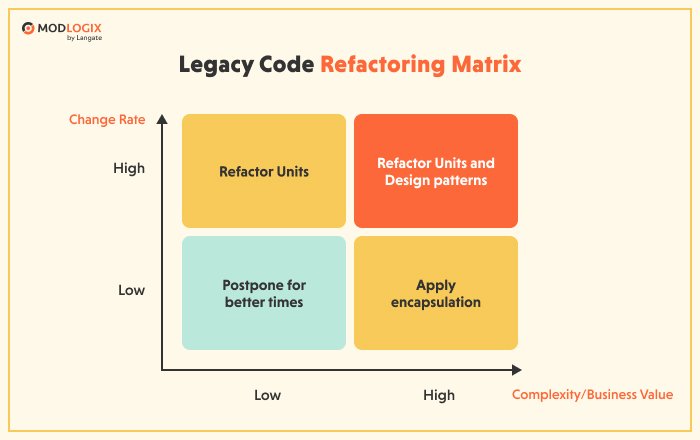
Refactoring is probably the use case where AI coding assistance has the highest ceiling. The reason is that refactoring is 90% pattern recognition — recognizing when deeply nested conditions could be flattened, when repeated code could be extracted, when a callback chain could be converted to async/await — and pattern recognition is what these models are genuinely good at.
“The best refactoring prompts are the ones that tell the model what to preserve, not just what to change.”
Prompt #18 Refactoring
Reduce Cognitive Complexity
Refactor this function to reduce its cognitive complexity. Keep the exact same behavior — this is a pure refactoring, not a feature change.Language: [LANGUAGE]Code:[CODE BLOCK]Target: The refactored version should be readable by someone unfamiliar with this codebase without needing to mentally simulate many states.Constraints:- Do not change public interfaces or function signatures- Do not introduce external dependencies- Keep performance equivalent or betterAfter the refactored code, explain each structural change you made and why it reduces complexity.
Why this works: “Readable by someone unfamiliar” is a more useful instruction than “make it cleaner.” It gives the model a concrete reader model to optimize for.
Prompt #19 Refactoring
Callback Hell → Async/Await Migration
Convert this callback-based code to modern async/await. Language: JavaScript/TypeScript (Node.js [version]).Code:[CODE BLOCK]Requirements:- Preserve all existing error handling — do not silently swallow errors- Maintain the same concurrency behavior (don't accidentally serialize things that ran in parallel)- Keep TypeScript types correct if applicable- Do not change the public-facing function signatureFlag any places where the conversion isn't straightforward and explain the trade-off.
Prompt #20 Refactoring
Extract and Decouple a God Object / God Function
This function/class is doing too many things. Help me break it apart.Language: [LANGUAGE]Code:[CODE BLOCK]Business context: [what this code does at a high level]Identify the distinct responsibilities in this code. Suggest how to split it into smaller, focused units. For each proposed unit:- Give it a name and describe its responsibility in one sentence- Show the code it would contain- Show how the pieces connectI don't want to change behavior — just reorganize. Tell me if you see any places where splitting would require changing behavior.
Prompt #21 Refactoring
Add TypeScript to Existing JavaScript
Add TypeScript types to this JavaScript code without changing runtime behavior.Code:[CODE BLOCK]TypeScript config notes: [strict mode on/off, target version, any special compiler options]Priority order:1. Correct types (no "any" unless genuinely unavoidable — explain each one)2. Good developer ergonomics (intellisense that actually helps)3. Compatibility with the runtime environmentIf you need to infer a type from context and aren't sure, say so and give me two options. Don't guess and move on.
The “don’t guess and move on” instruction cuts down significantly on incorrect type inferences that look plausible but fail at runtime with strict TS configs.
Prompt #22 Refactoring
Remove Code Duplication (DRY Pass)
Find and eliminate code duplication in these files.Language: [LANGUAGE]Files:[CODE BLOCKS FROM MULTIPLE FILES]For each instance of duplication:1. Show both duplicated sections2. Propose an abstraction (function, class, utility, etc.)3. Show how both call sites would look after the changePrioritize by impact — most-duplicated and most-likely-to-diverge first. If any duplication should be intentionally kept (e.g., different contexts that happen to look similar now), say so.
Prompt #23 Refactoring
Upgrade to New Language Features
Update this code to use modern [LANGUAGE] features available in version [X.Y].Code:[CODE BLOCK]Target version: [e.g., Python 3.12, ES2024, Java 21, Go 1.23]Keep compatible with: [any minimum runtime version constraints]Replace outdated patterns with their modern equivalents. For each change:- Show old vs. new side by side- Explain the benefit (readability, performance, safety)- Flag anything where the modern version has subtly different behaviorDo not modernize things that are already idiomatic — only update patterns that are genuinely outdated.
Prompt #24 Refactoring
Translate Between Languages / Frameworks
Translate this code from [SOURCE LANGUAGE/FRAMEWORK] to [TARGET LANGUAGE/FRAMEWORK].Source code:[CODE BLOCK]Target environment: [version, conventions, any specific style guides]Translation priorities:1. Correctness — same behavior in all cases2. Idiomatic target code — not just a direct translation that "works" but reads like [SOURCE]3. Use target-language standard library where it replaces the source approach naturallyFor any logic where there's no clean 1:1 mapping, explain the difference and how you handled it.
04
Testing & QAPrompts 25–32 · The category most developers skip in prompts
Testing prompts are where developers leave the most time on the table. Writing unit tests for a function takes maybe ten minutes manually. A well-structured prompt can produce the same tests in under two minutes — and a genuinely good prompt includes edge cases you’d have missed. The key is telling the model about failure modes, not just happy paths.
Prompt #25 Testing
Unit Tests with Edge Cases
Write comprehensive unit tests for this function.Language: [LANGUAGE]Test framework: [Jest / pytest / JUnit / RSpec / Go test / etc.]Code:[CODE BLOCK]I need tests that cover:- All valid inputs and expected outputs- Edge cases: empty inputs, null/undefined, boundary values, very large inputs- Error cases: invalid types, missing required fields, out-of-range values- Any state dependencies (mock these — don't hit real services)For each test, write a one-line comment explaining what scenario it covers. Aim for tests that would catch a future regression, not just tests that document current behavior.
Why this works: The distinction between “tests that catch regressions” vs. “tests that document current behavior” seems subtle but it materially changes the tests generated. The former tends to include negative cases and boundary conditions; the latter produces happy-path-only tests.
Prompt #26 Testing
Integration Test for an API Endpoint
Write integration tests for this API endpoint. Framework: [Express / FastAPI / Rails / Django / etc.]Test framework: [Supertest / httpx / RSpec request specs / etc.]Endpoint code:[CODE BLOCK]Test for:- 200 response with valid input (multiple valid variations)- Each 4xx error case: what inputs trigger them, what response body structure I expect- Authentication/authorization: unauthorized and forbidden cases- Any business logic constraints that should reject valid-looking requestsUse real database calls against a test database, not mocks — I want these to catch real integration bugs. Include any test setup / teardown needed.
Prompt #27 Testing
Generate Test Data / Fixtures
Generate realistic test fixtures for these data structures.Language: [LANGUAGE]Schema / type definitions:[TYPE DEFINITIONS OR DB SCHEMA]I need:- 5 "happy path" examples that represent typical production data- 3 edge case examples that stress boundary conditions (max string length, zero values, nested empty collections, etc.)- 2 "almost invalid" examples that should fail validation and what specifically makes them invalidMake the test data realistic — not {"name": "test", "email": "test@test.com"} but data that could plausibly come from real users. Prompt #28 Testing
Mock / Stub External Dependencies
Help me mock the external dependencies in this code so I can test it in isolation.Language: [LANGUAGE]Test framework: [framework]Code to test:[CODE BLOCK]Dependencies to mock: [list external APIs, databases, file system, time, etc.]For each mock:1. Show how to set it up for the test2. Show how to configure different scenarios (success, failure, timeout, partial response)3. Show how to verify it was called correctly where that mattersI want mocks that are realistic enough to catch integration mismatches, not just stubs that return empty objects.
Prompt #29 Testing
Property-Based Test Generation
Write property-based tests for this function using [Hypothesis / fast-check / QuickCheck / proptest].Language: [LANGUAGE]Library: [property-based testing library]Function:[CODE BLOCK]Identify the invariants that should always hold — things like:- Output type constraints- Mathematical properties (idempotence, commutativity, inverse operations)- Boundary guarantees ("output is always <= input" type constraints)- Error conditions that should always be raised for certain input shapesWrite generators that cover the realistic input space, not just random noise. Prompt #30 Testing
Test Coverage Gap Analysis
I have tests for this code but I think they have gaps. Analyze both and tell me what's not covered.Code:[CODE BLOCK]Existing tests:[TEST CODE]For each code path, state or function branch that isn't covered:1. Describe what scenario is missing2. Explain why it matters (would a real bug hide there?)3. Write the missing testPrioritize by risk — which gaps are most likely to allow a real bug to go undetected?
Prompt #31 Testing
Load / Stress Test Script
Write a load test for this endpoint/service using [k6 / Locust / Artillery / JMeter].Endpoint details:[URL, method, headers, body template]Test scenario:- Ramp from 0 to [N] concurrent users over [duration]- Sustain [N] users for [duration]- Track: p50, p95, p99 response times; error rate; throughputThresholds: fail the test if p95 > [Xms] or error rate > [Y%]Include realistic think time between requests and parameterized test data (don't hammer the same request 1000 times).
Prompt #32 Testing
End-to-End Test with Playwright / Cypress
Write an E2E test for this user flow using [Playwright / Cypress].Application: [brief description]User flow to test:[Step 1: user does X][Step 2: user expects Y to appear][Step 3: user clicks Z][Expected final state]Requirements:- Use data-testid attributes for selectors (not CSS classes — they change)- Handle async loading states — wait for real content, not arbitrary timeouts- Test with network conditions: normal, and a slow-network simulation- Clean up created test data after each run
05
Architecture & System DesignPrompts 33–38 · Use for planning, not building blindly
Honest caveat Architecture prompts are where AI assistance is least reliable. Models can produce architecturally coherent-sounding designs that are wrong for your specific scale, team, or business constraints. Use these prompts to generate options and surface trade-offs — not to outsource the decision.
Prompt #33 Architecture
Architecture Options for a New Feature
I need to build [FEATURE] and I want to evaluate my architectural options before committing.Context:- Current stack: [languages, frameworks, databases]- Team size: [N developers]- Scale: [current and expected load]- Constraints: [hosting, cost, deadlines, existing tech debt]Feature requirements: [describe what needs to be built]Give me 3 architectural approaches — ordered from simplest to most complex. For each:1. Describe the approach in concrete terms2. List what this approach is optimized for3. List where it breaks down4. Estimate the implementation complexity (rough person-weeks)5. Name the biggest riskDon't tell me what "most companies" do. Tell me what fits this context.
Why this works: "Don't tell me what most companies do" is a small but effective nudge. Without it, architecture responses tend toward generic "use microservices" or "use a message queue" advice regardless of whether those make sense at your scale.
Prompt #34 Architecture
Architecture Decision Record (ADR)
Help me write an Architecture Decision Record (ADR) for a decision we've made.Decision: [what we decided]Context: [what problem we were solving, what constraints we were under]Options we considered: [list them with brief descriptions]Why we chose what we did: [your reasoning]Trade-offs we're accepting: [what we're giving up]Format it as a proper ADR with:- Status: Accepted- Context (2–3 sentences)- Decision (1 sentence)- Consequences: positive and negative- Alternatives rejected and whyWrite it clearly enough that a developer joining the team in 2 years can understand why this decision was made without asking anyone.
Prompt #35 Architecture
Database Schema Design Review
Review this database schema design before I build on top of it.Database: [PostgreSQL / MySQL / MongoDB / etc.]Schema:[DDL or schema description]Business context:- What this data represents: [brief description]- Access patterns: [how the data will be queried — read-heavy, write-heavy, specific query types]- Scale expectations: [approximate row counts, growth rate]Evaluate:- Normalization: is anything that should be split, split? Anything over-normalized?- Missing indexes for the access patterns described- Constraint correctness — foreign keys, null constraints, unique constraints- Anything that would require a painful migration later if requirements expand in obvious waysTell me what I'd regret in 18 months.
Prompt #36 Architecture
System Design Interview / Whiteboard
Walk me through designing [SYSTEM] at scale. This is for [interview prep / actual planning].Requirements (as given):- [Functional requirement 1]- [Functional requirement 2]- Scale: [DAU, QPS, data volume estimates]Guide me through:1. Requirements clarification — what questions should I ask first?2. Capacity estimation — rough numbers3. High-level design4. Component deep-dives on [specific component I want to focus on]5. Trade-offs of my approachIf you see me make assumptions that are wrong at this scale, call them out.
Prompt #37 Architecture
Migration Strategy Planning
Help me plan a migration from [OLD SYSTEM/APPROACH] to [NEW SYSTEM/APPROACH].Current state:- [Describe current system]- Data volume: [size]- Traffic: [concurrent users, requests/sec]- Team: [N engineers available]- Zero-downtime requirement: [yes/no]Target state: [describe what we're moving to]Produce a phased migration plan with:- Phase breakdown (what happens in each phase)- Rollback strategy for each phase- How I'll validate each phase before proceeding- The highest-risk moment in the migration and how to mitigate it
Prompt #38 Architecture
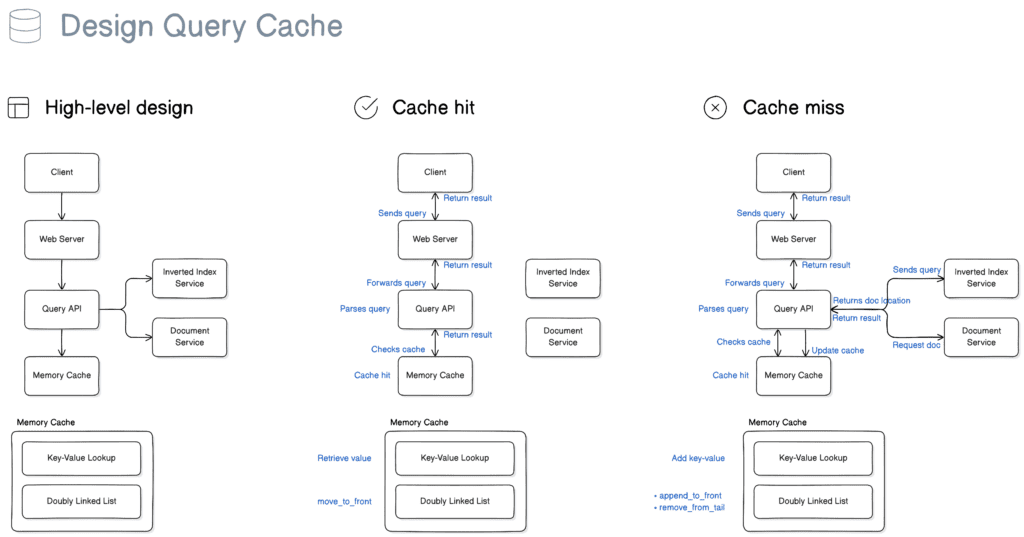
Caching Strategy Design
Design a caching strategy for this system.Current problem: [describe the performance issue — slow queries, high DB load, latency, etc.]Data characteristics:- Read/write ratio: [e.g., 20:1]- Data size: [approximate]- Freshness requirements: [how stale can cached data be?]- Invalidation triggers: [what events make the cache stale?]Stack: [language, database, any existing infrastructure]Recommend:1. What to cache (be specific — not "cache your queries")2. Cache strategy (write-through, write-around, write-back)3. TTL and invalidation approach4. What to explicitly not cache and why5. How to handle cold start and cache stampede
06
Documentation & ExplanationPrompts 39–44 · The use case with the highest ROI per minute
Prompt #39 Documentation
Write Inline Code Documentation
Add documentation comments to this code. Language: [LANGUAGE].Code:[CODE BLOCK]Documentation style: [JSDoc / Python docstrings / Rustdoc / Javadoc / Go doc comments]For each function/method/class:- Document what it does (not how — the code shows how)- Document parameters: type, what it represents, any constraints- Document return value- Document exceptions/errors it can raise- Add @example for any function whose usage isn't obvious from the signatureDon't document things that are self-evident from the name. Skip comments like "// increment i" on "i++". Focus on intent and contract, not mechanics.
Why this works: The instruction to skip self-evident things is critical. AI-generated docs often produce noise that makes code harder to read, not easier. This prompt specifically guards against it.
Prompt #40 Documentation
README for a New Project
Write a README for this project.Project description: [what it does and who it's for]Tech stack: [languages, frameworks, databases]Repo structure overview:[list main directories/files]Include these sections:- What this is (2–3 sentences, no marketing)- Prerequisites (exact versions)- Installation and local setup (step by step — assume a fresh machine)- How to run tests- Environment variables needed (with example .env format, not actual values)- How to contribute- LicenseWrite it for a developer who's never seen this codebase. Err on the side of more detail in the setup section — that's where people get stuck.
Prompt #41 Documentation
Explain Complex / Unfamiliar Code
Explain this code to me. I understand [LANGUAGE] well but I'm unfamiliar with [specific pattern/library/domain].Code:[CODE BLOCK]I need:1. What it does at a high level (2–3 sentences)2. How it works — walk through the logic step by step3. Why it's written this way — what pattern or constraint drives this structure?4. Anything I should know about the trade-offs or limitations of this approachUse the "what → how → why" structure. Don't assume I know [specific thing I'm unfamiliar with].
Prompt #42 Documentation
Write API Documentation (OpenAPI / Swagger)
Generate OpenAPI 3.1 documentation for these endpoints.Framework: [Express / FastAPI / Rails / etc.]Route definitions:[CODE BLOCK]For each endpoint include:- Summary and description (honest about what it does and doesn't do)- All path, query, header parameters with types and whether required- Request body schema with examples for at least 2 scenarios- All possible response codes with schema and real-world example responses- Authentication requirementGenerate valid, parseable YAML. Use $ref for any schemas used in multiple places.
Prompt #43 Documentation
Changelog / Release Notes from Git Diff
Write release notes for this version based on what changed.Version: [X.Y.Z]Git diff summary / commit messages:[PASTE COMMITS OR DIFF SUMMARY]Target audience: [end users / developers / both]Format:- Breaking Changes (if any — be explicit about migration steps)- New Features- Bug Fixes- Performance Improvements- DeprecationsDon't include internal refactors or test changes unless they have user-facing implications. Write in plain language — no commit-message jargon.
Prompt #44 Documentation
Runbook for a Critical Process
Write a runbook for [PROCESS NAME — e.g., "database failover", "deploys to production"].System context:[Brief description of the system and tech stack]The runbook should cover:- When to use this runbook (trigger conditions)- Prerequisites (access, tools needed)- Step-by-step procedure with commands (exact, copy-pasteable)- How to verify each step succeeded before proceeding- Rollback procedure if something goes wrong- Who to escalate to and how if this runbook failsWrite it for someone who has system access but hasn't done this before. Optimize for crisis conditions — clear, numbered, no ambiguity.
07
Performance & OptimizationPrompts 45–50 · Measure first, then prompt
Ground rule for this section Every performance optimization prompt should start with actual measurement data. The model cannot tell you what's slow without it. "Make this code faster" is the least useful prompt in this category. "This function runs in 800ms on a 10k row dataset — here's the profiler output" is where the value starts.
Prompt #45 Performance
Algorithm / Complexity Optimization
This code is too slow for the scale it needs to operate at. Help me optimize the algorithm.Language: [LANGUAGE]Current performance: [measured time/memory on realistic input size]Required performance: [target]Input characteristics: [size range, data distribution, any useful patterns]Code:[CODE BLOCK]Analyze the time and space complexity of the current implementation. Propose alternatives with better complexity, ranked by improvement potential. For each alternative, show the code and explain the trade-offs (readability, implementation complexity, space/time trade-off).
Prompt #46 Performance
SQL Query Performance Optimization
This query is slow. Help me optimize it.Database: [PostgreSQL / MySQL / etc.]Current execution time: [measured time on [N] rows]EXPLAIN ANALYZE output:[PASTE EXPLAIN ANALYZE OUTPUT]Query:[SQL QUERY]Schema and indexes:[DDL]Typical row counts per table: [estimates]Analyze the query plan, identify the bottleneck (seq scans, bad joins, missing indexes, etc.), and propose optimizations. Show the expected improvement and any trade-offs (index write overhead, storage cost, query structure changes).
Always include the EXPLAIN ANALYZE output. This single addition makes SQL optimization prompts dramatically more useful — the model is analyzing the actual execution plan, not guessing at it.
Prompt #47 Performance
Frontend Bundle Size Reduction
My JavaScript bundle is too large. Help me reduce it.Build tool: [webpack / Vite / esbuild / etc.]Current bundle analysis: [paste bundle analyzer output or key stats]Framework: [React / Vue / Svelte / etc.]Problem areas:[list large dependencies or chunks]Evaluate each large dependency:- Is it tree-shakeable? Am I importing it correctly?- Is there a smaller alternative for what I'm actually using?- Should it be lazy-loaded or code-split?Also review my build config for common optimization misses: [attach config if relevant].
Prompt #48 Performance
React / Frontend Rendering Performance
My React component re-renders too frequently and it's causing performance issues.Component:[CODE BLOCK]Profiler data (from React DevTools or equivalent): [describe what you observed — which renders are expensive, frequency]Identify:1. Every unnecessary re-render and what triggers it2. Props or state that could be memoized3. Expensive computations that should use useMemo4. Event handlers that should use useCallback5. Any structural issues (component split, data fetching location) that are the real problemPrioritize — not every memo is worth adding. Tell me which optimizations have real impact vs. premature optimization.
Prompt #49 Performance
Identify N+1 Query Problems
Review this code for N+1 query problems. Language: [LANGUAGE]. ORM/framework: [name].Code:[CODE BLOCK INCLUDING DATA FETCHING LOGIC]Identify every place where a query inside a loop (or equivalent) would produce N+1 database calls. For each:1. Show the problematic code2. Explain why it produces N+13. Show the corrected version (eager loading, batch query, or restructured logic)4. Estimate the query reduction on [typical N value from my use case]
Prompt #50 Performance
Cost Optimization for Cloud Infrastructure
Review my infrastructure setup for cost optimization opportunities.Cloud provider: [AWS / GCP / Azure]Current monthly spend: [approximate, or paste billing breakdown]Infrastructure as code:[Terraform / CloudFormation / etc. snippet]Traffic profile: [peak vs. average load, time patterns]Performance requirements: [latency, uptime SLA]Identify:- Overprovisioned resources (instances bigger than needed)- Resources running 24/7 that could be scheduled or autoscaled- Storage or data transfer costs that could be reduced- Better pricing models (reserved vs. spot vs. on-demand)Quantify the savings estimate for each opportunity if you can. Don't suggest changes that would compromise the SLA.
The best developers I've spoken with who use AI tools extensively all do one thing that most don't: they maintain a personal prompt library. Not a folder of interesting prompts they saw on Twitter — an actual curated collection of prompts that work for their specific stack, team conventions, and coding style.
The setup is simple. Keep a markdown file (or a Notion page, or a Raycast snippet library, or whatever you actually use) with your 10–15 most-used prompts, parameterized with placeholders. Every time you write a prompt from scratch and get a great result, spend 30 seconds adding it to the library.
| Category | Time to Write Prompt | Estimated Time Saved vs. Manual | Caveat |
|---|---|---|---|
| Unit test generation | 2 min | 15–25 min | Review edge cases manually |
| Boilerplate / scaffolding | 3 min | 20–40 min | Low risk; always works well |
| Debug stack trace | 5 min | Varies wildly (0–120 min) | Harder bugs require human insight |
| Code review first pass | 3 min | 10–20 min (on security / mechanical issues) | Human still needed for architecture review |
| Documentation writing | 2 min | 20–45 min | Usually needs light editing |
| SQL query optimization | 5 min (including EXPLAIN output) | 30–60 min | Validate against your actual data distribution |
| Architecture exploration | 10 min | 1–3 hours (brainstorming, not deciding) | Decision still requires domain judgment |
One real-world note: GitHub's 2024 research found developers completed isolated coding tasks 55% faster — average completion time dropped from 2 hours 41 minutes to 1 hour 11 minutes with AI assistance. But these were well-defined tasks. The efficiency gains on ambiguous, multi-file, context-heavy problems are smaller and less consistent.
The honest answer on time savings is: consistently high on mechanical tasks (tests, docs, boilerplate), highly variable on debugging, and basically unpredictable on architecture. Plan accordingly.
Mostly, but not identically. The structural principles — Role, Context, Task, Constraints, Output Format — apply across Claude, ChatGPT, Gemini, and GitHub Copilot. However, Claude tends to handle long, detailed prompts particularly well, while Copilot works best inline within an IDE where it has direct code context. Test your most-used prompts on your actual model and adjust.
No — the context is different. Copilot Chat in VS Code already has your file open and can see surrounding code, so you need less context in the prompt itself. Chat-based interfaces like Claude or ChatGPT have no visibility into your codebase, so you need to paste the relevant code explicitly. The long-form prompts in this guide are designed for chat interfaces.
Set the temperature lower if the API allows it (for deterministic tasks like bug fixes, lower temperature helps). More practically: be more specific. Vague prompts produce varied results because the model has more freedom to interpret. The more constraints you add — language version, framework, style, output format — the more consistent the output becomes.
Is it safe to paste production code into these tools?
This depends entirely on your organization's data policies and the tool you're using. Claude.ai's privacy policy, GitHub Copilot's enterprise settings, and ChatGPT Enterprise each have different data retention and training implications. For anything customer-sensitive or proprietary, check your legal team's stance before pasting. Many enterprises now run models on-premises or via private API endpoints to address this.
Why does AI-generated code sometimes look right but fail in subtle ways?
Because the model has no access to your runtime environment, your actual database state, your team's conventions, or the behavior of your specific dependencies. It generates code that would be correct in the most common interpretation of your prompt — which may not match your actual context. This is why context-rich prompts produce dramatically better results than short ones.
How do I handle it when the AI confidently gives me wrong code?
First, never trust AI code without running it. Second, push back directly: "This doesn't work because [specific reason]. Here's what actually happens: [error/behavior]. Fix it." Models generally self-correct well when given a concrete failure description. If it keeps getting it wrong after 2–3 iterations, the prompt probably lacks crucial context — stop and add it.
Are there tasks where AI coding assistance is not worth using?
Yes. Complex multi-file architectural refactors where the relationships between components matter more than any individual file. Security-critical code that requires expert human review regardless of how it was generated. Any task where your domain knowledge (what the business actually requires) is the main input — the model has no access to that knowledge.
How long should my prompts be?
As long as needed, no longer. A debugging prompt that includes a full stack trace, the relevant code, environment details, and what you've already ruled out might be 300 words — and that length is justified. A simple "explain what this function does" prompt should be a sentence. Longer is only better when the additional content is genuinely informative, not when you're adding words to feel more precise.
Can I use these prompts with AI coding agents like Cursor or Devin?
Yes, but agents that can read your codebase directly need less explicit context in the prompt. The principles still apply — Role, Constraints, Output Format — but you can be less verbose about code that the agent can already see. The Architecture and Debugging prompts translate well to agentic workflows; the testing prompts work best when you tell the agent where to put the output files.
What's the biggest mistake developers make with AI coding prompts?
Trusting the first output without testing it. The second biggest is giving up after one bad response instead of refining the prompt. Most bad AI code outputs are recoverable with a follow-up that adds the missing context or corrects a misunderstood constraint. Treat prompting as a conversation, not a one-shot query.
Is there a risk of becoming too dependent on AI for coding?
Potentially, yes. Stack Overflow's 2025 survey found 44% of developers now use AI to learn to code, but there's a legitimate question about whether AI-generated solutions help you understand the underlying concepts. If you're early in your career, it's worth occasionally writing things the long way — not because AI assistance is bad, but because the manual process builds mental models you'll need when the AI gets something wrong.
How often should I update my prompt library?
Every time you write a new prompt that produces notably good results. Models improve quickly — a prompt structure that was necessary in late 2024 might be overkill in 2026, or vice versa. Review your library every few months and test whether your older prompts still produce the best results, or whether the model's improved enough that simpler instructions now work.
Final Thoughts
There's a version of AI coding assistance that's genuinely transformative, and there's a version that wastes your time with plausible-looking bugs. The difference isn't which model you're using. It's how much real context you give it and how critically you evaluate what comes back.
The 84% adoption rate in Stack Overflow's 2025 survey tells you AI tools have moved from experiment to baseline. The 29% trust rate tells you the average developer hasn't yet figured out how to get consistently useful output from them. That gap is where the real productivity advantage lives — and it's closed by learning to prompt well, not by waiting for models to get smarter.
Start with three or four prompts from this guide that match your most common frustrations. Test them, adjust them for your specific stack, and track whether they actually save time. The prompts that don't work for your context should be modified, not abandoned — the structure is sound even if the specific wording needs adjustment.
The developers saving meaningful hours with AI aren't chasing every new tool. They've built a small, reliable library of prompts for the tasks they do every day, and they use them consistently. That's a realistic version of this that works.
More from BestPrompt.art
Guide
The Complete Prompt Engineering Guide for 2026
Prompts
Best Claude Prompts for Professional Developers
Prompts
ChatGPT Coding Prompts That Actually Work
Tips
GitHub Copilot Hidden Features and Prompt Tricks
Guide
How to Run AI-Assisted Code Reviews That Catch Real Bugs
Deep Dive
System Prompts for Developer Workflows: A Practical Guide
Prompts
50 Cursor AI Prompts for Agentic Coding
Guide
AI-Assisted Debugging: A Framework That Actually Works
Template
Build Your Personal Prompt Library (Free Template)
Prompts
AI Prompts for Test-Driven Development
Generative AI for Designers: What’s Working in 2025 (And What’s Just Hype)
The AI Prompts Top Developers Use Every Day – Best Guide
20 Best AI Prompts for HR Leaders in 2026: The Complete Implementation Guide with P-C-T-F Framework
25 AI Coding Prompts Programmers Use to Save Hours Every Week
Unraveling the Magic: Compare 9 Prompt Engineering Tools You Need to Know!
How to Use AI to Write Cleaner, More Efficient Code