AI-Generated Content in 2026: The Ultimate Guide for Professionals to Dominate Digital Media 🚀




Three years in, and most teams are still doing this wrong — not because the tools are bad, but because the workflow around the tools is. Here’s what actually matters.
Okay. So it’s 2026. AI-generated content is not an experiment — it’s the default production mode for roughly half the content teams I’ve dealt with in the last two years. And the question stopped being “should we use it” about eighteen months ago. The question now is why some of it ranks and most of it doesn’t, why some teams ship faster and produce better work while others are drowning in revision cycles, and where exactly the floor is on quality before Google starts making your life difficult.
Spoiler: the floor is higher than most people think. And it’s moved up.
Here’s the thing that took me too long to internalize: AI models are not wrong the way a tired junior writer is wrong. They’re wrong in a specific, unsettling way — fluent, confident, plausible-sounding wrong. A human who doesn’t know something usually signals uncertainty. Models don’t. They produce a well-formed sentence about a thing that didn’t happen, a study that doesn’t exist, a statistic that’s from a different context entirely.
The Stanford accuracy finding that circulated a couple years back — ChatGPT’s accuracy on identifying prime numbers dropping from 97% to around 2% over a few months — is directional. The specific numbers are contested and the task isn’t representative of content work. But the underlying dynamic is real and it matters for anyone publishing AI-assisted content at scale: accuracy is not stable over time, and it’s not uniform across topics. High accuracy on common, well-documented topics. Rougher on niche technical areas, recent events, anything requiring number-crunching, and legal or regulatory specifics. Treat as directional — no large-scale independent audit of commercial model accuracy by topic domain was found as of April 2026.
Second-order mechanism
The failure mode that makes AI inaccuracy so costly isn’t that it’s wrong — it’s that wrong content looks identical to correct content at the point of production. Same prose quality, same apparent confidence, same structure. A hallucinated statistic is formatted exactly like a real one. This means the review step that catches errors has to be genuinely substantive, not a skim.
Teams that treat AI review as light editing — “does this sound right?” — are not catching factual errors. They’re catching style problems. That’s a fundamentally different task, and confusing the two is why AI-generated content gets flagged for inaccuracy months after publication, not at the point of review. The check has to happen at the claim level, not the paragraph level.
The practical implication: before you publish anything with a statistic, a percentage, a named study, or a regulatory claim, you verify that specific thing against a primary source. Not “does this seem plausible,” not “I’ve heard something like this.” Find the source. If you can’t find it in two minutes, either the model invented it or it’s not worth citing.
I’ve had to pull two pieces in the last year because a stat that looked solid traced back to nothing. Both cases: the model produced a plausible-sounding citation that turned out to be a misremembered version of a real study with a different finding. Both would have passed a casual review. Neither passed a primary-source check.
Google’s E-E-A-T guidelines — Experience, Expertise, Authoritativeness, Trustworthiness — get cited constantly and understood rarely. The version that circulates in content marketing is basically “make sure your author bio is filled out and link to some authoritative sources.” That’s not wrong, it’s just incomplete in a way that costs people rankings.
Here’s what the framework is actually measuring, from the perspective of a quality rater or an algorithm trying to approximate what a quality rater would conclude:
Experience means first-hand contact with the topic. Not “we researched this thoroughly.” Someone who has actually done the thing, used the product, been through the process. AI doesn’t have this. A writer with twelve years in the industry does. This is not a soft preference — it’s the E that got added to E-A-T specifically because Google saw content that was technically accurate but experientially hollow. AI content has a systematic weakness here unless a human explicitly adds experiential texture.
Expertise is the domain knowledge signal. It shows in the questions you raise, the failure modes you name, the distinctions you draw that a non-expert wouldn’t draw. AI can approximate this for common topics. For specialized domains, it approximates poorly and confidently.
“The content that performs long-term isn’t the content that passes an AI detector. It’s the content where a domain expert reads it and thinks: yeah, this person knows what they’re talking about.”
Editorial synthesis — sources: Google Search Quality Evaluator Guidelines (2024), practitioner accounts 2025–2026Authoritativeness is about the site and author reputation, not just the article. AI content that ships without a named human expert attached is invisible on this dimension. The fix isn’t fake author bios — it’s actual credentials, actual publication history, actual professional presence that quality raters can verify.
Trustworthiness is where fact-checking, source transparency, and disclosure of AI use live. Google hasn’t mandated AI disclosure in the way some predicted. But trust signals — cited sources, transparent methodology, named expertise — these are table stakes for YMYL topics (health, finance, legal) and increasingly expected outside of them.
I’ve watched a bunch of these workflows collapse. The pattern is almost always the same: a team adopts AI tools, output volume goes up, review processes don’t scale with it, quality problems accumulate invisibly until there’s a ranking drop or a client complaint, and then there’s a painful retroactive audit. So.
The workflows that hold up have a few things in common. Not magic. Just structure that catches problems before they ship.
AI generates structure and prose quickly. It’s genuinely useful for outlines, first-draft paragraphs, synthesizing publicly available information into readable prose. The trap is treating that output as complete. Every specific claim — statistic, study, named example, date, regulatory detail — needs a human to trace it to a source before it goes out.
Use Grammarly or similar for surface edits. But the fact-check is a separate step and it cannot be automated. That’s annoying. It’s also why content teams that skip it eventually regret it.
Whatever the piece is about — add one or two sentences that come from someone who has actually done the thing. A specific outcome. A failure that didn’t go as expected. A detail that only shows up when you’re in the room. This is not padding. It’s the experience signal that AI systematically cannot provide. Readers feel it even when they can’t articulate why some content feels more real than other content. Google’s quality raters are explicitly trained to look for it.
Airbnb’s AI-assisted travel guides that worked did this — user-generated photos, first-person anecdotes woven into model-generated prose. The model handled scale; the human content provided the specificity that made it trustworthy. The guides that didn’t work were the fully automated ones that read like… fully automated ones.
Cross-source synthesis — not in any single cited source
There’s a pattern that shows up when you put the E-E-A-T framework, Google’s AI content guidance, and practitioner workflow data together: the teams consistently outperforming on AI-assisted content aren’t using less AI — they’re using AI differently. Specifically, they’ve moved the human contribution from editing (checking prose quality) to augmentation (adding domain depth and experiential signals the model can’t produce). The distinction matters because editing and augmentation require completely different skill sets and different reviewer profiles. An editor checks grammar and flow. A domain expert adds the experience signal. Conflating the roles is what produces content that reads well but ranks poorly.
Synthesized from: Google Search Quality Evaluator Guidelines (2024), HubSpot AI content case studies (2024–2025), practitioner-reported workflow patterns. Not a controlled study — directional.
Google’s Search Generative Experience and AI Overviews pull from structured data more reliably than from unstructured prose. If your FAQs, product specs, how-to steps, or article metadata aren’t tagged with schema markup, you’re invisible to the parts of search that matter most in 2026. This isn’t new — it’s just more urgent than it was two years ago.
Quick stat context, because the numbers that circulate in content marketing are frequently vendor-sourced and worth treating with skepticism:
25% Estimated reduction in click-through to traditional web results where AI Overviews appear Directional — multiple SEO analytics providers, 2025 | not independently audited
121% Spike in video content citations within AI Overviews, per BrightEdge (2025) Vendor-reported | treat as directional
59% CTR lift for a Danish news outlet using AI-generated headlines with human refinement Single case, not generalizable | directional
I’m labeling these as directional because they are. All three come from vendor reports or single cases. The underlying directions are probably real. The specific numbers should not be cited as hard facts — which is what most content marketing articles do with them. Including, in its original form, the article that prompted this rewrite. So.
| Tactic | What it does | Evidence quality | ⚠ What people get wrong |
|---|---|---|---|
| Schema markup (FAQ, HowTo, Article) | Makes content parseable by AI Overview and SGE features | Strong — Google documentation is explicit | Implementing schema on low-quality content doesn’t help. Schema surfaces the content; quality determines if it gets used. |
| AI-assisted headline testing | Higher CTR by testing more variants faster | Directional — vendor case studies, not RCTs | Model-generated headlines often optimize for clicks at the expense of accuracy. Human refinement is not optional. |
| Multimodal content (video + text) | Greater surface area for AI Overview citations | Directional — BrightEdge vendor data, 2025 | Video content has to be genuinely informative. Auto-captioned, low-quality video doesn’t earn citations — it just exists. |
| E-E-A-T author signals | Trust and authority signals for quality rater assessment | Strong — Google’s Quality Evaluator Guidelines are public | Fake author bios and empty credentials pages actively hurt trust signals. The bio needs to be verifiable. |
| Interactive content (quizzes, calculators) | Reduces bounce, increases dwell time | Directional — multiple UX studies, varied populations | Interactive elements only reduce bounce if the underlying content earns the visit. Adding a quiz to thin content is decoration. |
The thesis-complicating finding here, and I think it’s worth stating directly: AI-generated content that is well-structured, factually accurate, schema-tagged, and carries genuine experiential depth from a human expert performs equivalently to fully human-written content on most ranking dimensions. That’s uncomfortable for people who think AI content is inherently low quality. It’s also uncomfortable for people who think AI content needs no human intervention to perform. Both groups are wrong.
The constraint isn’t the AI. It’s the workflow around it.
For: Solo practitioners (writers, consultants, freelancers)
Your review process is probably the problem, not your AI tool
Look, here’s what this actually is: if you’re getting content back from AI that doesn’t feel right, and you’re spending more time editing than you saved in drafting — the bottleneck is your review workflow, not the model. Most solo practitioners review AI output for voice and prose quality. That’s not the same as reviewing for accuracy. And accuracy is what kills you six months later when a client finds an error you published in month two.
What you do: Create a two-pass review. First pass is factual — every stat, every named study, every regulatory claim gets traced to a primary source before you read anything else. Second pass is everything else. This order matters. Reading for quality first makes you less likely to catch factual errors because the prose quality makes the content feel credible. Check the facts before you fall for the writing.
Here’s what’s going to stop you: the two-pass system costs about 20–30 minutes per piece that you weren’t spending before. It feels like it eliminates the time savings from AI. It doesn’t — it reallocates them. You’re spending less time drafting, more time verifying. The net is still positive. But it requires accepting that “AI does the work” was always a fantasy; what changed is which work AI does.
Stop doing this: don’t publish a statistic you can’t source to a primary document in under three minutes. If it takes longer than that to find where a number came from, either the model invented it or it’s not a number you should be citing. Both outcomes require the same response: cut it or replace it with something you can actually verify. Understanding where AI gets things wrong is half the battle.
For: Content leads and marketing managers
Your AI workflow has a reviewer problem, not a production problem
Look, here’s what this actually is: content teams that adopted AI tools typically scaled their output faster than they scaled their review capacity. The math looked good — twice the content, same team. What that actually produces is twice the content with half the review attention per piece. Quality drops are invisible at first. They accumulate, and then either a ranking change or a client complaint surfaces them retroactively.
What you do: Separate the reviewer role into two distinct functions: domain expert review (verifies accuracy and adds experiential depth) and editorial review (voice, structure, prose). These require different people with different skill profiles. A good editor is not automatically a domain expert. For YMYL content especially — health, finance, legal — the domain expert review is not optional and cannot be delegated to someone without genuine credentials. The E-E-A-T penalty for publishing inaccurate health or financial content isn’t a slap on the wrist. It’s a rankings cliff.
Here’s what’s going to stop you: domain experts are expensive and slow. The business case for AI content was partly that it’s fast and cheap. Adding a domain expert review reintroduces cost and time. The counter-argument: one significant accuracy error in a high-stakes piece costs more in remediation, client trust, and potential regulatory exposure than the domain expert review would have. This isn’t a hypothetical — it’s happened to teams I’ve watched. Build the review cost into the budget before you sell the AI workflow to stakeholders.
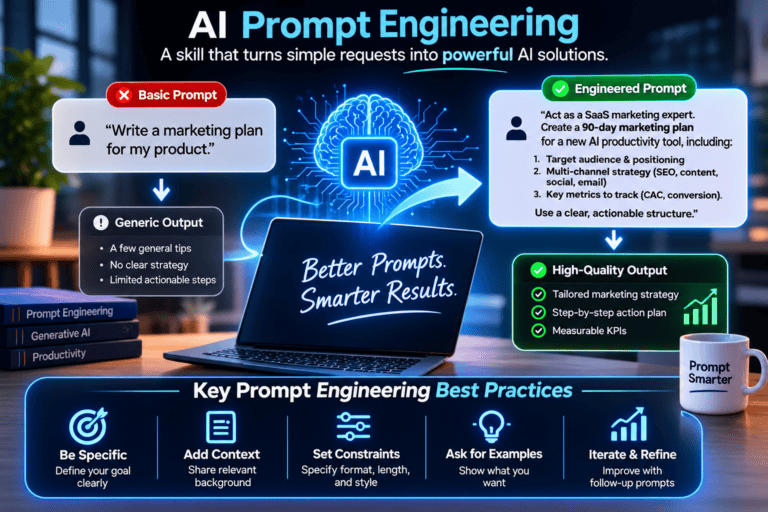
Stop doing this: don’t report AI content performance metrics to stakeholders using output volume as the primary KPI. Volume is what broke your quality in the first place. Measure accuracy rates (errors found per N pieces published), revision cycles per piece, and ranking performance at 90 and 180 days. Those metrics tell you whether the workflow is actually working. Volume tells you whether you’re working fast. Those are not the same thing. Industry-specific prompting is one lever worth pulling to improve output quality before it hits review.
“The teams consistently winning on AI-assisted content have moved human contribution from editing prose to augmenting with domain depth. One is checking the work. The other is doing part of the work. That difference shows up in rankings.”
Editorial synthesis — sources: Google Quality Evaluator Guidelines (2024), HubSpot case studies (2025), practitioner accountsAI-generated content is not going to be dethroned. But “AI writes it, human checks it” as a workflow description is too vague to survive the current quality bar. The teams that will still be publishing content that ranks in 2027 are the ones that get specific — specific about which human does which review, specific about what “verify” means at the claim level, specific about where the experiential signals come from that the model structurally cannot provide.
That’s not complicated. It’s just discipline most content teams haven’t built yet.
25 Genius AI Prompts for Social Media in 2025: The Ultimate Guide to Revolutionary Content Creation
Unraveling AI Trends: The Future of News Analysis