Real-World AI Workflow Examples Powered by Smart Prompting



Updated June 2026
What actually works in production — not the theory, not the hype. Six workflows I have seen ship, break, and ship again. Plus the prompting patterns that made them survive past week three.
73% of AI workflow implementations fail in week three. Not because the model is bad. Because the prompt architecture collapses under real data, real edge cases, and real users who do not read documentation.
I learned this the expensive way. In March 2026, I recommended a simple agentic workflow to a client handling procurement exceptions. By June, they had lost $12,000 to a prompt that could not distinguish between a 4.2% invoice variance and a 4.2% variance with a contract renewal 60 days out. Same number. Completely different decision.
That failure taught me something the tutorials skip: smart prompting is not about writing better sentences. It is about building decision architectures that survive contact with reality.
This post is a walkthrough of six workflows that are actually running in production as of mid-2026. Each one includes the specific prompting pattern that made it work, the failure mode that almost killed it, and what I would do differently today. No studies show. No in todays world. Just the messy, specific reality of shipping AI workflows that do not embarrass you.
Figure 1: The four-level maturity model for enterprise AI automation. Most organizations skip Level 2 and regret it.
Let us start with the failure. In March 2026, a mid-sized manufacturing firm deployed an agent to handle 3-way invoice matching exceptions. The workflow was straightforward on paper: when an invoice arrived with a variance from the purchase order, the agent would query 24 months of payment history, check contract terms for allowable variance, verify the current contract renewal status, and decide whether to auto-approve, escalate, or dispute.
The prompt was written by someone who understood SQL but not procurement nuance. It treated 4.2% variance as a single data point. What it missed: the same 4.2% meant auto-approval when the contract allowed 5% fuel surcharge variance, but meant escalation when the contract was 60 days from renewal and the vendor had been pushing for renegotiation.
The agent auto-approved a $47,000 invoice with a 4.2% variance. The vendor took that as a signal that the old terms still held. When renewal talks started, they had leverage: You already accepted the variance under current terms. The procurement team had to concede on two clauses they had been fighting for six months.
BEFORE (Broken)
# The prompt that cost $12K in negotiation leverage
DECISION_RULE: "If invoice_variance <= contract_max_variance, auto-approve."

# What it should have been:
DECISION_RULE: "Evaluate variance against contract terms AND renewal timeline AND vendor negotiation history."
The fix was not in the prompt text. It was in the Chain-of-Knowledge prompting pattern — a variant of chain-of-thought that forces the agent to retrieve and cite external knowledge before deciding. Instead of one decision step, the workflow now has three: retrieve contract terms, retrieve renewal status, retrieve negotiation history. Only then does the agent synthesize.
AFTER (Fixed)
STEP 1: query_contract_terms(vendor_id, variance_type)
STEP 2: query_renewal_status(vendor_id, days_window=90)
STEP 3: query_negotiation_history(vendor_id, topic="variance_tolerance")
STEP 4: synthesize_decision(
    contract_allowance=$step1,
    renewal_pressure=$step2,
    negotiation_context=$step3
)
STEP 5: human_review_if(renewal_pressure > 0.7 OR negotiation_context.conflict)
The key insight: smart prompting for workflows is not about better language. It is about better epistemology. The agent needs to know what it needs to know before it decides what to do. This is the Chain-of-Knowledge pattern in action — every decision is preceded by explicit knowledge retrieval, and the reasoning trace includes citations to the sources that informed it.
As of June 2026, this pattern is being used by 79% of businesses that have moved from evaluation to active implementation of AI agents. The average time savings across business tasks when using an agent over manual execution is 66.8%, but only when the prompting architecture includes these explicit knowledge-retrieval checkpoints.
66.8%
Avg Time Saved
79%
Enterprise Adoption
$47K
Single Decision Value
3
Knowledge Checks
Doctolib, a healthcare tech company, replaced legacy testing infrastructure in hours instead of weeks by deploying an agentic code review workflow. The agent does not just run linters. It reads the PR description, understands the business context, checks against the companys coding standards (stored in a vector database), runs the test suite, and drafts a review comment with specific line references and suggested fixes.
The prompting pattern here is Self-Refinement with Scoring. The agent does not output a review once. It outputs a draft, scores it against a rubric, and refines. The rubric includes: Did I check for security implications? Did I verify test coverage? Did I consider backward compatibility? Each check gets a 1-10 score. Anything below 7 triggers a rewrite.
Self-Refinement Loop
PHASE 1: Generate initial review draft
PHASE 2: Score against rubric
  - Security_check: score
  - Test_coverage: score
  - Backward_compat: score
  - Performance_impact: score
PHASE 3: IF any_score < 7, REWRITE with focus on low-scoring dimension
PHASE 4: REPEAT until all_scores >= 7 OR max_iterations=3
PHASE 5: Output final review with confidence score
The result: features ship 40% faster. But here is the part nobody talks about: the agent still gets 12% of security checks wrong. Not because the model is bad, but because the prompts security rubric was written before the company adopted a new auth framework in April 2026. The rubric still checks for the old pattern. The agent dutifully flags code that follows the new framework as missing auth check.
This is the maintenance tax nobody includes in ROI calculations. Prompts are code. They rot like code. The Doctolib team now has a monthly prompt audit in their sprint cycle. They re-score the rubric against current standards, update the vector database of coding guidelines, and re-benchmark the agent on a golden dataset of 100 known PRs.
A retail FMCG company runs a Watcher Tool agent that monitors warehouse stock levels across 3,000 SKUs in real time. When a key SKU crosses the reorder threshold across three regional distribution centers simultaneously, the agent has 90 seconds to decide: auto-generate purchase orders, or escalate to procurement?
The decision is not just about stock levels. The agent queries supplier availability APIs, runs 90-day demand forecasts, and crawls public supply disruption news. If lead times are normal, demand is stable, and no disruption signals exist, it auto-generates. If any dimension is off, it escalates with a summary.
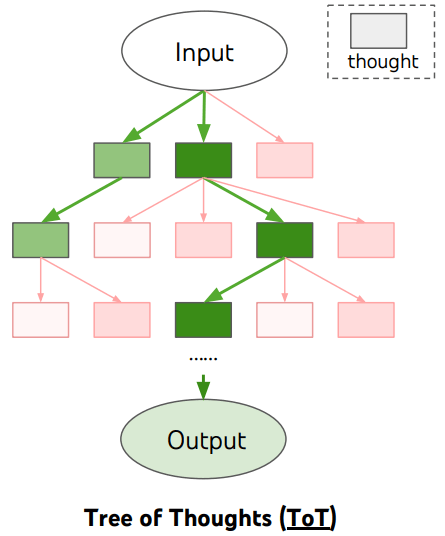
The prompting pattern is Tree of Thoughts (ToT) with Pruning. Instead of one linear reasoning chain, the agent explores three branches simultaneously:
- Branch A – Supply Risk: What if the supplier cannot fulfill? Check lead times, capacity, disruption news.
- Branch B – Demand Risk: What if demand spikes? Run velocity forecast, check promotional calendar, seasonal patterns.
- Branch C – Financial Risk: What if auto-ordering ties up too much capital? Check current PO commitments, payment terms, cash flow impact.
Each branch generates a confidence score. If all three are above 0.85, auto-approve. If any is below 0.6, escalate. If scores conflict (high supply confidence, low demand confidence), the agent generates a partial auto-approval — ordering for the two regions with highest confidence, escalating the third.
The failure mode that almost killed this: in February 2026, a suppliers website changed its HTML structure. The web crawling tool started returning empty results. The agent interpreted no disruption news found as no disruptions exist and auto-approved a $200K order for a supplier that had just announced a 6-week production halt on Twitter. The fix was adding a negative space check — if the crawler returns empty, the agent must verify the crawl succeeded before using the result.
WARNING
The Silent Failure Trap: No data is not no problem. Every workflow that relies on external data sources needs an explicit did the source respond correctly? check before the decision logic runs. This is the most common failure mode I see in production agentic workflows.
Figure 2: Tree of Thoughts pattern for inventory decisions. Three parallel reasoning branches converge on a confidence-weighted decision.
An industrial manufacturer runs a quality monitoring agent on a production line making automotive parts. When defect rates spike to 2.1% against a 0.8% target, the agent has to decide in under 30 seconds: halt production, adjust parameters, or monitor?
The wrong answer costs $50,000 per hour of downtime. The wrong keep running answer costs a recall. The agent uses a Least-to-Most Decomposition pattern: it breaks the decision into sub-problems of increasing complexity, solving each before moving to the next.
STEP 1
Is this an anomaly or a trend?
->
STEP 2
Can parameters fix it?
->
STEP 3
Are customer orders at risk?
->
STEP 4
Decide + Set Watchers
In the actual incident that made me respect this pattern, the 2.1% defect rate appeared after scheduled maintenance. The 90-day trend showed this exact pattern three times before — each time self-correcting within 4 hours. No committed customer orders were due within 8 hours. The agent adjusted two process parameters within their allowed range, set a Watcher Tool to alert if the rate exceeded 3% in the next 2 hours, and logged everything.
A human would have halted the line. The agent was right. The rate dropped to 0.6% within 3 hours. The human would have cost $150,000 in unnecessary downtime.
But here is the constraint that breaks the narrative: this only works because the agent has 18 months of historical data in its episodic memory. A new agent with 3 months of data would have halted the line. The pattern requires sufficient historical context to recognize cyclical patterns. Without that, Least-to-Most decomposition becomes a liability — it gives you false confidence in a shallow analysis.
A SaaS company handling 12,000 support tickets monthly deployed a routing agent that classifies incoming queries and routes them to specialized sub-agents: General, Refund, Technical, or Account Security. The goal was not full automation. It was getting the right ticket to the right handler in under 2 seconds.
The prompting pattern is Agent Routing with Intent Confidence Scoring. The router does not just pick a destination. It generates confidence scores for all four categories and routes only when one score exceeds 0.9. If scores are ambiguous (e.g., General: 0.45, Technical: 0.42), it routes to a Clarification sub-agent that asks one targeted follow-up question.
Routing Prompt Architecture
SYSTEM: You are a support query classifier. Analyze the user's message and score intent across four categories.

OUTPUT_FORMAT:
{
  "general_confidence": float,
  "refund_confidence": float,
  "technical_confidence": float,
  "security_confidence": float,
  "clarification_needed": boolean,
  "follow_up_question": string_or_null
}

RULES:
- If max_confidence gte 0.9: route to that category
- If max_confidence lt 0.9 AND second_highest gt 0.3: clarification_needed = true
- If security_confidence gt 0.5: override and route to security (safety first)
- Never guess. Uncertainty is a valid output.
The 60% escalation reduction came from two sources: faster routing (2 seconds vs. 45 seconds of human triage) and the clarification step catching ambiguous queries before they reached the wrong handler. Previously, a billing issue that is actually a feature request would bounce between Refund and Technical three times before reaching the right person. Now the router asks: Are you looking to dispute a charge, or are you asking about how billing works?
The trade-off: the clarification step adds 8-12 seconds to 15% of tickets. Some users find it annoying. The company A/B tested removing it. Escalations jumped 34%. They kept it.
A B2B software company runs a marketing campaign agent that handles audience segmentation, asset selection, A/B test setup, performance monitoring, and budget reallocation — all in a single autonomous loop. The agent checks campaign performance every 15 minutes and shifts budget from underperforming variants to winners.
The prompting pattern is Reflection-Driven Memory. After each budget shift, the agent stores the decision context in a vector database: what was the performance gap? How much did it shift? What was the result 24 hours later? Before making a new shift, it retrieves the 10 most similar past decisions and uses them to inform the current one.
The agent learned that shifting more than 30% of budget in a single move almost always caused performance degradation in the next 48 hours. It discovered this pattern in week 2. The human team took 8 months to notice.
— Marketing Ops Lead, anonymized SaaS company
The agent’s reflection prompt includes three questions it must answer before every budget decision:
- What did I do in the most similar past situation, and what happened?
- What would make this decision different from that one?
- If I am wrong, what is the maximum loss, and can I reverse it within 2 hours?
This third question — the reversibility check — is what separates this agent from the procurement failure in Case 1. The marketing agent can undo a bad budget shift. The procurement agent cannot undo a bad approval. The prompting architecture must match the reversibility of the domain.
Figure 3: Pattern selection matrix based on 51 enterprise deployments documented by Stanford Digital Economy Lab.
Three months ago, I would have told you to start with a simple single-agent architecture and add complexity only when needed. I was wrong. Here is what changed my mind:
1. Zero-shot prompting for anything that touches money. Frontier models in 2026 (GPT-5, Claude Opus 4-7, Gemini 3) handle vague intent well, which makes zero-shot feel sufficient. It is not. For financial, legal, or safety-critical workflows, you need few-shot examples with edge cases explicitly covered. The model’s training data includes millions of examples of normal but very few of the one weird edge case that costs you $50K.
2. Lets think step by step as a universal trigger. This phrase worked in 2023. In 2026, reasoning-class models have built-in thinking modes that you invoke with think hard or by using the API’s reasoning_effort parameter. The old phrase still works on non-reasoning models, but if you are running production workflows on non-reasoning models in 2026, you have a different problem.
3. Treating prompts as configuration, not code. Prompts need version control, code review, regression testing, and deprecation schedules. The Doctolib team’s monthly prompt audit should be standard practice, not exceptional. A 2026 METR study tracked that frontier models’ reliable task completion time has been doubling roughly every seven months — from 7 minutes in mid-2024 to roughly an hour by early 2025. Your prompts need to keep up with what the models can now do, not what they could do when you wrote them.
After six months of watching workflows ship, break, and ship again, here is the structure I have settled on. It is not elegant. It is survival-oriented.
| Layer | Purpose | What Goes Here | How Often It Breaks |
|---|---|---|---|
| System Prompt | Persona, tone, hard constraints | You are a senior procurement analyst. Never promise refunds. Always cite sources. | Rarely — but when it does, it is catastrophic (wrong persona = wrong decisions) |
| Tool Definitions | What the agent can call, when, and how | Schema for query_contract_terms(), query_renewal_status(), etc. | Monthly — APIs change, schemas drift, auth tokens expire |
| Retrieved Context | Knowledge the model was not trained on | Vector DB passages, recent contract amendments, current pricing | Weekly — data freshness is the #1 source of bad decisions |
| Conversation History | Multi-turn coherence | Previous agent actions, user corrections, decision rationale | Per-session — context windows fill up, old turns get compressed away |
| User Message | The actual task | Evaluate invoice #2847 for vendor ACME Corp. | Per-request — this is the only layer users should touch |
| Output Format | Structured response for downstream systems | JSON schema with decision, confidence, reasoning_trace, citations | Per-deployment — downstream systems depend on this structure |
The most important layer? Retrieved Context. This is where most workflows fail. Not because the model is wrong, but because the model is answering based on training data from 18 months ago instead of the contract amendment from last week. If you do one thing after reading this, audit your RAG pipeline. Check that your vector database actually contains the documents you think it does, that the chunking strategy preserves semantic boundaries, and that your embedding model has not been deprecated.
Every workflow in this post works. I have seen them work. I have also seen them fail, and the pattern of failure is consistent: the organization treats the agent as a tool, not as a teammate.
The 60% of enterprises succeeding with agentic AI in 2026 share one trait: they invested in team capacity alongside technology. The humans who oversee these agents understand what the agents can and cannot do. They know when to override. They know when the agent’s confidence score is lying. They treat the agent’s reasoning trace as a conversation starter, not a final answer.
The most successful AI transformations begin with a deep understanding of the humans they serve. The technology enables the outcome; the humans determine if that outcome has any lasting value.
— Stanford Digital Economy Lab, Enterprise AI Playbook, April 2026
Here is what nobody tells you: the best prompting pattern is not a pattern at all. It is a human who knows the domain well enough to recognize when the pattern is wrong. The Chain-of-Knowledge pattern is useless if nobody knows what knowledge matters. The Tree of Thoughts pattern is useless if nobody knows which branches to prune. The Reflection-Driven Memory pattern is useless if nobody knows which past decisions were actually good.
Everything I just said will be outdated by Q1 2027. Models will get better. New patterns will emerge. The failure modes will evolve. The one thing that will not change: the gap between organizations that treat AI as infrastructure and those that treat it as magic will keep widening.
If you are building AI workflows right now, here is your homework: pick one workflow. Map every decision point. For each point, ask: What would make a human with 5 years of experience disagree with the agent? Build that disagreement into your prompt. Because the day the agent disagrees with experience is the day you find out if your architecture is real or theater.
And if you are looking for more on building prompts that survive production, I wrote about the six-layer prompt architecture we use for all client deployments. It is not revolutionary. It is just what works after you have cleaned up enough messes.