Open-Source vs. Proprietary AI Prompt Tools: What They Really Cost You

Open-Source vs. Proprietary LLMOps Tools: What It Actually Costs in 2026
Version 4 · September 17, 2026 · All pricing re-verified against live vendor pages on this date
Bottom line up front:
- For a small team (under ~10 engineers), managed cloud plans run $29–$250/mo — and self-hosting is not cheaper. It’s a sovereignty decision that costs extra. Buy it knowingly, or don’t buy it.
- Whether self-hosting is sane depends mostly on one variable: does your team already run stateful infrastructure (Postgres, Redis, container deployments) in production? That question predicts success better than any feature comparison.
- The only hard constraint that settles the debate is regulatory: if prompts/traces legally cannot leave your infrastructure, only fully self-hostable platforms qualify.
- Every other difference — polish, eval UX, support — is testable in a two-hour trial. This article ends with the protocol; run it instead of trusting anyone’s matrix, including ours.
What changed in version 4
Version 3 was too long for its information content, and some of its scaffolding disguised guesses as measurements. Concretely:
- Length cut roughly in half. Four sections restated the same conclusion; they are now one decision section. The meta-discussion of our own rigor is compressed to a single disclosure block.
- Langfuse usage math corrected. V3 cited $0.000008/event from an AWS Marketplace contract listing. The live pricing page shows $8 per 100k units ($0.00008/unit) — a 10× discrepancy that mattered precisely because this article’s brand is checkable numbers. All break-even math below uses the pricing-page figure.
- Estimate ranges replaced with two worked scenarios. V3’s “1–20 hours initial, 0.5–8 h/month ongoing” couldn’t be wrong, which meant it couldn’t inform. V4 commits to specific illustrative assumptions per regime and gives you the formula to substitute your own numbers. Committing to wrong-but-checkable beats unfalsifiable.
- Agenta pricing fixed. V3 said “Pro $50/mo, free 10k traces/mo” sourced to Agenta’s own blog (a vendor citing itself, labeled REPORTED — a labeling error). Live pricing today: Hobby $0 (5,000 agent runs/mo, 2 seats) · Pro $29/mo · Business $299/mo.
- PromptLayer coverage upgraded from a dismissive row to real analysis. This also surfaced a V3 error: PromptLayer’s Enterprise tier does offer a self-hosted managed single-tenant option. V3 said “no self-hosting,” full stop. Wrong.
- Maxim AI given honest treatment instead of title decoration.
The landscape in 90 seconds
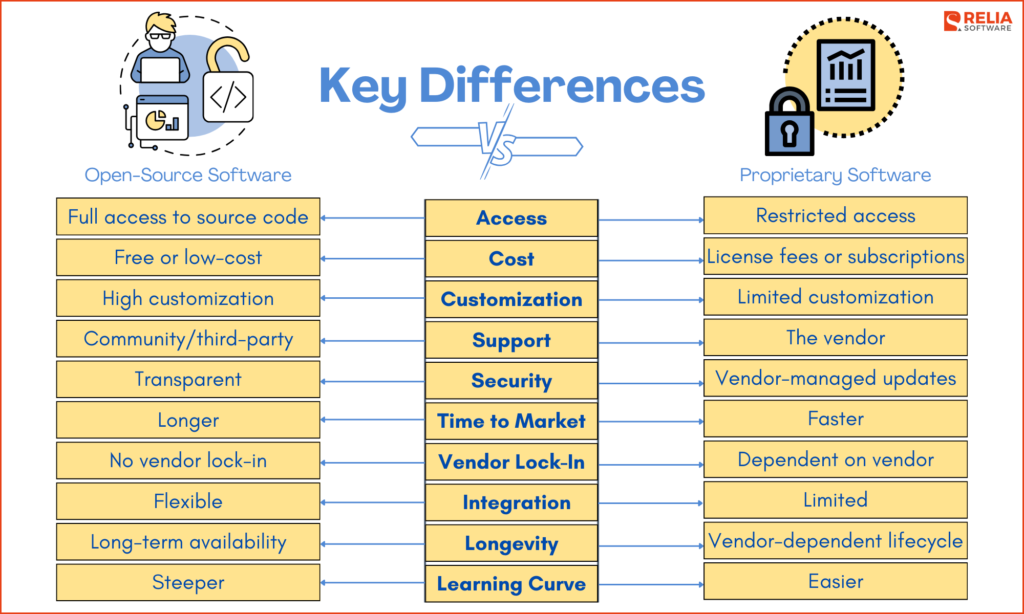
The category has split into self-hostable platforms (Langfuse, Opik, Arize Phoenix, Helicone, Lunary, Agenta) and managed closed-source platforms (LangSmith, PromptLayer, Braintrust, Maxim AI). Licenses, because “open source” does loose work in this category:
| Tool | License | Precision note |
|---|---|---|
| Langfuse | MIT core + commercial add-ons | Strongest promise in the table; in-UI model evals are cloud-only |
| Opik | Apache 2.0 | Fully open |
| Arize Phoenix | Elastic License 2.0 | Source-available, not OSI open — fine internally, constrains building a competing hosted service on top |
| Helicone | Apache 2.0 | Fully open; gateway-first design |
| Agenta | MIT | Fully open |
| Lunary | Apache 2.0 core | Open-core: some compliance features (e.g., PII masking) are Enterprise-licensed — treat as open-core, not open source |
| LangSmith / PromptLayer / Braintrust / Maxim | Proprietary | Braintrust and PromptLayer offer partial/Enterprise deployment options (details below) |
The acquisition that should recalibrate your instincts: ClickHouse acquired Langfuse in January 2026 (confirmed by the ClickHouse blog, the Langfuse announcement, and Reuters, alongside ClickHouse’s $400M Series D at a $15B valuation). The lesson is not “open source is safe” or “open source is doomed” — it’s that open source buys exactly one thing: the right to run and fork the code regardless of who owns the company. Ask that question about every tool on this list, open or closed: what happens to my data and workflow on acquisition, shutdown, or repricing? The license is the only guarantee; the roadmap never is.
The price ladder, verified
Spot-checked against live pricing pages on September 17, 2026. Labels: ✅ verified against the vendor’s own page · 🏷️ vendor-published but self-interested · 📰 secondary source.
| Vendor | Free tier | First paid rung | Mid tier | Enterprise / usage |
|---|---|---|---|---|
| Langfuse Cloud ✅ | Hobby $0, no card | Core $29/mo | Pro $199/mo (compliance controls) | $2,499+/mo floor; usage $8 per 100k units (~$0.00008/unit) |
| LangSmith ✅ | 5k traces/mo | Plus $39/seat/mo (4 seats = $156/mo) | — | Custom; self-host only on Enterprise |
| Braintrust ✅ | Limited free | Pro $249/mo | — | Custom; hybrid data-plane self-host, Enterprise only |
| PromptLayer ✅ | $0: 5 users, 2.5k requests/mo | Pro $49/mo | Team $500/mo | Custom; includes self-hosted managed single-tenant; overage $0.003/txn (Pro) |
| Agenta ✅ | $0: 5k agent runs/mo, 2 seats | Pro $29/mo | Business $299/mo | Custom |
| Maxim AI 📰 | 10k logs/mo | from $29/seat/mo | — | Custom (per Braintrust’s 2026 comparison — secondary, label accordingly) |
| Lunary 🏷️ | 10k events/mo | Team $20/seat/mo | — | Vendor-authored comparisons only; re-verify before relying on it |
Two structural notes the one-line summaries hide:
- Self-hosting is never “a Docker container.” Langfuse’s production shape is Postgres + ClickHouse + Redis + object storage, with official K8s/AWS/GCP guides. Helicone documents five services. Budget for a small stateful stack you patch, back up, and upgrade — not a $5 VPS side quest.
- “Self-hosted” means three different things. Full self-host (Langfuse, Opik, Phoenix, Helicone, Agenta): UI + auth + data, any tier. Hybrid (Braintrust Enterprise): data plane in your cloud via Terraform; UI, auth, and metadata stay on Braintrust’s servers. Managed single-tenant (PromptLayer Enterprise): PromptLayer runs a dedicated instance for you. “Payloads never leave our VPC”: all three can qualify. “Nothing touches a vendor’s cloud”: only the first group.
The worked scenario
Setup: 4 engineers, one production AI feature, ~50,000 traced LLM calls/month, prompts changed weekly, one PM reviewing prompts occasionally.
Managed options (4 seats, verified base prices): Langfuse Core $29 · Langfuse Pro $199 · LangSmith Plus $156 · Agenta Pro $29 · PromptLayer Pro $49 · Braintrust Pro $249. Nothing here approaches the cost of a part-time engineer. This is the anchor correction that changed V3’s conclusion: the previous version compared self-hosting against a range anchored on Langfuse’s $2,499 Enterprise floor — a tier this team would never buy.
Self-hosting, two regimes. The answer depends on one variable, so we commit to two sets of explicit assumptions instead of one unfalsifiable range. Both scenarios are illustrative — substitute your own numbers using the formula at the end.
Regime A — you already run this infrastructure. A platform team maintains Postgres/Redis/containers for other services. Adding one more stateful stack is marginal work.
| Line | Assumption | Monthly |
|---|---|---|
| Infra | Managed Postgres + object storage + monitoring, modest volume | ~$200 |
| Time | 3 h setup (amortized over 24 mo ≈ $9/mo) + 1 h/mo upkeep | ~$100 |
| All-in | ~$300/mo |
At ~$300/mo, self-hosting overlaps the managed mid-tiers. It’s a defensible economic choice and sovereignty comes nearly free. Verdict: reasonable.
Regime B — nobody here has run a stateful stack in production. “We should learn Kubernetes” has been on the roadmap for a year.
| Line | Assumption | Monthly |
|---|---|---|
| Infra | Same stack, plus backups and the mistakes you pay for once | ~$250 |
| Time | 16 h initial setup (amortized over 24 mo ≈ $48/mo) + 4 h/mo upkeep | ~$430 |
| All-in | ~$680/mo |
At ~$680/mo, self-hosting costs more than every managed tier this team would consider — roughly 2× the most expensive relevant option (Braintrust Pro). The premium buys sovereignty. That may be worth it; it should be bought knowingly. Verdict: you’re paying ~$430/mo to own a yak.
Which regime are you in? Has someone on your team upgraded a stateful multi-service deployment in the last six months without drama? Regime A. Has the Docker compose file for this tool become someone’s orphaned side project? Regime B. The honest test takes ten minutes and beats any table in this article.
Where the math flips: at roughly $300+/mo of usage-based overage — around 4M units/month at $0.00008/unit — self-hosted economics start winning in Regime A, where infra is already amortized. (🧮 illustrative; compute your own break-even with the formula.) In Regime B the engineer time swamps the unit-price difference at any realistic volume. Regulatory constraint overrides everything: if traces legally cannot reach a third party, full self-host is the only qualifying option — though note Langfuse Pro ($199/mo), PromptLayer Enterprise (managed single-tenant), and Braintrust’s hybrid data plane each satisfy some compliance postures short of it.
The formula, so you never need our numbers again:
monthly self-host cost = infra + (setup_hours ÷ 24 + monthly_upkeep_hours) × your loaded hourly rate
Migration cost: budget 1–5 engineering days to re-instrument a medium codebase. OpenTelemetry-first instrumentation pays the low end; scattered vendor-specific SDK calls pay the high end. This is a structured guess, not a measurement — your exit-drill result (below) is the real number.
Decision rules
Self-host (Langfuse / Opik / Phoenix / Helicone / Agenta) when:
- Regulation forbids third-party trace storage (healthcare, legal, finance) — the only non-negotiable case
- You’re Regime A: a platform engineer owns upkeep as part of an existing job
- Long-term ownership of prompt/eval data outweighs this quarter’s shipping speed — the ClickHouse acquisition is the live case study for why this matters
- You’re building a product on top of the platform (license then matters: MIT/Apache yes, ELv2/proprietary constrained)
Buy managed when:
- Under ~10 engineers and every hour matters — at this scale the fee is usually smaller than the hidden time cost, unless Regime A
- Nobody wants to own infrastructure — say this out loud in the meeting; it is a real answer
- Framework coupling: committed to LangChain/LangGraph → LangSmith’s tight integration is worth real money; fighting it with a generic tool adds friction for nothing
- Cross-functional UX today: PMs editing prompts without touching code is a product-design investment; buying it is cheaper than building it on an OSS base
- Compliance means “data in our cloud,” not “nothing in a vendor’s cloud” → Braintrust hybrid or PromptLayer managed single-tenant qualify
Near-even split? Start on the free/hobby tier of whichever managed tool fits your framework, run the trial protocol before the first renewal, revisit self-hosting when the bill — not the ideology — justifies it.
The two vendors V3 shortchanged
PromptLayer is not “the SaaS-only one” — that was V3’s error and it’s the kind of error this article exists to catch. Reality: Pro at $49/mo is the cheapest serious paid tier in the proprietary column, and Enterprise includes a self-hosted managed single-tenant deployment, which collapses the binary this article is built on. Its genuine tradeoffs: no full self-host below Enterprise, proprietary SDK rather than OTel-native ingestion, and a 9-person company (per PitchBook) whose $4.8M seed-stage scale is a real, if unfashionable, vendor-risk consideration. For a small team wanting a visual, PM-friendly prompt workflow with minimal ops, it’s arguably the most under-priced option on the ladder.
Maxim AI deserves its title billing or none. What the secondary sources show: evaluation breadth (deterministic, statistical, LLM-as-judge, human review in one system), simulation workflows, and reviewer collaboration — aimed at cross-functional teams running multi-step agents. Free at 10k logs/mo, paid from $29/seat/mo (📰 secondary source — verify on their page before quoting it anywhere). The honest caveat: a smaller ecosystem and track record than the incumbents, and we have no first-party confirmation of the pricing.
What we did not test
No benchmark, no hands-on. Specifically:
- Eval-workflow ergonomics and “PM-friendliness” — inference from docs and demos, not experience. Our matrix’s judgment row was the least reliable thing in V3 and is gone entirely in V4 precisely because we can’t defend it.
- Support SLA reality (contracts ≠ observed performance).
- Migration friction beyond the 1–5 day structured guess.
- Langfuse’s post-acquisition roadmap. The MIT core is guaranteed; the pace of it is not.
- Vendor customer-name marketing (“Notion and Ramp run Braintrust’s hybrid deployment” appears only ever as a vendor-blog-sourced claim — we found no independent corroboration).
The 2-hour trial protocol
The substitute for our missing benchmark, and better than any article’s opinion:
- Setup (30 min). Pick your top two candidates. Free tier or
docker compose upeach. Instrument the same 20-line toy endpoint. - Eval loop (30 min). 10 production-shaped examples, one model-based eval, two prompt variants. Score: doable from docs alone? Would a PM interpret the result?
- Non-engineer handoff (20 min). A PM edits a prompt label and finds last week’s traces, unaided, timed. >10 minutes is a data point against “PM-friendly.”
- Exit drill (20 min). Export datasets and prompts to CSV/JSON. What didn’t export cleanly is your measured migration cost — it replaces our guess.
- Kill criterion (20 min). Self-host candidate took >45 min to stand up from docs alone? That’s Regime B evidence. Record it.
Disclosure and evidence
BestPrompt.art sells prompt templates; no vendor here pays, advertises, or previews this content. Marketplace templates target all major frameworks — including LangChain/LangSmith’s large user base — a mild indirect incentive we can’t remove, only disclose. Our defense is procedural and visible: sourced labels applied symmetrically (we corrected numbers for the vendors this article leans toward and against), dated corrections, and a stated verification limit — one editor, one session, September 17, 2026. Spot checks are not audits; re-verify any number that drives a purchase, and note that pricing older than ~90 days in the log below should be rechecked.
| Claim | Source | Label |
|---|---|---|
| ClickHouse–Langfuse acquisition, $400M Series D, $15B valuation | ClickHouse blog; Langfuse announcement; Reuters | ✅ |
| Langfuse pricing incl. $8/100k units | langfuse.com/pricing | ✅ |
| LangSmith 5k free traces; $39/seat | langchain.com pricing/docs | ✅ |
| Braintrust Pro $249; hybrid data-plane self-host | braintrust.dev docs | ✅ |
| PromptLayer $0/$49/$500; Enterprise self-hosted single-tenant; $0.003/txn overage; $4.8M seed, ~9 employees | promptlayer.com/pricing; PitchBook | ✅ |
| Agenta $0/$29/$299, 5k runs free tier | agenta.ai/pricing | ✅ |
| Maxim from $29/seat, 10k free logs | Braintrust’s 2026 comparison | 📰 |
| Lunary Team $20/seat | Vendor-authored comparisons only | 🏷️ |
| Infra/time/migration figures | Stated assumptions + formula for substitution | 🧮 |
Corrections: v4 (Sep 17, 2026) — Langfuse unit price corrected 10× (AWS contract listing → pricing page); Agenta re-verified directly ($50 blog figure → $29 live); PromptLayer “no self-host” corrected (Enterprise single-tenant exists); estimate ranges replaced with committed per-regime scenarios; article cut ~50% with four redundant sections merged; Agenta self-citation re-graded. V3 (Sep 17, 2026) — corrected Enterprise-floor anchoring that flipped the small-team conclusion; removed IBM ROI statistic; re-graded vendor customer claims. Spot an error? Tell us; we verify, fix, and date it.
Confirm every number on the vendor’s own page before purchase — including, especially, ours.