Generative AI Prompts for Education:
What Actually Works in 2025
Student adoption leaped from 66% to 92% in a single year. Yet most educators still write prompts so vague the output is useless. Here’s the research gap — and how to close it.
The short version: Vague prompts (“explain photosynthesis”) produce vague output. Research-backed prompts specify role, audience level, output format, ethical constraints, and iteration trigger. A June 2025 Harvard RCT (N=194) found that well-engineered AI tutoring produced more than twice the learning gains of active-learning classrooms — in 20% less time. The difference wasn’t which AI was used. It was how the prompt was built.
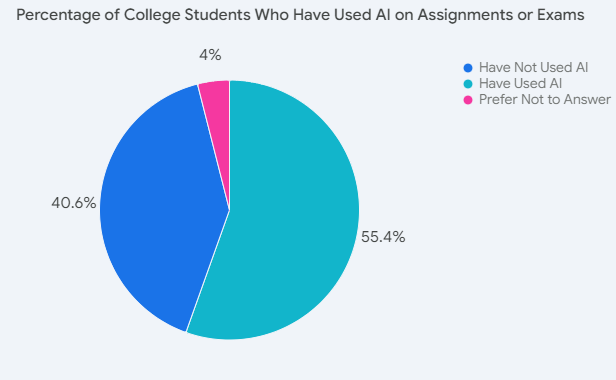
Something dramatic happened in UK higher education between 2024 and 2025. In a single academic year, the share of undergraduates using generative AI for assessments jumped from 53% to 88%. Overall tool usage climbed from 66% to 92%. HEPI’s policy manager Josh Freeman called it “almost unheard of to see changes in behaviour as large as this in just 12 months.” Similar patterns appeared across the Atlantic: College Board Research in October 2025 found that 84% of US high school students had used AI tools for school-related tasks.
The adoption numbers mask a quieter crisis. Turnitin’s 2025 research found that 50% of students want to use AI effectively in their studies but don’t know how to get maximum benefit. Meanwhile, only 32% of teachers had a clear AI usage policy as of the 2024–2025 school year, according to EdWeek. Students are adopting tools their institutions haven’t caught up to. That gap lives primarily in one place: prompt quality.
The Prompt Is the Pedagogy
In June 2025, Harvard physicists Greg Kestin, Kelly Miller, and colleagues published what may be the most methodologically rigorous test of AI tutoring yet conducted. Their randomized controlled trial in Scientific Reports (N=194) compared a custom-engineered AI tutor against experienced instructors running active-learning sessions — not passive lectures, but peer instruction, small-group activities, and real-time feedback. This is the gold standard of in-person teaching.
The AI tutor won. Students using it learned more than twice as much in 20% less time, and reported higher engagement and motivation. The critical detail: the tutor wasn’t just ChatGPT with a chat box. The researchers built it on GPT-4 using targeted, content-rich prompt engineering informed by seven pedagogical best-practice principles — managing cognitive load, scaffolding difficulty, encouraging a growth mindset, and prompting students to self-explain rather than just receive answers.
“The question is no longer whether these tools can help students, but how educators should reposition themselves within this altered ecology.”
— ERCT Analysis of Kestin et al., 2025Important boundary conditions apply. The Harvard study covered two undergraduate physics topics over two weeks, at a single elite institution. Independent reviewers note the study has not yet been replicated, and the researchers themselves caution that complex synthesis tasks and higher-order critical thinking may not show the same advantage. The finding should be read as: when the underlying prompt structure is pedagogically sound, AI tutoring is surprisingly powerful — not as a universal replacement for human instruction.
The practical takeaway isn’t “replace teachers.” It’s simpler: prompt engineering is not a technical afterthought. It is the pedagogy itself.
Why Most Educational Prompts Underdeliver
Most educators writing AI prompts for the first time do what feels intuitive: they type what they’d type into a search engine. “Explain photosynthesis.” “Write a quiz on the Civil War.” These aren’t wrong — they’ll produce something — but they systematically fail to give the model the information it needs to generate pedagogically useful output.
A 2025 peer-reviewed study in MDPI’s Education Sciences reviewed 166 studies on prompt engineering in educational contexts and identified four recurring failure modes: absence of learner context (the AI doesn’t know who it’s talking to), missing output format specification (the AI produces an essay when you wanted bullet points), no ethical constraint (the AI uses culturally exclusive examples), and no iteration trigger (educators accept the first output instead of refining it).
Compare these two approaches side by side:
The engineered version specifies role, audience level, reading level, pedagogical structure, format, ethical constraint, and an explicit iteration signal — all before the model generates a word.
The difference is not complexity for its own sake. Each element removes a degree of ambiguity that would otherwise force the model to make a guess — usually a wrong one.
A Framework That Actually Comes from Educators
Dr. Jiyeon Park of CIDDL, whose work on prompt engineering for special education teachers was published in the Journal of Special Education Technology in 2025, developed what she calls the IDEA framework. It’s built specifically around the messiness of classroom contexts where learner needs are heterogeneous and outcomes need to be measurable.
The framework’s real value is in the “E” step — iteration — which most educators skip. A prompt is not a command. It’s the start of a refinement conversation with the model.
The August 2025 research in Theory Into Practice adds a specific technique worth adopting: chain-of-thought prompting. Instead of asking for a final answer, you instruct the model to show its reasoning step by step — then you can catch where the reasoning breaks down before the student ever sees the output.
Prompt Examples That Work: Six Use Cases
What follows are engineered prompts for the tasks educators actually reach for most often. According to a 2026 survey compiled by Programs.com, these are the top five educator AI use cases: research assistance (44%), lesson planning (38%), information summarization (38%), assessment and quiz generation (37%), and student communication drafting. I’ve added a sixth — differentiated instruction — because it’s where AI genuinely outperforms traditional planning time.
The three-version structure eliminates one of the most time-consuming parts of lesson planning. OECD’s 2023 data (cited in eSchoolNews, June 2025) found teachers using AI for instructional planning saved up to 30% of prep time.
The chain-of-thought instruction forces the model to reason about pedagogical alignment before generating content — making it far easier to catch misaligned questions before they reach students.
This structure directly mirrors the seven principles used in the Harvard tutoring study: Socratic guidance, scaffolded difficulty, growth-mindset framing, and specific (not generic) feedback.
The ethics constraint at the end is essential. Models have a documented tendency to oversimplify content for students with disabilities, removing intellectual challenge alongside linguistic complexity.
Constraining the output to 200 words and banning grade assignment keeps the teacher — not the AI — in the evaluative role. The model drafts; the teacher reviews, adjusts, and delivers.
Comparing Tools: What Each Model Does Best in Education
Tool choice matters less than prompt quality — but it’s not irrelevant. Models differ in how they handle pedagogical constraints, how willing they are to push back when a prompt is unclear, and how they handle sensitive contexts like student accommodations or academic integrity discussions.
| Tool | Pricing (2025) | Best Educational Use | Key Limitation | Prompt-Following Reliability |
|---|---|---|---|---|
| ChatGPT (GPT-4o) | Free / Plus $20/mo | Assessment generation, broad content drafting, multimodal (image input for science) | Can ignore complex format constraints on first pass; hallucination risk on specific facts | High on simple prompts; Medium on multi-constraint |
| Claude (Anthropic) | Free / Pro $20/mo | Long-context document analysis, nuanced ethical instructions, IEP support, detailed rubric alignment | Slower on heavy computational tasks; more conservative on some creative requests | Very high — follows multi-constraint prompts reliably |
| Google Gemini | Free / Advanced $20/mo | Multimodal (image, audio, video analysis), Google Workspace integration, research tasks | Less nuanced on pedagogical tone constraints; variable on Bloom’s taxonomy alignment | High on factual tasks; Medium on tone-specific educational prompts |
| Khanmigo (Khan Academy) | Included with Khan Academy | Built-in Socratic tutoring architecture; math and science step-by-step guidance; already pedagogically engineered | Limited to Khan Academy’s subject coverage; not adaptable for custom curricula | Very high — pedagogically constrained by design |
| MagicSchool AI | Free tier; Pro $13/mo | Pre-built educator workflows (differentiation, IEP, rubric creation); reduces prompt engineering burden | Less flexible for custom use cases not covered by templates | High within templates; Low for custom prompts |
Khanmigo and MagicSchool AI are already prompt-engineered for education. If you use them, you’re using the template, not writing the prompt. For maximum control over pedagogy — differentiation, specific learning objectives, accessibility constraints — building your own prompts in Claude or ChatGPT gives more flexibility.
What Doesn’t Work — and Where It Can Go Wrong
The Harvard tutoring result is real. So is a competing study. In a 2025 paper by Bastani et al. cited in Google’s LearnLM RCT, generative AI without pedagogical guardrails caused measurable harm to high school math learning outcomes. Students who had unrestricted access to AI for homework showed lower skill retention on subsequent unassisted tests. The difference between the two findings is the same variable the Harvard team controlled for: the prompt structure.
In assessments where AI generates unedited written submissions, HEPI 2025 data shows approximately 6% of students submitted AI-generated content without editing. At the institutional level, Turnitin reports AI misconduct investigations at 5.1 per 1,000 students — low in absolute terms, but rising.
Resolution status: Ongoing. UNESCO’s 2025 survey of 450+ schools and universities found only 10% have established usage guidelines. The technology has outrun institutional governance by two to three academic years.
Educator countermeasure: Design assessments that require students to document their prompts alongside the AI output, then explain how they iterated and why. This shifts the evaluatable skill from “did they use AI” to “how well did they direct AI” — a genuinely future-relevant competency.
A separate risk sits with skill atrophy. A June 2025 preprint by Kosmyna et al. at MIT Media Lab (54 participants, not yet peer-replicated as of April 2026) found reduced neural connectivity in essay-writing tasks when participants used AI assistance compared to unassisted writing. Whether this translates to meaningful long-term cognitive impact in educational contexts is an open empirical question — the sample is small, the task narrow, and no longitudinal data exists. But it suggests the design principle matters: AI prompts in education should scaffold to independence, not replace independent practice permanently.
Multiple threads on r/Teachers and r/highereducation report student over-reliance leading to difficulty completing basic tasks without AI access during timed assessments. These reports have not been measured or verified by named review outlets as of April 2026. They are directionally consistent with the Bastani et al. (2025) experimental finding, but should be treated as illustrative rather than confirmed.
Where This Is Heading: 2025–2027
AI tutoring is getting cheaper faster than institutions can adapt
The AI education market sat at approximately $7.05 billion in 2025 and is projected to reach $136.79 billion by 2035 (Precedence Research, February 2026 — a forecast, not a confirmed figure). The near-term pressure isn’t the size of the market; it’s the cost trajectory. Khanmigo, backed by Khan Academy’s nonprofit structure, offers Socratic AI tutoring essentially free to students. Google’s LearnLM (tested in UK classrooms in a 2025 RCT across five schools) demonstrated that supervised AI tutoring reached human-tutor quality on mathematics tasks, with expert tutors approving 76.4% of LearnLM’s drafted messages with zero or minimal edits. Both represent “good enough” pedagogical AI entering the market at near-zero marginal cost per student interaction — a direct competitive pressure on paid tutoring services and a structural shift for under-resourced schools that previously couldn’t afford one-on-one support.
Agentic AI is about to change what prompting even means
The prompts described in this article are single-turn: you write, the model responds. The next structural shift is multi-turn agentic AI — systems that maintain context across an entire semester, adapt to a student’s evolving knowledge state, and proactively surface gaps without being asked. Microsoft announced $4 billion in AI education investment in July 2025, specifically targeting community colleges and nonprofits through its Microsoft Elevate Academy — a signal that agentic tools are being built for educational deployment at scale. Gartner forecasts that AI agents will drive 50% of organizational decisions by 2027 (a forecast, not verified outcome). The implication for educators: the prompt-engineering skills you build today are the foundation for orchestrating these more complex systems tomorrow. The underlying principles — specificity, role definition, iteration, ethical constraint — don’t change. Only the scope does.
The governance gap will close — probably unevenly
Only 10% of schools had AI usage guidelines as of UNESCO’s 2025 survey. That number will change, but 58% of adults and 56% of AI experts surveyed by Pew Research worried the US government won’t regulate AI far enough — not that it will overreach. The practical consequence: expect institutional AI policies to arrive before regulatory ones, and to vary significantly by district and country. HEPI recommends institutions stress-test every assessment to verify it can’t be completed trivially by AI — a significant undertaking that will reshape course design more than any single tool adoption.
The Prompt Closes the Gap
The real tension in AI and education isn’t whether students will use it — they already are, at rates no institution predicted two years ago. It’s whether the prompts shaping those interactions will be pedagogically intentional or accidentally designed. The Harvard RCT demonstrates that intentional prompt design produces dramatically better learning outcomes than ambient AI use. The Bastani et al. study demonstrates that unstructured AI use can actively harm them.
The strategic question isn’t “should we use AI in the classroom?” That’s settled. It’s “who designs the prompts, with what pedagogical framework, and toward what definition of learning success?” Right now, in most institutions, the student is designing the prompt — alone, without guidance, in the five minutes before a deadline. The gap isn’t in the tools. It’s in the training.
Educators who learn to build the frameworks described here — IDEA, CLEAR, chain-of-thought scaffolding — don’t surrender pedagogical control to AI. They exercise it more precisely than traditional lesson planning ever allowed.
Quick Reference: Prompt Structure Checklist
| Element | What to Specify | Example | If Missing |
|---|---|---|---|
| Persona | Who is the AI playing? | “You are a 9th-grade biology teacher…” | Model defaults to generic assistant tone — too broad for classroom use |
| Audience | Who is the output for? Reading level, prior knowledge, any accommodations? | “…for students reading 2 years below grade level with strong visual learning preferences” | Model assumes typical adult with no constraints — wrong for almost every K-12 context |
| Task + verb | What action? (Generate, evaluate, adapt, compare, draft) | “Generate three versions of…” | Model may explain instead of produce, or produce instead of evaluate |
| Format | Exact structure of output | “Format: intro → 3 concepts → 3 check questions → exit ticket” | Model produces a wall of text; teacher spends 15 minutes reformatting |
| Constraints | What to avoid, length limits, style rules | “Do not use idioms; max 100 words per section” | Output includes inappropriate examples, exceeds time/space, uses wrong tone |
| Ethics cue | Inclusivity requirements, bias flags | “Avoid examples that assume suburban geography only” | Output reflects model’s training data biases — often urban or suburban US defaults |
| Iteration trigger | Tell the model when to flag instead of guess | “Flag any claim requiring local geographic knowledge” | Model guesses wrong and you don’t catch it until students read it |
This article draws on peer-reviewed research (HEPI 2025, Scientific Reports 2025, MDPI Education Sciences 2025, Theory Into Practice 2025), large-scale surveys (College Board, Microsoft, Turnitin, Originality.ai, Programs.com), and official institutional reports (UNESCO, OECD, Khan Academy). All statistics are dated and linked to sources. Forecasts are labeled as such. Community reports are isolated in a clearly labeled section.
AI Prompts in Education 2025: Latest Tools & Strategies for Teacher
15 ChatGPT Prompts For Productivity On A Whole New Level: Your Secret Weapon to Crushing Goals in 2025
Game-Changing AI Prompts for Teachers in 2025: Unlocking the Future
Improve AI Outputs Using Advanced Prompt Techniques in 2025
Top Free AI Tools to Start Using in 2025
5 Best AI Case Studies in Education That Will Blow Your Mind