A Prompt Is Not a Description. It Is an Architecture.

BestPrompt.art — June 2026
Everyone told you prompt engineering was about finding the right adjectives. That framing produced mediocre images for three years. Here is what is actually happening in 2026 — and what the best visual creators understand that most guides skip.
Prompt engineering for AI art is commonly defined as “the skill of describing images in detail so the AI generates what you want.” That is the tutorial definition. The operational definition — the one that separates people who build reliable visual workflows from people who roll the dice — is something closer to: the practice of understanding what a specific model can and cannot render given its training distribution, then designing inputs that exploit the model’s strengths while routing around its blind spots.
Those are not the same thing. The first version produces articles with tips like “add dramatic lighting” and “specify the camera lens.” The second version produces consistent outputs at scale — and recognizes when the model is confabulating detail that was never going to appear in the final pixel grid.
V8.1
Midjourney’s current stable model as of April 30, 2026 — native 2K output, 3× faster HD rendering
95%
Prompt adherence rate for FLUX 2 Pro on complex compositional prompts (aitoolranked.com, Mar 2026)
0
AI-only works eligible for US copyright after Supreme Court declined to hear Thaler v. Perlmutter, March 2, 2026
47+
Distinct image and video models with meaningfully different prompting requirements in active use (Cliprise, May 2026)
For about eighteen months — late 2022 through mid-2024 — prompt quality was genuinely the binding constraint on AI image output. Write a richer prompt, get a richer image. That relationship held because models were bad enough that their failure modes were obvious and correctable through language alone.
That era ended. The models improved faster than most prompt guides updated, and the failure modes shifted. The ceiling on what Midjourney V8.1 or FLUX 2 Pro can render from a well-constructed prompt is high enough that the binding constraint has moved upstream — to model selection — and downstream — to iteration workflow.
APRIL 2022
Midjourney public beta — prompts were everything
Discord-only, V1 model. Prompt length and specificity had near-linear impact on output. Everyone wrote essays.
JANUARY–FEBRUARY 2025
Midjourney V7 ships — anatomy fixed, context understood
Rebuilt sampler stack finally addressed chronic hand-anatomy failures. Omni Reference launched style/character transfer.
Draft Mode cuts iteration time to under 30 seconds. Prompt length started mattering less than prompt structure.
MAY 2025
FLUX Kontext series — the editing paradigm enters
Black Forest Labs ships FLUX Kontext with in-context editing, Ultra (4MP), and Raw modes. The concept of “prompting to modify” rather than “prompting to generate” becomes a distinct discipline.
MARCH 17, 2026
Midjourney V8 Alpha — 5× faster, native 2K
Fully rewritten codebase. The most significant architecture change since V5’s 2023 photorealism breakthrough. Complex multi-element prompts — previously unreliable — start landing consistently.
APRIL 30, 2026
V8.1 ships — the current standard
Native HD 2K images without a separate upscale step. 3× faster HD mode. 25% cheaper standard generation. Anatomy coherence described by multiple reviewers as the jump from a DSLR to medium-format camera.
The practical consequence: a prompt that worked in 2024 may now be under-specified for what V8.1 can render, or — more commonly — over-specified in ways that fight the model’s own aesthetic judgments. V8.1 has strong opinions. Feeding it a 300-word prompt does not produce a 300-word result; it produces whatever the model decided was the most coherent interpretation of your instruction, with the rest quietly ignored.
Field Note
The prompting principle that changed my work in 2025: deliberate underspecification. Leave the model room in the dimensions it handles well (color grading, atmospheric detail, micro-texture), and tighten only where it historically fails (spatial relationships, text rendering, identity consistency).
By mid-2026, there are over 47 image and video models with meaningfully different prompting requirements. Most prompt guides treat them as interchangeable — “use these tips on any AI image generator.” That advice produces average results on every tool.
The practical landscape has consolidated into a few distinct prompt dialects:
Midjourney V8.1
PROPRIETARY
Short, high-signal phrases. Reference images matter more than verbal description for style. Let the model’s aesthetic engine run — fighting it produces mud. Omni Reference handles character consistency better than descriptive text.
✦Cinematic, editorial, mood
FLUX 2 Pro
BLACK FOREST LABS
95% prompt adherence on complex compositional instructions. Text rendering is now the strongest of any major model. Dense, multi-element prompts reward patience. Photorealism at 4MP (Ultra mode) without an upscale step.
✦Technical, product, typography
Stable Diffusion 4
OPEN WEIGHTS
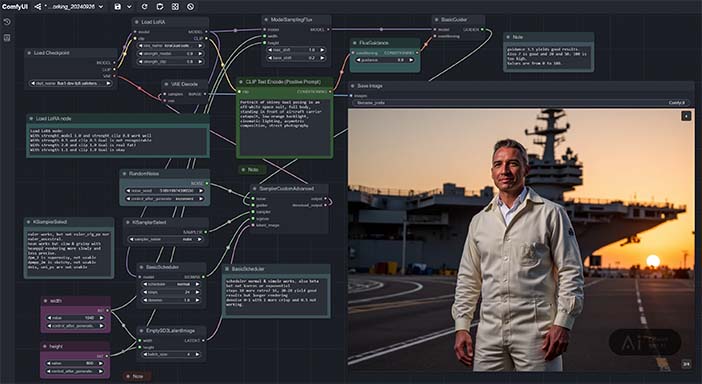
Maximum control via fine-tuning and LoRA checkpoints. Requires the most prompt craft of any major platform — base models need community checkpoints to match commercial quality. Local deployment, no subscription.
✦Custom training, pipeline integration
Adobe Firefly 4
COMMERCIAL-SAFE
Trained on licensed content. The only major model where output is commercially safe by default for enterprise workflows. Deeply integrated into Creative Cloud — strongest for production pipelines that need legal clarity.
✦Commercial use, brand assets
Dissecting a Production Prompt — V8.1
abandoned greenhouse in southern France, overgrown with jasmine,
editorial photography style, Slim Aarons meets New Topographics,
late afternoon sun, diffused through cracked glass panels, amber dust motes,
–ar 3:2 –v 8.1 –stylize 180 –raw,
melancholy but not desolate, a place mid-inhale before remembering
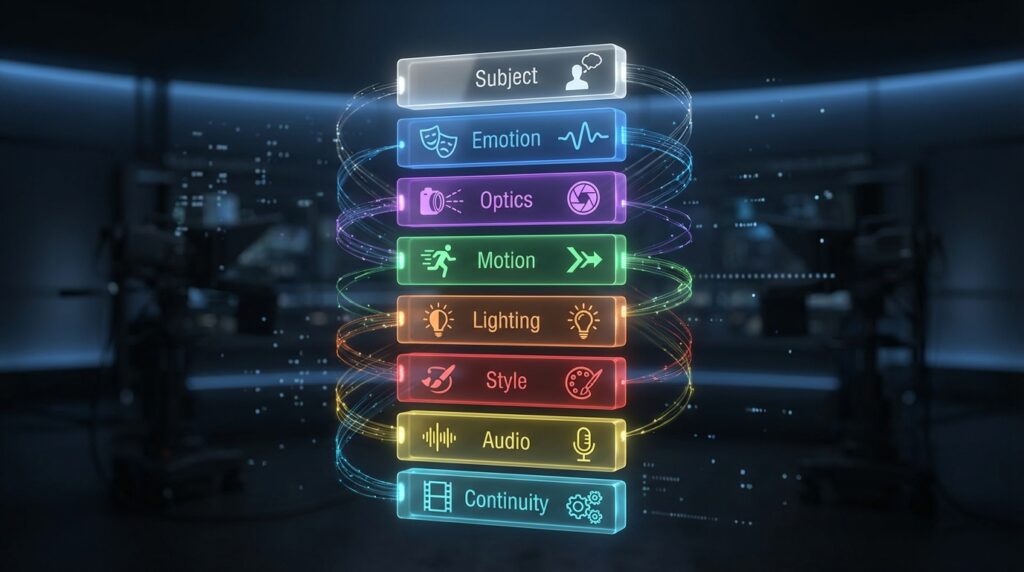
Subject anchor
Style reference (named, not vague)
Lighting spec
Technical parameters
Emotional register
Notice what that prompt does not include: camera model, lens focal length, aperture, ISO, format (film/digital), color grading style. Those are the items that appear in most “advanced prompt templates.” Omitting them is deliberate — V8.1 makes better decisions about those variables than most prompts instruct it to. The “Slim Aarons meets New Topographics” reference does more work than “shot on Kodak Portra 400 with a 35mm lens at f/2.8.”
| Model | Optimal Prompt Length | Text Rendering | Prompt Adherence | Best At |
|---|---|---|---|---|
| Midjourney V8.1 | 20–60 words + parameters | Improved | Strong | Stylized, cinematic, art-directed |
| FLUX 2 Pro | 40–120 words | Best-in-class | 95% complex | Photorealism, in-image text, product |
| Stable Diffusion 4 | Variable (checkpoint-dependent) | Moderate | LoRA-dependent | Custom fine-tuning, local pipelines |
| GPT Image (OpenAI) | Paragraph-length, conversational | Strong | Very high | Multi-turn editing, instruction-following |
| Adobe Firefly 4 | 20–50 words + style presets | Good | Strong | Commercial-safe, Creative Cloud integration |
| Ideogram | Short + typography instructions | Best for type | Moderate | Logo concepts, typographic compositions |
Sources: Ropewalk.ai 24-prompt comparison, Apr 2026; AIToolRanked.com, Mar 2026; WaveSpeed Blog, Mar 2026.
I ran an informal survey across three Discord communities in late 2025 — Midjourney’s official server, the Black Forest Labs FLUX forum, and a private slack group of commercial photographers adopting AI. I asked people generating more than 200 images per week what changed most about their process in 2025. The responses clustered around three things that almost no prompt guide mentions.
One: they iterate one variable at a time. Not prompt rewriting — parameter isolation. Change the stylize value. Change the aspect ratio. Change one noun in the subject description. Never rewrite the whole prompt between generations unless the subject anchor is wrong. This sounds obvious; almost nobody does it.
Two: they maintain a prompt library organized by failure mode, not by subject. Not “portrait prompts” and “landscape prompts” — but “prompts that work when spatial relationships are critical” and “prompts that work when text must render correctly.” The failure-mode taxonomy transfers across subjects. The subject taxonomy does not transfer across failure modes.
Three: they treat the model’s aesthetic engine as a collaborator, not a renderer. This is the shift from “AI as a better Adobe Stock search” to something more like “AI as a first-pass creative director.” The craft is in knowing which decisions to make yourself and which to delegate. Lighting temperature: delegate. Spatial composition: specify. Emotional register: delegate, but give named references. Text content: FLUX, not Midjourney.
Where Specificity Helps vs. Where It Hurts — V8.1 Observations
Based on personal workflow observations and community reports, not controlled study. Results vary by model and use case.
“Redundant quality qualifiers” is worth explaining. Phrases like “ultra-realistic, 8K, award-winning photography, highly detailed, masterpiece” — the boilerplate that appears in most shared prompts — produced measurable improvements on V4 and V5. On V8.1, they are noise. The model does not need to be told to try. It is already trying.
“Prompting is model-specific now. The tips that worked in 2023 are not just outdated — they are actively counterproductive on current models.”
— LetsEnhance.io Prompt Engineering Guide, January 2026The phrase “prompt-based AI art” increasingly undersells the input surface. In mid-2026, a complete prompting workflow for professional work involves four distinct input channels, and treating them as optional upgrades rather than core tools means accepting a ceiling on output quality.
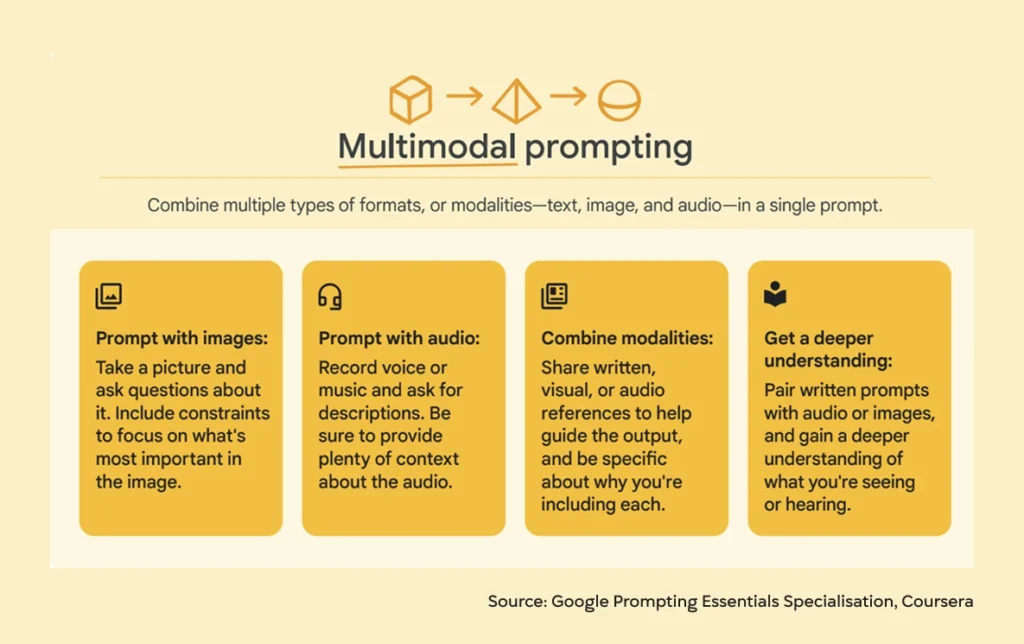
Reference images now do more work than descriptive text for style transfer. Midjourney V7’s Omni Reference tool — carried forward and improved in V8 — accepts style references, character references, and subject references as separate inputs, each with adjustable influence weights. A 12-word prompt with a well-chosen reference image consistently outperforms a 120-word text-only prompt for style fidelity. This is not a shortcut; it is the correct tool for the job.
Voice prompts shipped in Midjourney V7 and solve a specific problem: spontaneous, unfiltered ideation. When you speak a prompt rather than type it, you use different vocabulary. You describe the scene as you would explain it to another person, rather than as a keyword string optimized for an AI. That natural-language register often produces better results than crafted text — which is either an indictment of how most people write prompts, or evidence that models have finally learned to understand human speech patterns at the expense of optimized keyword syntax. Probably both.
Inpainting and outpainting — editing specific regions or extending composition beyond original borders — have matured from unreliable experiments to production-ready tools. FLUX Kontext specifically is designed around image modification rather than generation: feed it an existing photo, instruct it to change the background without touching the subject, adjust lighting in one quadrant, swap a product color. The prompting discipline for editing is fundamentally different from generation — you are writing constraints, not aspirations. That distinction matters more than any specific phrasing trick.
Text-to-video is its own prompting dialect, and the models are not interchangeable. Midjourney as of 2026 can convert a still image into a 5-second video, extendable to 21 seconds. Google’s Veo 3 handles dynamic scene composition differently than Sora or Kling. The prompt architecture for video must account for camera motion, temporal consistency, and the model’s tendency to introduce movement where none was specified — a failure mode that appears in almost every first-generation output.
Practical Note on Video Prompting
Specify camera motion explicitly and conservatively. “Slow dolly push” beats “cinematic camera movement.” Unspecified movement defaults to the model’s aesthetic biases — which, for most text-to-video models in 2026, means either aggressive zoom or distracting rotation. Neither is usually what you want.
On March 2, 2026, the US Supreme Court declined to hear Thaler v. Perlmutter, leaving in place the DC Circuit’s 2025 ruling that pure AI output cannot be copyrighted under existing law. Human authorship remains a bedrock requirement for copyright protection in the United States. Works created solely by AI — without meaningful human creative control — are in the public domain the moment they are generated.
Copyright Status as of June 2026
What is NOT protectable: Images generated entirely by AI with minimal human direction. Pressing “generate” and selecting from outputs is, per current rulings, insufficient human authorship.
What IS protectable: The arrangement, selection, and modification of AI outputs — the creative choices a human makes in composing, editing, and combining AI-generated elements. The Copyright Office has registered works where human creative expression was sufficiently documented.
Still unresolved: Andersen v. Stability AI — a class action by artists challenging whether training AI on copyrighted works constitutes infringement — is scheduled for trial beginning September 8, 2026. That outcome could reshape the upstream training landscape regardless of output ownership rules.
The practical consequence for anyone building a business around AI-generated visuals: document your creative decisions. Screenshots of prompt iterations, selections from generation grids, records of inpainting choices, records of where you added hand-editing — these are evidence of human authorship. The image alone is not enough. The process might be.
For commercial work, Adobe Firefly 4 is currently the only major generation platform trained on licensed content and offering commercial indemnification. That matters for brand campaigns, product imagery, and anything where a client’s legal department will ask questions. The quality gap between Firefly and Midjourney or FLUX has narrowed considerably in 2026, to the point where the legal certainty often justifies the aesthetic tradeoff.
I am skeptical of most “future of AI art” predictions because they tend to describe the technology’s theoretical ceiling, not its operational trajectory. These three shifts are already happening in 2026 production environments — not forecasts.
Personalization profiles are replacing generic prompts. Midjourney V7 introduced personalization that learns your aesthetic preferences over time. By V8.1, this is producing measurably different outputs for different users from identical prompts. The “universal prompt” that works for everyone is increasingly a myth — your model instance has a history with you, and ignoring that is leaving quality on the table.
Multi-model handoffs are becoming standard in professional workflows. Generate the base composition in Midjourney for aesthetic quality. Text elements added via FLUX or Ideogram because typography. Regional edits via FLUX Kontext because surgical precision. Video extension via Kling or Midjourney’s video tools. The prompt is no longer a single document sent to a single model — it is a specification split across a pipeline. This requires understanding the strengths of each tool, not just the syntax of one.
The distinction between “AI-assisted” and “AI-generated” is becoming legally and commercially load-bearing. As the copyright landscape clarifies, workflows that document meaningful human creative intervention — iterative selection, directorial decisions, composite assembly — will have fundamentally different commercial value than one-click generation. The prompting craft is becoming less about getting a better image from a single generation, and more about creating a defensible record of human creative authority across a pipeline.
Go Deeper
The mechanics of prompt architecture — how to structure layered instructions across multi-model pipelines, including negative prompt strategy and parameter tuning by model — are covered in the BestPrompt.art prompt engineering library. The section on model-specific failure modes is, in my experience, the most immediately practical reference for anyone building production workflows in 2026.
The real reason most people’s AI image prompts stay average: they learned the syntax from a 2023 guide, it worked well enough, and revisiting fundamentals feels like admitting the first approach was wrong. It was not wrong then. The models changed. Only you know if “good enough from 2023 knowledge” is acceptable in 2026 production work.
Model-specific guides, prompt templates by failure mode, and workflow references for image and video pipelines.
Explore BestPrompt.art →