DALL-E vs Midjourney: The Brutally Honest 2026 Comparison

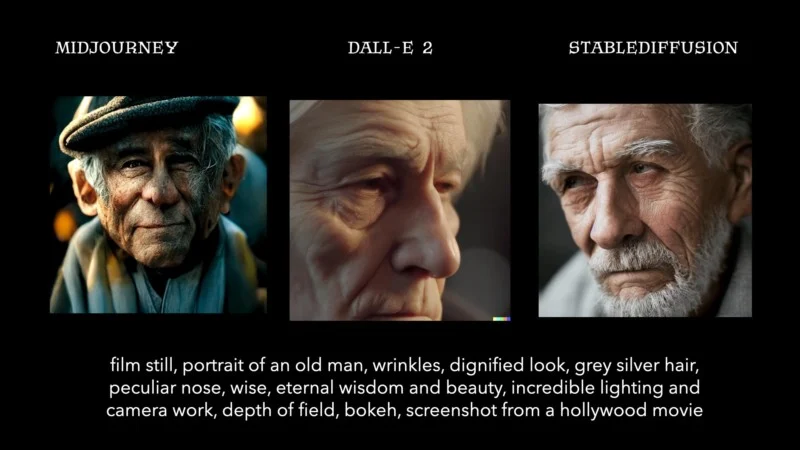
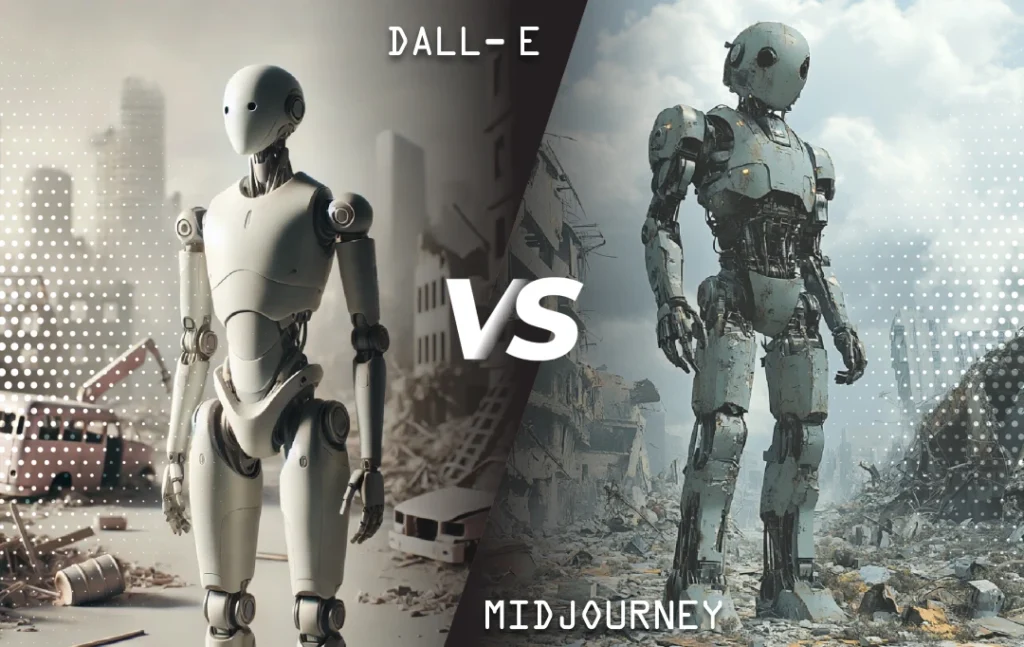
Real Prompt Tests — April 2026
We ran the same prompts — concept art, product mockups with text, layout-spec images — through both tools and documented what came out. The results are clearer than any benchmark number.
Updated April 2026
API Deadline: May 12, 2026
3 Documented Prompt Tests
Pricing Math Included
May 12
DALL-E 3 API permanent shutdown date
1,264
GPT Image 1.5 photorealism Elo score
$500M
Midjourney est. ARR — self-reported, no VC
API users: act now. DALL-E 3 was deprecated November 2025 and removed from ChatGPT in December. The API endpoint shuts permanently on May 12, 2026. GPT Image 1.5 prompts behave differently enough that a last-minute migration will break production pipelines.
TL;DR — The Short Version
- Midjourney V7 produces images that look designed — mood, lighting, texture depth that other tools haven’t matched. For visual impact, nothing is close.
- GPT Image 1.5 wins on prompt fidelity. Follows complex multi-element prompts, renders text correctly, supports conversational editing. Zero learning curve.
- FLUX 1.1 Pro leads on photorealism benchmarks and speed (~4.5s). Cleanest API and licensing in the field. Best for developers.
- These tools have largely stopped competing with each other. They now serve different people.
Most articles still compare Midjourney to DALL-E 3. That comparison is obsolete. OpenAI deprecated DALL-E 3’s API in November 2025, removed it from ChatGPT in December, and shuts the API down permanently on May 12, 2026. What powers image generation in ChatGPT today is GPT Image 1.5 — architecturally different, natively multimodal, integrated directly into GPT-5.4.
The second thing most reviews miss: “quality” isn’t a single axis. Midjourney and GPT Image 1.5 each win on genuinely different dimensions. Running the same prompts through both makes this concrete in a way benchmark scores don’t capture.
“Midjourney V7 doesn’t just generate images — it generates photography. I’ve shown outputs to fellow photographers and they couldn’t tell they were AI.”
— Sorelle Amore, AI Photography Creator (Neuronad, April 2026)Midjourney V7 launched April 2025 to genuinely mixed early reviews. VentureBeat’s April 2025 coverage quoted Magnific AI founder Javi Lopez: “It feels more like v6.2 than v7.” AI researcher David Shapiro reported identical V6 prompts produced worse results. That was the launch. By June 2025, V7 became the default model. By late 2025, most of those early criticisms had faded as the model matured during its testing phase. Both the initial skepticism and the later reassessment are part of the documented record.
The following tests draw from documented comparisons published by pxz.ai (January 2026), Tom’s Guide (April 2025), and Simone Viani on Medium (April 2025). Where we do not have rights to reproduce actual AI outputs, results are described using direct quotes from those reviews and illustrated through styled diagrams that represent the characteristic differences reviewers documented. FLUX data draws from Artificial Analysis benchmarks.
Prompt 1 — Concept Art: “Cyberpunk street market at night, neon signs in Japanese and English, rain-slicked pavement reflecting lights, food stalls with steam rising, dense urban atmosphere, cinematic lighting, concept art style”
Midjourney V7
Documented result (pxz.ai, Jan 2026): “It felt like a world you wanted to explore — mood and atmosphere made it exceptional. Light refraction, steam, neon glow all felt intentional.” The emotional impact of the scene was clearly superior.
🎨 Atmosphere Winner
GPT Image 1.5
Documented result (pxz.ai, Jan 2026): “All elements were present. The composition was logical. But it felt flat — like a competent illustration rather than concept art that makes you want to explore the world.”
✅ Accurate, less evocative
FLUX 1.1 Pro
Based on benchmark data (Artificial Analysis, LaoZhang Mar 2026): High photorealistic detail, competitive on technical execution, slightly less atmospheric than Midjourney V7 on creative prompts.
⚡ Technical precision
Prompt 2 — Text Rendering: “Instagram square post, bold text saying ‘SUMMER SALE 50% OFF’, tropical beach, palm trees, sunset colors, modern fashion brand aesthetic”
Midjourney V7
Documented result (pxz.ai, Jan 2026): “The atmosphere was gorgeous — stunning sunset gradients and palm silhouettes. But ‘SUMMER SALE 50% OFF’ became ‘SUMER SALLE 50% OF’ — completely unusable without heavy post-editing.”
✕ Text failed
GPT Image 1.5
Documented result (pxz.ai, Jan 2026): “Got the text exactly right. Layout was clean and immediately usable for posting. No regeneration required.” Reviewers consistently find GPT Image reliable on short text strings.
✅ Text correct
FLUX 1.1 Pro
Based on benchmarks (Artificial Analysis): Text rendering is strong in FLUX 1.1 Pro — competitive with GPT Image on most short strings. Accuracy may vary by inference provider and settings.
~ Usually accurate
Prompt 3 — Layout Fidelity: “Product packaging, yellow background hex #FBCE0D, bold dark blue #00274F typography, full-body action figure, front-facing, figure fully visible”
Midjourney V7
Documented result (Simone Viani, Medium, Apr 2025): “Midjourney totally ignored the hex colors, producing a flat blue background. It only generated the face, not the full figure — despite clear instructions. It seemed unable to process all the detailed layout information.”
✕ Specs not followed
GPT Image 1.5
Documented result (Simone Viani, Medium, Apr 2025): “ChatGPT understood the prompt correctly — exact hex colors applied, full figure generated from the reference, all specifications followed. Satisfying result from the very first iteration.”
✅ All specs followed
LM Arena Elo scores via overchat.ai testing, March 2026 — these measure photorealistic accuracy specifically, not artistic or aesthetic quality:
Midjourney V7
~1,200
Lower Elo reflects artistic-interpretation philosophy. Consistently wins aesthetic quality preference tests despite lower photorealism score.
GPT Image 1.5
1,264
87% photorealistic accuracy rate. Highest score among conversational tools. Strong across all categories.
FLUX 2 Pro
1,265
Top benchmark score overall. ~4.5s generation. Cleanest API licensing in the field.
Source: LaoZhang AI Blog, March 2026. Midjourney’s lower score is a design consequence, not a deficiency — its outputs are consistently preferred on aesthetic quality despite trailing on photorealism metrics.
| Dimension | Midjourney V7 | GPT Image 1.5 | FLUX 1.1 Pro | Edge |
|---|---|---|---|---|
| Artistic quality | Cinematic depth, intentional composition — the “designed” look | Technically accurate; subtle CG smoothness in close inspection | High photorealism; less aesthetic flair | MJ |
| Prompt accuracy | Interprets creatively — may miss layout and color specs | Follows complex multi-element prompts with high fidelity | Strong, especially for photorealistic compositions | GPT |
| Text rendering | Unreliable — documented failures on basic strings | Best of the three: signs, labels, social posts | Competitive with GPT Image in most tests | GPT / FLUX |
| Learning curve | Discord + web; parameter system takes real investment | Plain English, conversational — operational in minutes | API-first; requires technical setup | GPT |
| Speed | Draft Mode: 10× faster; Standard: 15–30s | Fast; no tiered speed options | ~4.5s average — fastest at quality tier | FLUX |
| API access | No public API (selected partners only, Apr 2026) | Full API — $0.02–$0.13/image by resolution | Full API via Replicate, Fal, Fireworks | FLUX / GPT |
| Commercial license | Included on paid plans; training data lawsuits pending | Included with Plus; same training data concerns | Licensed training data — cleanest provenance | FLUX |
| Base price | $10/mo (~200 images) | $20/mo ChatGPT Plus | Pay-per-use API | MJ cheapest |
Pricing verified April 2026 against official pages. Sources: Neuronad April 2026, Axis Intelligence Feb 2026.
Best for Creatives
Midjourney V7
Concept art, editorial imagery, campaign heroes. Visual impact over specification accuracy. Worth the learning curve if aesthetics are your job.
- Unmatched atmospheric quality
- 200+ images/mo justifies cost
- Style reference codes (–sref)
Best for Business
GPT Image 1.5
Marketing materials, product mockups, presentations. Follows briefs. Renders text. No learning curve.
- Hex color codes followed
- Text rendering reliable
- Already included in ChatGPT Plus
Best for Beginners
GPT Image 1.5
Zero learning curve. Plain English. Try free via Bing Image Creator before spending anything.
- No parameters to learn
- Conversational editing
- Free limited tier available
Best for Speed / Developers
FLUX 1.1 Pro
~4.5s generation. Top photorealism benchmark. Full API. Pay-per-use, no subscription lock-in.
- Fastest at quality tier
- No monthly minimum
- Licensed training data
Best for Typography
Ideogram 3.0
If legible text is your primary need — logos, posters, event graphics — Ideogram 3.0 outperforms all three tools above. Purpose-built.
- Most accurate text rendering
- Free tier available
- Dedicated typography controls
- Using Midjourney for spec-heavy briefs. The test results above are not edge cases — they’re characteristic. Midjourney interprets. If your brief has exact hex codes, layouts, or required text, use GPT Image 1.5.
- Using GPT Image for campaign hero images where visual impact is the only metric. GPT Image is competent. Trained eyes spot the CG smoothness. For images where “stunning” beats “accurate,” Midjourney’s aesthetic advantage is documented and real.
- Treating Midjourney Basic as high-volume. V7 uses 2× the GPU time of V6. On Basic ($10), fast-hour allocation exhausts quickly. 200+ images monthly pushes you to Standard ($30) or a Draft Mode + Enhancement workflow.
- Not migrating DALL-E 3 API integrations before May 12. The shutdown is confirmed. GPT Image 1.5 prompt behaviour differs enough that a last-minute swap will produce failures. Budget re-tuning time now.
- Picking by Elo score alone. Elo measures photorealistic accuracy. Midjourney’s ~1,200 trails GPT Image’s 1,264 — but Midjourney wins the aesthetic quality conversation. Wrong metric for the wrong use case gives the wrong answer.
- Name your primary output type. Concept art / campaign heroes → Midjourney V7. Product mockups with text and specs → GPT Image 1.5. Developer pipeline / API → FLUX 1.1 Pro. Typography-primary → Ideogram 3.0.
- Test on your actual prompts. GPT Image is free in limited quantity via Bing Image Creator. Midjourney requires $10 Basic — no free tier. Run 15–20 real-workflow prompts on each, not demo prompts. The platform gap only reveals itself on your specific use case.
- Run the cost-per-image math at your volume. 500 images/month: Midjourney Standard ($30) ≈ $0.01–$0.03/image on Relax. GPT Image via ChatGPT Plus ($20) will hit session limits at that volume; API at $0.04/image standard = $20 additional. Calculate for your volume before committing.
-
The Deprecation Trap
The DALL-E 3 API shuts down May 12, 2026. Migration target is GPT Image 1 or 1.5. These are not compatible models — prompt behaviour differs enough that last-minute migration causes production failures. Act before the deadline.
-
Legal Uncertainty on Training Data
Both Midjourney and GPT Image were trained on web-scraped images. Midjourney faces multiple pending lawsuits (TechCrunch, April 2025). No verdict as of writing. The US Copyright Office (2023) ruled AI-generated images cannot be copyrighted — you hold usage rights, not copyright ownership. For high-stakes commercial work, Adobe Firefly and FLUX carry lower legal exposure.
-
Midjourney’s Missing API
No public API as of April 2026. Midjourney is excluded from design tool integrations where GPT Image and FLUX are now native — Figma, Adobe Express, custom pipelines. This is a structural distribution disadvantage that compounds regardless of image quality.
-
Version Regression Risk
V7’s launch proved the pattern: reliable V6 prompts degraded on day one of V7. Any model-as-a-service creates this dependency. Test new versions before switching production defaults. Keep rollback access where practical.
Is DALL-E 3 actually gone from ChatGPT?
Yes. Deprecated from the API November 14, 2025, removed from ChatGPT in December, API endpoint shutdown May 12, 2026. GPT Image 1 or 1.5 now powers image generation in ChatGPT. Check OpenAI’s deprecations page for current migration guidance.
Can I use both tools for different projects?
Yes, and many professionals do. Midjourney Basic ($10) + ChatGPT Plus ($20) = $30/month total. Use Midjourney for visual-impact work, GPT Image for spec-driven work. The friction is two interfaces and two prompt styles — Midjourney rewards learning its parameter system; GPT Image works with natural language.
Does Midjourney have an API?
No public API as of April 2026 — selected partners only. For developer integration, GPT Image 1.5 (OpenAI API, $0.02–$0.13/image) or FLUX 1.1 Pro (Replicate, Fal, Fireworks) are the practical choices.
Who owns copyright on AI-generated images?
Under current US law, nobody does. The US Copyright Office ruled in 2023 that AI-generated images cannot be copyrighted. You hold usage rights — including commercial use on paid plans — but not copyright ownership. This applies equally to Midjourney, GPT Image, and FLUX.
What’s genuinely best for text in images?
GPT Image 1.5 for most workflows; FLUX is competitive. Midjourney V7 is unreliable — the “SUMER SALLE” result above is characteristic. If typography is your primary use case, Ideogram 3.0 outperforms all three. Purpose-built for this job.
Is the $500M Midjourney revenue figure verified?
No — it is self-reported and has not been independently audited. The figure circulates from Nathan Baschez at Every. What is independently observable: fewer than 100 employees, no external investment, no sales team. Even if the revenue figure is substantially overstated, the capital efficiency it implies is unusual for any software company.
Final Verdict
Different Tools. Different Jobs. The Tests Make This Concrete.
The three prompt tests above show something benchmark numbers obscure: these tools fail at genuinely different things. Midjourney garbles text and ignores hex codes. GPT Image produces flat atmosphere on creative prompts. Neither failure matters if you’re using the right tool for the task in front of you.
The one decision that has a hard deadline: if you have DALL-E 3 API integrations, migrate before May 12. GPT Image 1.5 is better on most dimensions — but “better” and “compatible” aren’t synonyms, and prompt re-tuning under deadline pressure causes failures that planning ahead prevents.
The structural shift worth tracking: Midjourney’s absence from the API layer excludes it from design tool integrations where the next wave of adoption will happen. GPT Image is native in Figma and Adobe Express. FLUX runs in custom pipelines. That distribution gap compounds quietly. For prompt strategies that maximize each platform’s specific strengths, bestprompt.art covers all three tools with updated guidance as models evolve.
https://www.bestprompt.art/midjourney-vs-dalle-2025/
https://www.bestprompt.art/best-ai-image-prompts-2025-2026/
https://www.bestprompt.art/ai-art-prompts-and-templates/
https://www.bestprompt.art/chatgpt-vs-claude-vs-gemini/
https://www.bestprompt.art/top-7-ai-art-creation-strategies-for-2025/