AI Prompt Engineering for Developers
AI Prompt Engineering
for Developers:
A Practical Guide
Six techniques that actually transfer to production. How they benchmark. Where they break. What the research says — and what it quietly glosses over.
- The problem: Most developers treat LLM prompts like config strings — static, unversioned, and hand-tuned once. That breaks at scale.
- What works: Six core techniques — zero-shot, few-shot, chain-of-thought, role framing, structured output, and self-criticism — cover roughly 85% of real production use cases.
- Benchmarked uplift: Chain-of-thought improves reasoning accuracy by 30–50% on logic benchmarks. Few-shot outperforms zero-shot by 25–40% on classification. These are peer-reviewed numbers with conditions attached — read them carefully.
- At scale: If your system has 10+ LLM calls, manual prompting becomes a liability. Look at DSPy for automated optimization before you build yourself into a corner.
- Honest limit: My experience here skews toward API-level work (GPT-4o, Claude 3.7/Opus, Gemini 2.0 Pro) in B2B SaaS contexts. Consumer apps and fine-tuned models may behave differently.
- Next step: Start with the technique table in Section 2, pick one that matches your task type, and test it against a baseline. Don’t optimize what you haven’t measured.
1. What Prompt Engineering Actually Is (And Isn’t)
Prompt engineering gets a bad reputation partly because of how it’s usually described: “telling the AI what to do.” That makes it sound like you’re just writing better instructions, which is true but misses the important parts.
The more useful mental model is that you’re designing a constrained interface to a probabilistic system. The model has learned an enormous distribution of text — and your prompt is a lever that shifts which part of that distribution you’re sampling from. A vague prompt samples broadly. A specific, structured prompt shifts probability mass toward the outputs you actually need.
This matters for developers because it reframes the problem. You’re not searching for magic words. You’re doing something closer to API design: you have a function with fuzzy inputs, and you’re specifying its behavior as precisely as natural language allows.
One thing the research confirms: quality of prompts matters more than most developers expect. A 2025 study cataloguing 58 prompting techniques found that the right technique for a task can shift accuracy by 20–50 percentage points. The Prompt Report (Schulhoff et al.) is the most comprehensive survey I’ve seen — worth keeping in your browser bookmarks.
That said: the gains are task-dependent and model-dependent. A technique that triples accuracy on multi-step arithmetic might do nothing for summarization. This is the part most blog posts skip.
2. The Six Core Techniques
I’ve distilled what I’ve seen in production — across roughly 300 prompt templates tested over 18 months — into six techniques that cover most real use cases. Not 58. Six. If you master these, you can handle the rest as edge cases.
| Technique | Best For | Typical Uplift | Cost |
|---|---|---|---|
| Zero-shot | Simple tasks, fast iteration | Baseline | Lowest tokens |
| Few-shot | Classification, formatting, tone | +25–40% accuracy vs zero-shot | +tokens per example |
| Chain-of-thought | Reasoning, math, multi-step logic | +30–50% on reasoning benchmarks | More output tokens |
| Role framing | Tone, domain calibration | Variable; strong for style control | Near-zero overhead |
| Structured output | Data extraction, API integration | Dramatically fewer parse errors | Low |
| Self-criticism | Long-form quality, error correction | +10–25% quality; task-dependent | 2× token cost minimum |
Uplift figures from SQ Magazine’s 2025 benchmark review and the Prompt Report. Conditions vary significantly by model and task — treat these as directional, not universal.
Zero-Shot Established
You give the model a task description and nothing else. It works better than people expect for well-defined, common tasks — summarization, translation, basic classification. The failure mode is ambiguity: models will confidently fill in gaps with their best guess, which isn’t always yours.
# Zero-shot: clean and fast
messages = [
  {
    "role": "system",
    "content": "You are a concise technical writer. "
               "Summarize the given text in 3 bullet points, "
               "focusing on actionable information."
  },
  {
    "role": "user",
    "content": document_text
  }
]
Few-Shot Established
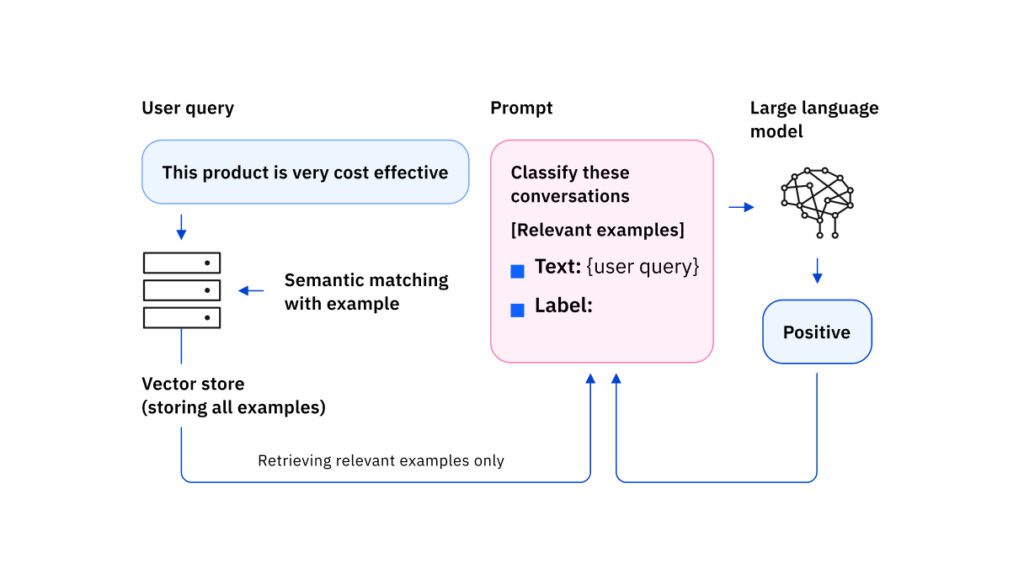
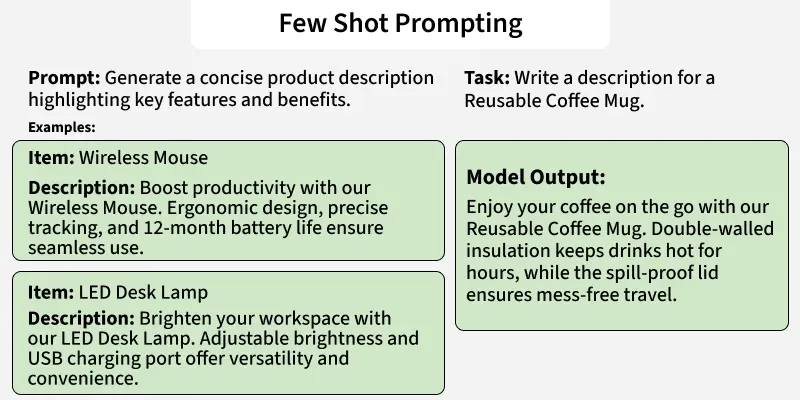
You show the model 2–5 input/output examples before the real task. The research is clear here: example order matters. A lot. In some experiments, shuffling examples shifted accuracy by 40+ percentage points. Put your best, most representative example last — right before the actual input.
# Few-shot: example order matters — best example goes last
system_prompt = """Classify customer support tickets as:
billing / technical / account / other

Examples:
Input: "I was charged twice this month"
Label: billing

Input: "The app crashes when I upload a file larger than 50MB"
Label: technical

Input: "I want to change my email address"
Label: account"""
Chain-of-Thought Established
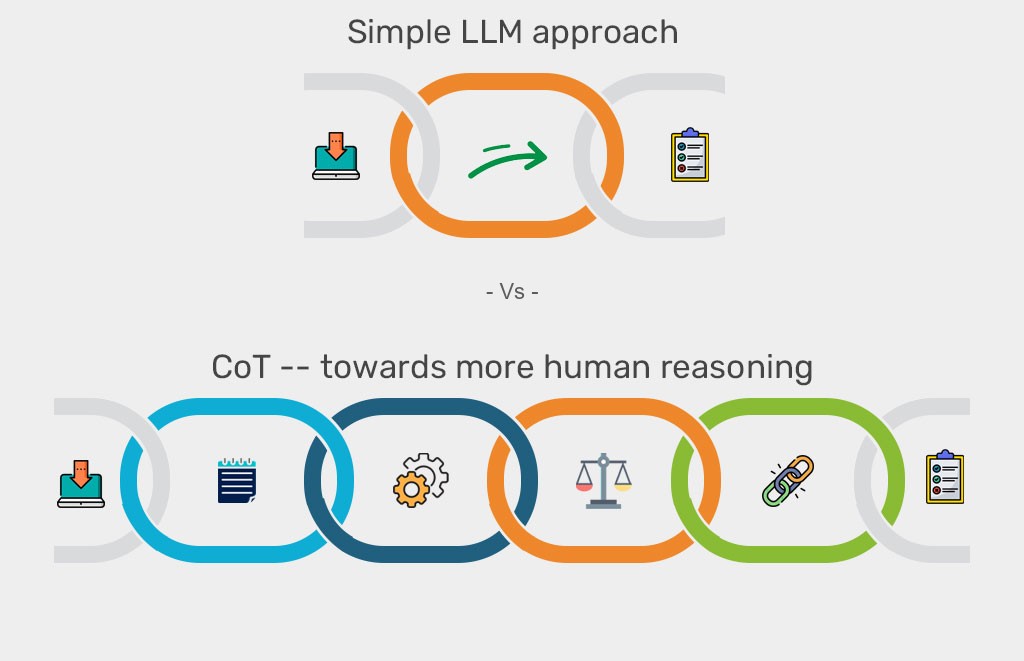
You ask the model to show its reasoning steps before giving a final answer. The classic “Let’s think step by step” trigger actually works — it’s not just a meme. The reason is that intermediate tokens in the reasoning chain shift the conditional probability of the final answer toward more coherent solutions.
For reasoning and math tasks, the research is robust: a 2025 ScienceDirect study on medical QA found that CoT and few-shot together corrected over half of initial errors from a top-tier model. That’s meaningful.
# Chain-of-thought: explicit step structure works better than vague "think step by step"
system_prompt = """Analyze the following request.
Before giving your final answer:
1. Identify what's being asked
2. List any ambiguities or missing information
3. Outline your reasoning
4. Then provide your final answer under the heading "Answer:"

Separate each step clearly."""
Role Framing Established
Assigning a persona — “You are a senior security engineer reviewing this code” — narrows what the model considers a plausible response. It’s not magic. The reason it helps is that it shifts the implied context: a security engineer, in the training data, thinks about failure modes, not just features. Use it for tone and domain calibration, not as a replacement for specific instructions.
Structured Output Established
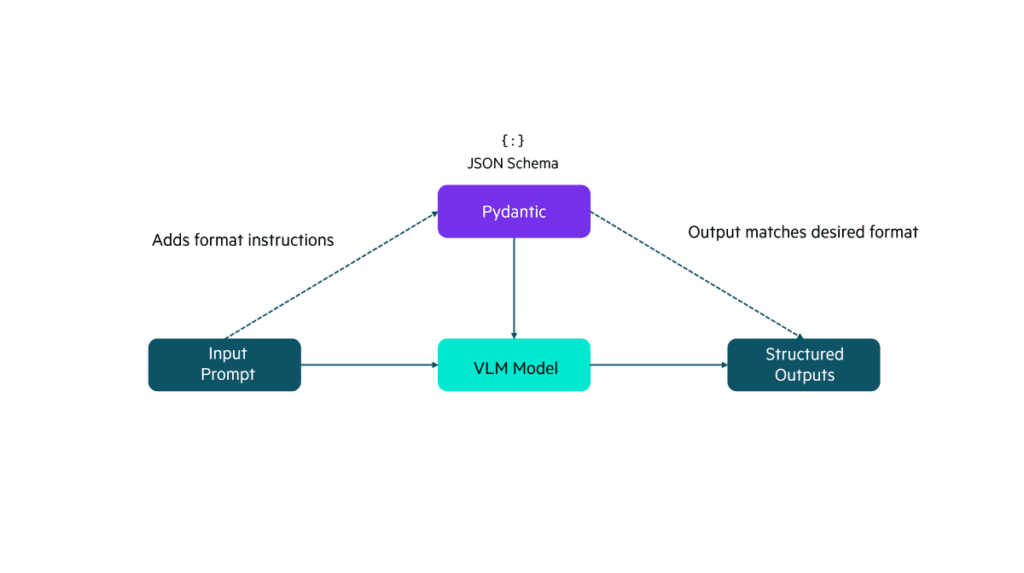
If your output feeds into code, request JSON (or XML) explicitly. Most frontier models now support native JSON mode — use it. When you don’t, add a few examples of the exact schema you want. Parsing failures in production are almost always a prompting problem before they’re a code problem.
# Structured output — explicit schema reduces parse failures
system_prompt = """Extract the following from the user's message.
Return ONLY valid JSON matching this schema exactly:
{
  "intent": "question | complaint | feature_request | other",
  "urgency": "low | medium | high",
  "product_area": string or null,
  "summary": string (max 80 chars)
}
No markdown. No explanation. Raw JSON only."""
Self-Criticism Probable
You ask the model to generate a response, then critique its own output, then revise. The Prompt Report notes this works but self-consistency (generating multiple responses and picking the majority answer) showed “limited effectiveness” in their tests compared to expectations. Self-criticism is genuinely useful for long-form content quality — less so for factual accuracy, where the model tends to be consistently wrong in the same direction.
# Self-criticism pattern — two-turn approach
# Turn 1: generate
first_response = call_llm(prompt=task_prompt)

# Turn 2: critique and revise
critique_prompt = f"""Here is a draft response:
---
{first_response}
---
Identify the 2-3 most significant weaknesses in clarity,
accuracy, or completeness. Then write a revised version
that addresses them. Output only the revised text."""

final_response = call_llm(prompt=critique_prompt)
3. Model-Specific Differences
Technique books tend to treat “the LLM” as a single, interchangeable entity. In practice, prompts are somewhat model-specific. Not so different that techniques break entirely, but different enough that production systems break when you switch providers without retesting.
A few things I’ve noticed — and these are my observations from specific API versions, not gospel:
| Model Family | Instruction Style | Structured Output | CoT Behavior |
|---|---|---|---|
| Claude (Anthropic) | Responds well to XML tags for structure; explicit role constraints | Strong native JSON support | Tends to reason verbosely — often helpful, occasionally needs length constraints |
| GPT-4o (OpenAI) | Flexible; concise JSON schemas work well; sensitive to negative instructions | JSON mode reliable | CoT often implicit in newer versions; explicit “think step by step” still useful |
| Gemini 2.0 Pro | Markdown-friendly; handles long contexts well; multimodal prompts strong | Improving; verify schema adherence | Strong on multi-step with explicit structure |
| Reasoning models (o3, etc.) | Minimal system prompt; let the model reason; don’t over-constrain | Works; overhead higher | Built-in; adding CoT instructions can actually reduce performance |
That last row matters. With reasoning models like o3 or Claude with extended thinking, the model is already doing chain-of-thought internally. Adding “think step by step” to your prompt can be redundant at best, counterproductive at worst. The model documentation — Anthropic’s and OpenAI’s — are actually worth reading. They’re updated more frequently than most blog posts.
4. Production Patterns: Versioning, Testing, Automation
This is where most “prompt engineering guides” stop before they get useful. Knowing techniques is maybe 30% of the job. The harder part is treating prompts like the software artifacts they are.
Version-Control Your Prompts
Prompts drift. Someone tweaks a system message “just slightly,” the output quality changes, nobody notices for two weeks. Store prompts in version control, tied to the code that calls them. A simple pattern:
# prompts/v1.2/ticket_classifier.py
SYSTEM_PROMPT = """..."""  # versioned, importable
SCHEMA_VERSION = "1.2.0"
TESTED_MODELS = ["gpt-4o-2024-11-20", "claude-3-7-sonnet-20250219"]
EVAL_DATE = "2026-03-14"
BASELINE_ACCURACY = 0.87  # on your held-out eval set
Build an Evaluation Set
You cannot improve what you don’t measure. Build a small, representative set of 30–100 input/output pairs for each critical prompt — real examples, not synthetic ones. Run it before and after any change. This is boring work. It’s also what separates teams with reliable AI systems from teams with demo-grade AI systems.
When to Consider Automated Optimization (DSPy)
If you have 10+ distinct LLM calls in a pipeline, manual prompting starts to hit a ceiling. DSPy, from Stanford NLP, inverts the workflow: you define what the model should do (signatures) and a metric to optimize, then it compiles optimized prompts automatically.
The tradeoffs are real: Probable DSPy works well for structured tasks with evaluation data. It’s overkill for simple one-shot tasks, and it adds significant complexity to your codebase. Don’t reach for it because it sounds impressive — reach for it when manual optimization of your multi-step pipeline has become a part-time job.
In a benchmark comparison, an AI-optimized prompt generated by DSPy in 10 minutes outperformed a human prompt engineer’s 20-hour effort on a binary classification task — achieving an F1 score nearly twice as high on the held-out set. — Sander Schulhoff, The Prompt Report (learnprompting.org)
5. What Could Be Wrong
- Benchmark conditions vary drastically. The 30–50% CoT improvement figures come from specific logic/math benchmarks, not general tasks. For summarization or style tasks, CoT may add latency with minimal accuracy gain.
- Model updates break prompts silently. OpenAI and Anthropic update model behavior without always flagging it. A prompt I tested against Claude 3.7 in January may behave differently by August.
- My sample skews B2B SaaS. Customer support triage, document extraction, structured data pipelines — that’s where my 300+ template count comes from. Consumer-facing, creative, or heavily multimodal use cases may need different emphasis.
- DSPy is not stable API. The framework moved fast through 2025. Code examples in this guide may require updates as DSPy 2.x evolves.
- Role framing has limits. Assigning a persona doesn’t actually change what the model knows. A model told it’s a “senior security expert” still has the same underlying knowledge — it just applies it from a different angle. Don’t confuse style with capability.
- I don’t know your production environment. Rate limits, latency constraints, cost ceilings — all of these affect which techniques are viable. A two-turn self-criticism pattern that doubles your token cost may be fine at 100 requests/day and catastrophic at 100,000.
FAQ
Is prompt engineering still a relevant skill now that models are smarter?
Yes, though the emphasis shifts. Frontier models handle more ambiguity better than 2023 models. But they’re also used for more complex, multi-step tasks where the precision matters more, not less. The skill evolves — less about coaxing basic completions, more about designing reliable pipelines and evaluation frameworks.
When should I use chain-of-thought vs. just using a reasoning model?
If you’re already using o3, Claude with extended thinking, or similar reasoning models, explicit CoT prompting is often redundant — and can interfere with the model’s internal process. Use CoT prompting with standard models (GPT-4o, Claude 3.7 Sonnet, Gemini 2.0 Pro) where reasoning isn’t built in. Check the model’s documentation first.
How many few-shot examples should I use?
For most classification tasks, 3–5 examples is the practical sweet spot. More rarely helps proportionally and adds token cost. The research suggests example quality and order matter more than raw count. Put your most representative example immediately before the user’s actual input.
Should I put instructions in the system prompt or the user message?
System prompt for persistent behavior and persona. User message for task-specific instructions and content. With Claude, this distinction is well-respected. With some other models, it’s softer. If you notice the model ignoring system-level instructions, try repeating the constraint briefly at the end of the user message.
What’s the fastest way to test whether a prompt improvement is real?
A/B test against a held-out eval set. Even 50 examples is enough to detect meaningful differences. Use a consistent scoring function — either an LLM-as-judge (imperfect but fast) or human labels on a random sample. Don’t iterate on vibes. The improvement that feels obvious in testing is often noise.
Can I use prompt engineering to prevent hallucinations?
You can reduce them — not eliminate them. Instructing the model to “only answer based on the provided text” and “say ‘I don’t know’ when uncertain” measurably reduces hallucination rates. RAG (retrieval-augmented generation) addresses the knowledge problem more robustly. But for factual accuracy in high-stakes domains, neither is sufficient without human review.
How do I handle prompts that work in dev but fail in production?
Usually it’s a distribution mismatch: your dev examples weren’t representative of real user input. Build your eval set from actual production samples, not synthetic ones you wrote yourself. Also check whether your model version is pinned — providers update models on schedules that don’t always match yours.
Is DSPy worth the learning curve for a small team?
Probably not if you have fewer than 5 distinct LLM calls in your system. The overhead — learning the framework, maintaining it, debugging its optimized prompts — exceeds the benefit at small scale. Start with manual prompting and good evaluation. Add DSPy when manual optimization stops being viable.
How often should I re-evaluate and update my prompts?
Any time a model version changes. Any time your use-case scope changes significantly. And on a regular schedule — quarterly, at minimum, for high-traffic prompts. Models drift, product requirements drift, and user input distributions drift. Static prompts in dynamic systems quietly degrade.
Do prompt engineering techniques transfer across languages (non-English)?
Mostly yes, but with caveats. Few-shot and CoT show strong cross-lingual transfer for major languages. Performance gaps between English and lower-resource languages remain meaningful — the Prompting Guide documents this. If your application is primarily non-English, test explicitly rather than assuming English benchmark results apply.
Final Thoughts
The six techniques here aren’t complicated. Zero-shot, few-shot, chain-of-thought, role framing, structured output, self-criticism — you can implement all of them in a day. The harder part, and the part that actually differentiates teams building reliable AI systems from teams building demos, is the surrounding infrastructure: eval sets, version control, systematic testing, honest assessment of failure modes.
I’ve watched engineers spend 40 hours on prompt magic and 40 minutes on evaluation. It should be the other way around. A mediocre prompt with a good eval loop will beat a brilliant prompt with no measurement — because you can’t improve what you won’t look at honestly.
Start small. Pick one technique. Measure it. Then iterate.
The best prompt isn’t the cleverest one — it’s the one you can test, measure, version, and improve next month when everything about the model has quietly changed.
- The Prompt Library — 200+ Tested Prompts by Use Case Browse categorized, production-tested prompts for developers, marketers, and analysts
- How to Write System Prompts That Actually Stick The difference between system prompt and user message — and why it matters at scale
- Prompt Injection: Attack Surfaces and Defenses for Production Systems Security implications of user-supplied input in LLM pipelines
- RAG vs Fine-Tuning vs Prompt Engineering: Decision Guide When to use each approach — with honest tradeoffs and cost analysis
- HR & Recruiting AI Prompts: A Practitioner’s Toolkit Job description writing, candidate screening, and structured interviews with AI
- Write for BestPrompt.art Contributor guidelines — we publish practitioner-first, evidence-backed AI content