Free vs Paid AI in 2026: When Upgrading Actually Makes Sense


AI Subscriptions · April 2026
Most people don’t need a paid subscription. Here’s exactly when free tiers fail — and what you actually get for $8, $20, or $200 a month.
Methodology & Disclosure: Pricing and feature data verified against official documentation from OpenAI, Anthropic, and Midjourney as of April 2026. Individual/small-team focus — enterprise needs differ. No affiliate relationships or paid placements. Model names reflect what’s current today; the original article had stale references.
TL;DR
Free tiers now include GPT-5.3 and Claude Sonnet 4.6 — genuine frontier access, just capped. Paid tiers ($8–$20/month) unlock higher quotas, advanced reasoning, and features like Deep Research and Sora video. Upgrade if you hit limits 3+ times a week, need extended reasoning, or build on top of these APIs. Stay free if you use AI casually and can batch or wait 5 hours for resets.
Let me be direct about something. Most of the “free vs. paid AI” content out there is written by people who want you to click an affiliate link. This one isn’t. I’m going to tell you when free is genuinely fine — which is most of the time — and when paying actually makes sense.
Because here’s the thing: the free tiers in 2026 are legitimately good. You get frontier models. Real ones. The question is whether the usage constraints break your workflow, not whether the quality is there.
The landscape changed fast. Eighteen months ago, free meant GPT-3.5. Now it means GPT-5.3 and Claude Sonnet 4.6. That’s not a minor upgrade — that’s the same model class professionals were paying for in 2024.
But. There’s always a but.
According to OpenAI’s official pricing page, the free tier gives you GPT-5.3 access with a hard cap of 10 messages every 5 hours. Hit that ceiling and you fall back to GPT-5.2 Mini for unlimited basic responses. You also get standard image generation, custom GPTs, and conversation history.
What you don’t get: Deep Research, Sora video, Codex, Agent Mode, extended reasoning. And — this is new as of February 2026 — ads. In the US, free ChatGPT now shows sponsored content at the bottom of responses. OpenAI announced this alongside the Go plan launch.
⚠ The Context Window Gap
Free tier is capped at roughly 16K tokens of context. Upload a long contract or research paper and you’re truncating the hell out of it. For document-heavy work, this limit hurts more than the message cap.
Claude’s free tier gives you Sonnet 4.6 — the mid-tier model, not Opus. Anthropic doesn’t publish exact limits, but the community consensus puts it at 10–15 messages per session before throttling, with a 5-hour reset window. Here’s the wrinkle: complex messages eat more quota than simple ones. Upload a 50-page PDF and you might burn 3–5 message-equivalents in one shot.
Unlike ChatGPT’s predictable caps, Claude’s quota is dynamic. System load, message complexity, time of day — all of it affects how fast you burn through your daily allowance. Annoying to plan around.
📌 Midjourney: Still No Free Tier
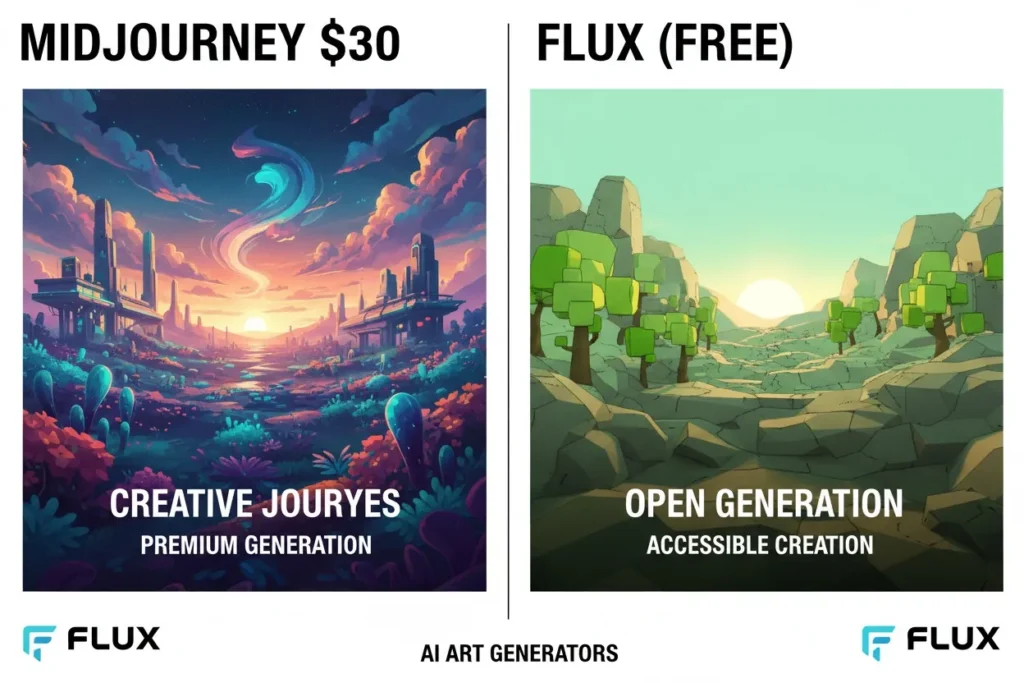
Midjourney killed its free trial in April 2023. It has not come back. As of April 2026, the minimum is $10/month for Basic (~200 fast image generations). Anyone telling you there’s a free Midjourney option is either selling something or three years out of date. For genuinely free image generation, use FLUX (open-source, runs locally) or Ideogram (free tier with watermarks).
“The free tiers in 2026 are legitimately good. The question isn’t quality — it’s whether the caps break your workflow.” Editorial synthesis — sources: OpenAI GPT-5 announcement (2025), Anthropic Claude pricing documentation (2026)
Paid tiers don’t just give you more of the same. Some features — extended reasoning, Sora, Deep Research, Opus 4.6 — don’t exist at the free tier at all. These are different tools, not a volume discount.
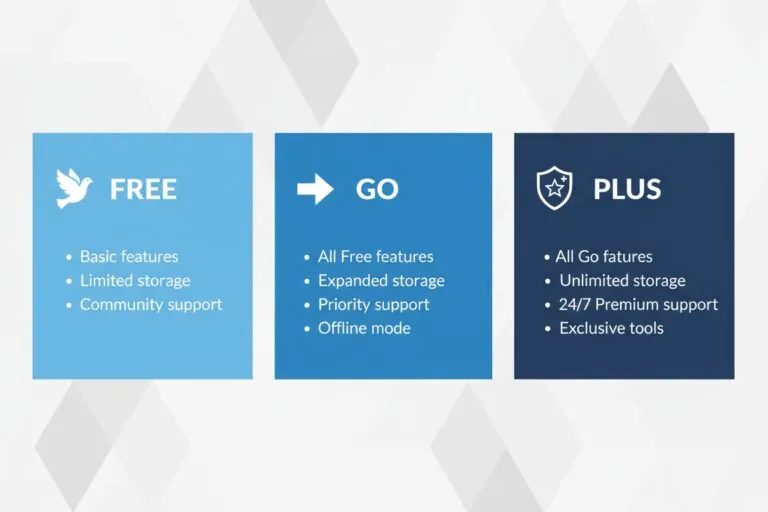
ChatGPT Go launched in India in August 2025 and went global in January 2026, currently available in 170+ countries at $8/month (₹399 in India, €8 in Europe). It gives you 10x more messages than free, GPT-5.3 Instant access, file uploads, image generation, and longer memory. What it doesn’t give you: Sora, Deep Research, Agent Mode, extended reasoning, or legacy models. And as of the global launch, it includes ads. Paying $8 to see ads while missing the features that make Plus worth it is a weird spot to be in — more on that in the traps section.
ChatGPT Plus at $20/month is where the product actually changes. GPT-5.4 access (as of March 2026), Sora video generation, 10 Deep Research runs per month, Agent Mode, extended reasoning — that’s not an incremental upgrade. It’s a different product class. No ads. The price has held at $20 for three years while the feature set has expanded considerably, which is genuinely good value by historical standards.
ChatGPT Pro is now split: $100/month (5x Plus limits, launched April 9, 2026) and $200/month (20x Plus limits). This is for people who exhaust Plus daily. Not most people.
| Plan | Price | Primary Model | Key Features | Ads? | ⚠ Limitations |
|---|---|---|---|---|---|
| Free | $0 | GPT-5.3 (capped) | Chat, image gen, custom GPTs | Yes (US) | 10 msg / 5hrs; 16K context; no reasoning |
| Go | $8/mo | GPT-5.3 Instant | 10x messages, file uploads, image gen | Yes (testing) | No Sora, Deep Research, Agent Mode, or extended reasoning |
| Plus | $20/mo | GPT-5.4 + Thinking | Sora, Deep Research, Agent Mode, Codex | No | 10 Deep Research runs/mo; no team features |
| Pro $100 | $100/mo | GPT-5.4 + full reasoning | 5x Plus limits, priority access | No | Same model access as Plus — only more usage |
| Pro $200 | $200/mo | GPT-5.4 Pro | 20x Plus limits, all features | No | Overkill for 95% of users; hard to justify unless you exhaust Plus daily |
Sources: OpenAI official pricing, ChatGPT Go Help Center (April 2026). Plan tiers: Go = expanded access, missing advanced features; Plus = full professional feature set; Pro = power-user volume only.
Claude’s tier structure is simpler. Free gets you Sonnet 4.6. Pro at $20/month gives you substantially more usage, Projects with persistent context, Research mode, Claude Code in the terminal, Google Workspace integration, and access to Opus 4.6 — the full-capability model. The reset window stays at 5 hours, but you can typically get 45 prompts per session before throttling, per community reports. Anthropic doesn’t publish the exact number.
Max is two tiers: $100/month (5x Pro usage) and $200/month (20x Pro usage). Both add priority access during peak traffic and early feature access. The $200 Max plan is documented to potentially replace API costs for heavy users — a developer processing millions of tokens daily can pay less on Max than on raw API billing. Real, if you’re at that scale.
“Opus 4.6 isn’t a speed upgrade. It’s a different model class. For complex document analysis or legal reasoning, the gap matters — and it’s not available on the free tier at all.” Editorial synthesis — sources: Anthropic Claude pricing documentation (2026), SSD Nodes Claude Code pricing analysis (March 2026)
I’ve seen people talk themselves into $20/month subscriptions they don’t need. I’ve also seen people waste hours per week hitting free tier limits because they convinced themselves they didn’t need to pay. Here’s the actual framework.
1
Do you hit usage limits 3+ times a week?
✓ Yes → Seriously consider upgrading. Each interruption is 5–15 minutes of workflow disruption.
✗ No → Stay free. You’re in the 75–85% of users who don’t need to pay.
2
Do you need extended reasoning (Thinking mode, Opus 4.6)?
✓ Yes → Go to Plus or Claude Pro. These model classes don’t exist at free tier.
✗ No → Standard models handle most tasks. Free or Go is fine.
3
Are you building automations or processing 500+ requests/month via API?
✓ Yes → API pricing matters more than subscriptions. Look at hybrid routing.
✗ No → Chat subscriptions cover you. API access is billed separately anyway.
4
Is your work time-sensitive (live support, client deadlines, peak-hour use)?
✓ Yes → The 2–5 second priority queue advantage on paid tiers adds up fast.
✗ No → Free and Go handle async work fine. Off-peak hours help too.
What the Research Actually Shows About AI Productivity
Here’s the part most comparison posts skip because it complicates the “upgrade and get more done” narrative.
A large-scale field study by Brynjolfsson, Li, and Raymond (2023), analyzing over 5,000 customer service agents using generative AI tools at a real call center, found a 14% productivity gain. Stanford HAI confirmed this finding — agents with AI access saw gains, but most of those gains accrued to novice and less experienced workers. Senior agents with deep domain expertise? The productivity lift was much smaller.
The Stanford AI Index 2026 updated the picture: productivity gains range from 14–15% in customer support, 26% in software development, and up to 50% in marketing output. But the report is explicit — gains are smaller or even negative in tasks requiring deeper judgment. And there’s a newer concern: heavy AI reliance may carry long-term learning penalties that slow skill development.
What does this mean for the free vs. paid decision? A few things.
If you’re early in your career or learning a new domain, AI assistance — even free tier — can have a disproportionate impact. You’re the novice worker. The research says you benefit most. If you’re an expert, AI gives you time savings on rote tasks, not transformative capability gains. The gap between free and paid matters less the more skilled you already are.
⚠ The Diminishing Returns Reality
There’s no research suggesting “slightly more AI access” creates breakthrough productivity for skilled professionals. The lift comes from eliminating interruptions and automating routine work — not from having a marginally smarter model. Before upgrading, honestly assess whether your bottleneck is access or how you’re using the tools.
The Honest Break-Even Math
Most “cost of AI” analyses just compare subscription price to vague productivity claims. Let’s be more specific.
ChatGPT Plus ($20/month) — Break-Even
Assumed hourly value of your time
$50/hr (median knowledge worker)
Time needed to justify $20/month
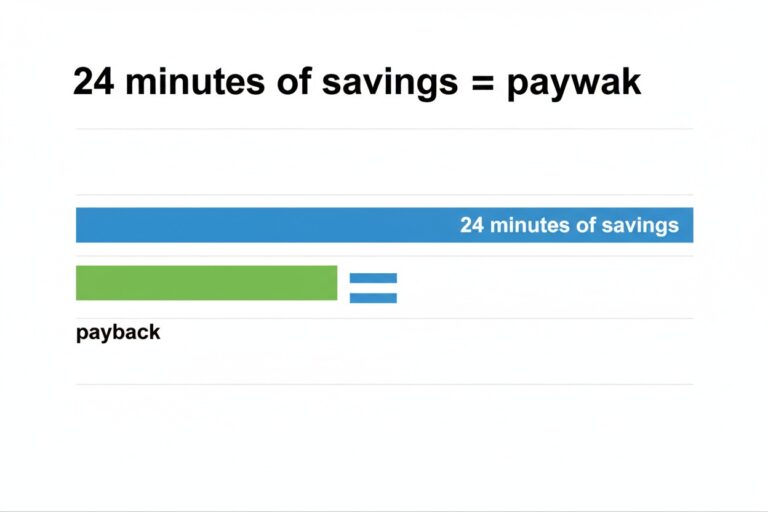
24 minutes saved per month
If you hit free limits 4x/week
~16 interruptions/month × 5–10 min = $67–133 in lost productivity
Reality check
Most users don’t hit limits 4x weekly. If you spread requests across hours, free works fine.
Claude Pro ($20/month) — When It Pays
You process 5+ large documents weekly
Free tier gets exhausted in 2–3 uploads
You write 20+ pages of complex content monthly
Opus 4.6 handles nuanced reasoning; Sonnet can’t always match it
You need Projects feature for persistent context
Free tier has no cross-session memory of any kind
For Claude Max and ChatGPT Pro at $100–200/month: the math is simple. Are you consistently exhausting Plus or Pro limits? If yes, the per-token API equivalent can be $600–1,500/month for the same workload. If no, you’re overpaying by a lot.
→ How to get more from free tiers with better promptingThree Traps I Keep Seeing People Fall Into
Paying for Plus when Go would be enough
If you don’t use extended reasoning weekly, don’t need Sora video, and aren’t running Deep Research — Go at $8 gives you 10x more messages than free for less than half the Plus price. A lot of users jump straight to $20 without testing whether $8 covers their actual workflow. Try Go for a month first.
Ignoring context window costs on Claude
Your “45 messages per session” on Claude Pro isn’t 45 questions. A single 50-page PDF upload consumes 3–5x the quota of a text question. Heavy document users hit Pro limits faster than they expect. If your workflow involves large files, factor this in before assuming Pro is enough — or before assuming free is enough.
Underestimating the cognitive cost of ads in Go
Sponsored Tips in ChatGPT Go aren’t banner ads in a sidebar. They appear below responses as contextual suggestions that can blend with the AI’s actual answer. In a focused work session, filtering that noise is a real cost — harder to quantify than $12/month but real. For professional environments where you’re context-switching constantly, the psychological overhead may exceed the savings versus Plus.
API Pricing for Developers: The Part the Comparison Charts Skip
If you’re building something — not just chatting — the subscription tiers are almost irrelevant. API access is billed separately on a pay-per-token basis, regardless of what subscription plan you have.
| Model | Input (per 1M tokens) | Output (per 1M tokens) | Best For | ⚠ Watch Out For |
|---|---|---|---|---|
| GPT-4o Mini | $0.15 | $0.60 | Simple queries at scale, classification | Weaker reasoning; production failures on nuanced tasks |
| Gemini 2.0 Flash | $0.08 | $0.30 | Highest value/cost ratio for bulk tasks | Less established enterprise track record; benchmark vs. production gap |
| Claude Haiku 4.5 | $1.00 | $5.00 | Balanced quality/cost for mid-complexity | Per-token cost 12x Gemini Flash; check if quality delta justifies it |
| Claude Sonnet 4.6 | $3.00 | $15.00 | Complex reasoning, document analysis | Context accumulation — turn 30 of a chat costs 30x turn 1 in tokens |
Sources: Anthropic API pricing docs (April 2026), OpenAI API pricing. Cost tiers: Low = under $0.50/1M input; Mid = $1–3; High = $3+. Independent benchmarks vary — treat as directional.
The smart move: route 70–80% of simple queries to cheap models (GPT-4o Mini, Gemini Flash), route complex analysis to Sonnet or Haiku. Documented hybrid approaches reduce total API spend by 60–70% versus using premium models for everything. Worth doing if you’re past 500 requests a month.
📌 The Context Accumulation Trap
In a long multi-turn conversation, you’re re-sending all previous turns as context with each request. Your first message costs $0.01 in tokens. Your thirtieth message — in the same conversation — might cost $0.30 because it carries the full history. For production applications, this compounds hard. Use Anthropic’s prompt caching (up to 90% cost reduction on repeated context) or reset context windows regularly.
The Actual Recommendation
Start free. Track your usage for two weeks — not vibes, actual tracking. Note every time a limit interrupts your work. Count them. Then do the math.
Quick Guide by Use Case
Casual user
Free tier is legitimately sufficient. Research, writing help, learning. If you’re not hitting limits twice a week, you don’t need to pay.
Regular professional
$20/month (Plus or Claude Pro) if you hit free limits 3+ times weekly or need advanced reasoning regularly. This is the right tier for 80% of paying users.
Document-heavy work
Claude Pro specifically. The 200K context window and Opus 4.6 access genuinely matters for legal contracts, technical docs, long-form research. ChatGPT Plus’s 16K free-tier limit truncates this work badly.
Developer / builder
API costs matter more than subscriptions. Hybrid routing (cheap models for simple tasks, premium for complex) beats any flat subscription if you’re at scale.
Image generation
Don’t start with Midjourney’s $10 minimum. Try FLUX or Ideogram free tiers first. Midjourney’s quality advantage is real, but not worth $10/month to experiment.
The Go plan at $8 exists in an awkward middle ground: more usage than free, but still no advanced reasoning, still ads, still missing Sora and Deep Research. If those missing features don’t matter to you, Go is cost-effective. If they do matter — even occasionally — go straight to Plus. The $12 difference is less than a beer in Chicago.
Sources & Further Reading
- OpenAI — ChatGPT Plans & Pricing (Official)
- OpenAI — Introducing ChatGPT Go, Now Available Worldwide (Jan 2026)
- OpenAI Help Center — What is ChatGPT Go? (Official FAQ)
- Anthropic — Claude Plans & Pricing (Official)
- Anthropic — Claude API Pricing Documentation
- Stanford HAI — Generative AI and Worker Productivity (Brynjolfsson, Li & Raymond, 2023)
- Stanford HAI — AI Index 2026 Report: Economy Chapter
- OpenAI — API Pricing
- tl;dv — ChatGPT Pricing 2026: Honest Review (Feb 2026)
- IntuitionLabs — Claude Max Plan Explained
https://www.bestprompt.art/membership-login/password-reset/
https://www.bestprompt.art/ai-tools-for-prompt-writing/
https://www.bestprompt.art/paid-ai-prompt-tools-youll-love-using-in-2025/
https://www.bestprompt.art/advanced-prompt-capabilities/
https://www.bestprompt.art/tiered-ai-access/
https://www.bestprompt.art/chatgpt-vs-claude-vs-gemini/
https://www.bestprompt.art/ai-tool-roi/
https://www.bestprompt.art/cost-performance-tradeoff-techniques/
https://www.bestprompt.art/9-prompt-engineering-tools/
https://www.bestprompt.art/best-free-ai-tools-to-start-using-in-2025/