Analysis · April 2025
Most creatives won’t lose their jobs to AI. They’ll keep their jobs while their rates collapse, their clients’ expectations inflate, and the craft that took years to develop gets treated like a prompt tweak. That’s a harder problem than replacement—and almost nobody is talking about it clearly.
- AI is restructuring which creative tasks have market value—not eliminating creative work wholesale.
- The jobs at risk aren’t the most creative ones. They’re the ones that generate the income stream that lets people do the creative work.
- Legal clarity on AI-generated content is still thin—and the gap is creating real exposure for commercial creative work.
- The creatives who are doing well aren’t the ones resisting AI. They’re the ones who’ve figured out what they offer that AI genuinely can’t replicate—and narrowed their pitch to that.
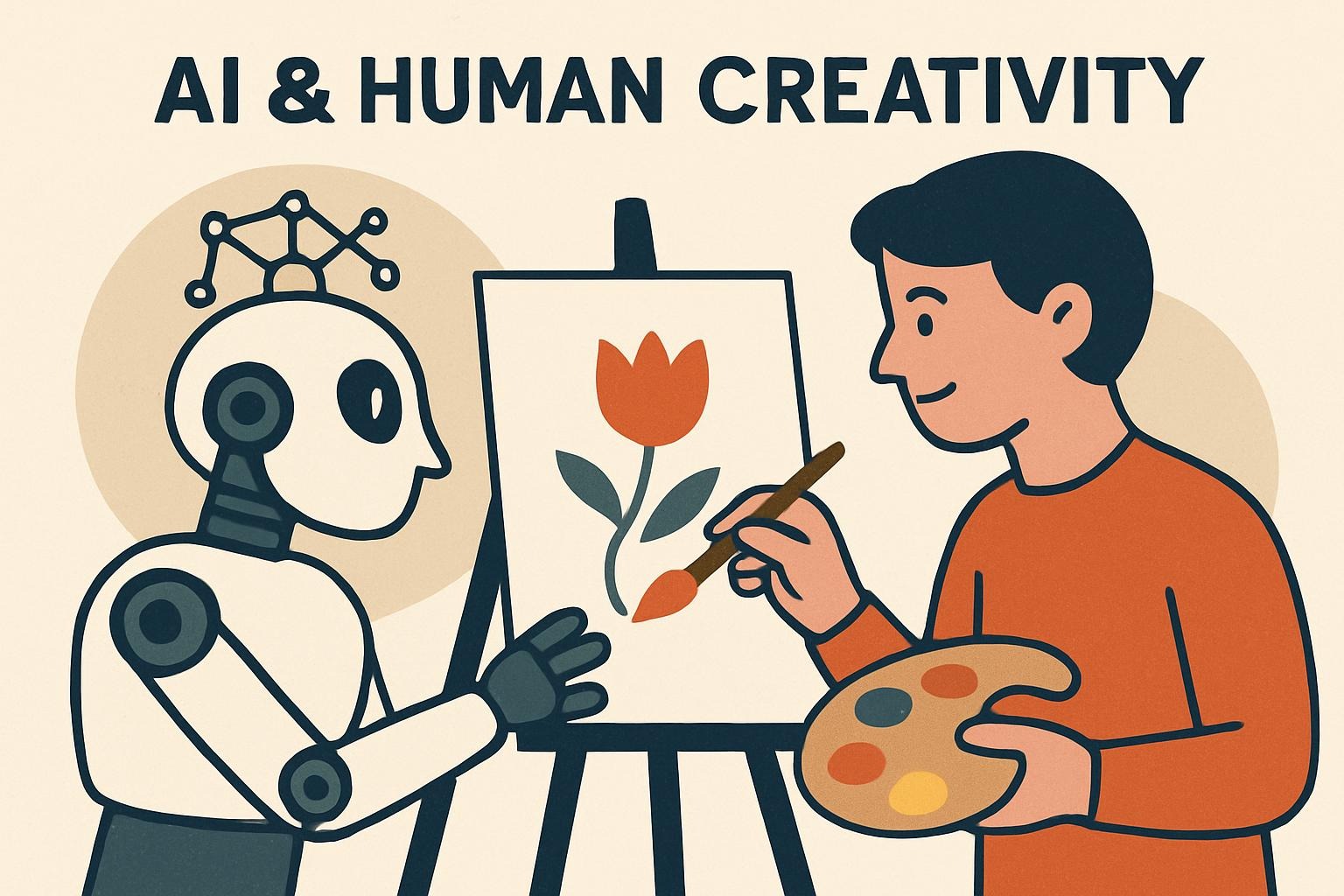
The debate about AI and creativity has a problem: it keeps having the wrong argument. One side insists AI will replace artists entirely. The other side insists human creativity is irreplaceable and always will be. Both are wrong in the same way—they’re treating this as a binary question when it’s actually a pricing problem.
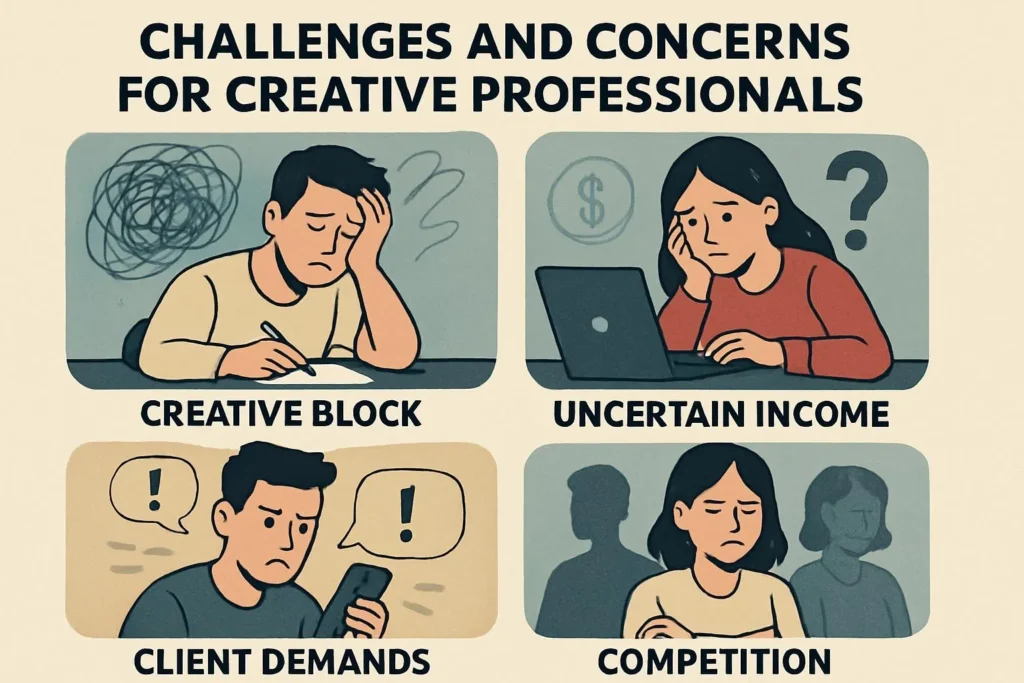
Here’s what I actually observe: writers still have writing work. Illustrators still have illustration work. Graphic designers still have design work. But the budgets have compressed. The turnaround expectations have accelerated. And the clients who used to say “take the time you need to get it right” are now saying “can’t you just use AI for the first pass?”
That’s not replacement. That’s devaluation. And it’s a harder problem to solve because it’s invisible in the job statistics.
The numbers worth paying attention to aren’t the adoption percentages in vendor press releases. They’re from sources with no stake in the conclusion.
That 18% automation figure deserves unpacking. It doesn’t mean 18% of jobs disappear—it means 18% of the tasks within jobs can be done by AI tools at current capability levels. Most jobs are a bundle of tasks. Some of those tasks are now cheaper to outsource to an AI. The rest still need a human. The economics of the role change; the role itself often survives—just at different pay.
The creative sector’s specific challenge is that the tasks most exposed to AI automation are often the ones creatives use to pay the bills—stock illustration, product copy, social media content, background music, basic template design. The passion projects and high-craft work were never the income floor. The commodity work was.
The Copyright Problem Nobody’s Explaining Clearly
This is the part that should be getting more attention and isn’t. The US Copyright Office has consistently ruled that AI-generated content—without meaningful human authorship in the creative choices—is not copyrightable. ESTABLISHED This isn’t a gray area anymore. The Thaler v. Vidal ruling (2023) established that copyright requires human authorship. The Copyright Office’s AI guidance reinforces it.
What this means practically: commercial work that’s purely AI-generated may have no copyright protection. A client who uses entirely AI-generated imagery for their campaign can’t stop a competitor from copying it. PROBABLE This is a real business risk that most creative clients haven’t thought through, and it’s an argument for human creative involvement that’s actually commercially grounded rather than philosophically defensive.
The Getty Images lawsuit against Stability AI—still working through the courts as of early 2025—is the other live thread. ESTABLISHED The outcome will matter for everyone who uses AI image tools commercially. Worth watching.
Who’s Actually at Risk, and Who Isn’t
Not all creative work faces the same pressure. The distinction that matters isn’t “creative vs. not creative”—it’s whether the task is specification-driven or judgment-driven.
Specification-driven tasks have clear success criteria you could write down: produce 50 product descriptions matching these brand guidelines, generate variations of this logo in these six color schemes, write three subject line options for this email. These tasks are compressible by AI because the spec is the constraint. Whoever manages the spec is still valuable. The person executing the spec against a template is less so.
Judgment-driven tasks require knowing which direction to push when the brief is incomplete, which draft feels right when all of them technically pass the criteria, when to push back on a client’s stated preference because it conflicts with their actual goal. AI doesn’t do this well. It doesn’t know what it doesn’t know. And in creative work, the gap between what the brief says and what the work actually needs is often where the real value lives.
What’s Actually Working, Without the Cheerleading
I’ve watched creative professionals navigate this well and badly. The pattern among the ones doing well isn’t “embrace AI wholesale” or “resist it on principle.” It’s something more specific: they’ve identified the narrowest possible version of what they do that AI can’t replicate without them, and they’ve moved their pitch there.
A copywriter who used to sell “I write good copy” is now selling “I know how Series B fintech companies talk to skeptical enterprise buyers, and I can tell when a brief is solving the wrong problem.” That’s not AI-resistant by accident. That’s judgment accumulated through domain depth that AI hasn’t trained on at that level of specificity.
An illustrator who used to sell “I make good illustrations” is now selling “I work with children’s book publishers who need a specific visual vocabulary that won’t terrify a 6-year-old or bore their parent”—and they understand that niche deeply enough that a generic AI image tool produces obviously wrong output in that context. Not because AI can’t draw. Because “right” in that niche requires understanding the reader psychology, the production format, the publisher’s track record, and the author’s intent simultaneously.
Narrow is safe. Generic is exposed. That’s the practical version of “human creativity is irreplaceable.”
My exposure is skewed toward B2B content and digital creative work. Fine art, performing arts, and physical crafts face different dynamics I haven’t fully engaged with here.
The copyright analysis covers US law primarily. EU AI Act implications for creative work are a separate and still-developing thread.
The “narrow is safe” argument assumes you can get to the narrow position. Emerging creatives who haven’t accumulated the domain depth yet face a harder problem than established practitioners—and this piece doesn’t have a good answer for them.
Predictions about AI capability plateaus are notoriously unreliable. The task-exposure table above reflects current capability, not 2027 capability.
Questions Worth Answering
The Honest Conclusion
AI is a real and significant shift for creative professionals. It’s not an existential threat to human creativity—but it is an economic restructuring of which creative tasks have market value, and that restructuring is hitting the income floor of creative careers harder than the headline jobs.
The people navigating this best aren’t the loudest voices on either side of the debate. They’re the ones who stopped arguing about whether AI is good or bad and started figuring out what they specifically can offer that makes AI-only output obviously insufficient.
The creative professionals who will matter in five years are the ones who’ve made themselves specific enough that generic can’t substitute for them—not the ones who’ve fought hardest against the tools.