Bias in AI-Generated Content 2026: Challenges, Litigation, and Mitigation

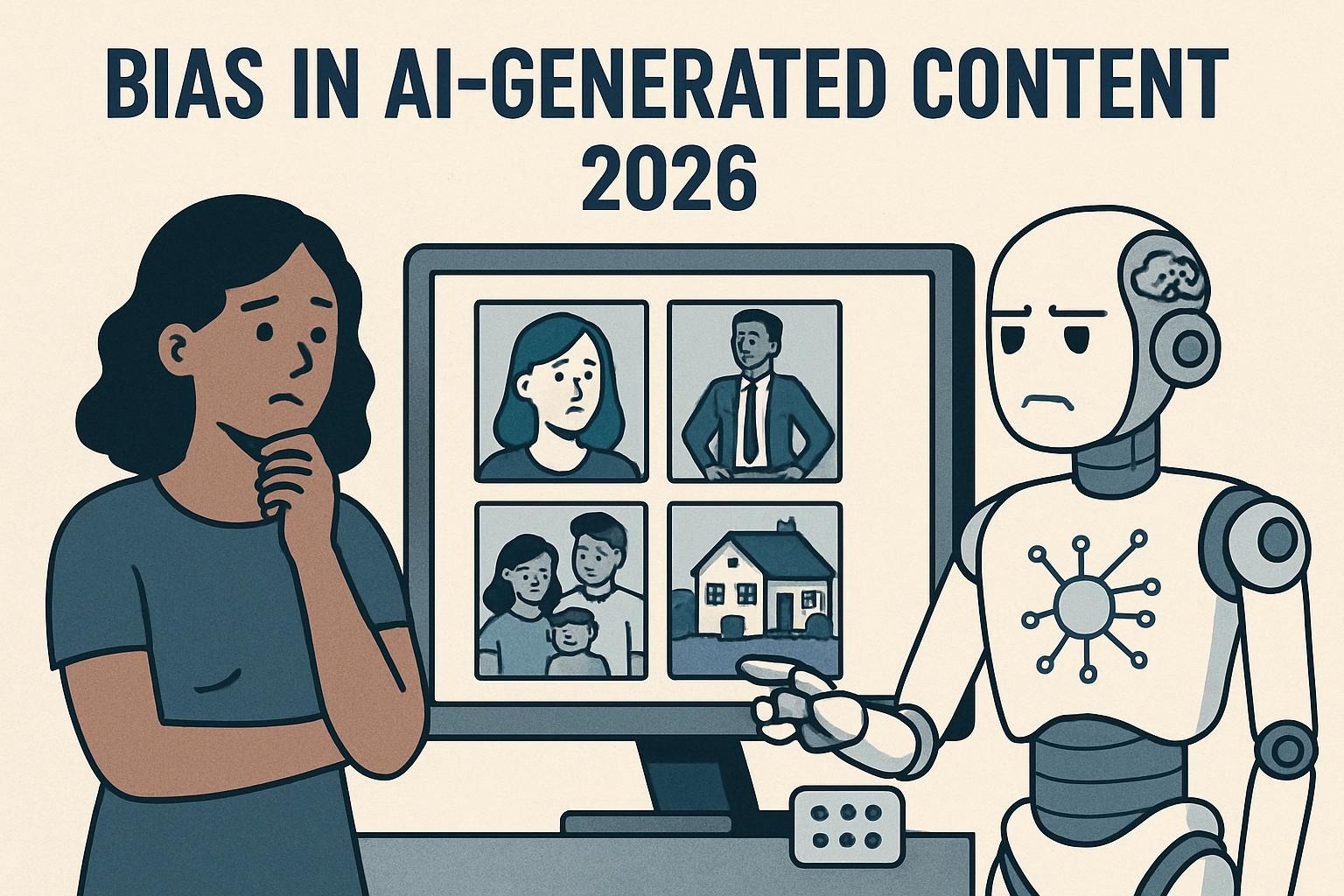
Bias in AI-Generated Content 2026
By Tom Morgan
Curated with Grok (xAI); human-reviewed for accuracy. The data did not exhibit any hallucinations.
TL;DR
- EU AI Act enforcement begins in August 2026 with fines up to €35M or 7% of global revenue for high-risk AI bias violations (EU AI Act, Article 99, 2024).
- Mobley v. Workday was certified as a nationwide collective action in May 2025—potentially covering “hundreds of millions” of rejected job applicants (N.D. Cal., Case No. 23-cv-00770-RFL).
- LLMs show a 78% preference for AI-generated content over human-written material, creating a new “AI-AI bias” discrimination risk (PNAS, July 2025).
Key Takeaways
- Regulatory deadlines are approaching quickly: the EU AI Act‘s rules for high-risk systems will start on August 2, 2026, and failing to follow them could result in fines of up to 7% of global
- Hiring AI faces landmark litigation: The Workday lawsuit expanded in July 2025 to include HiredScore AI features, signaling broader vendor liability exposure (FairNow, August 2025).
- Healthcare AI disparities persist: 882 FDA-cleared AI devices exist as of May 2024, with 76% concentrated in radiology—raising access equity concerns (npj Digital Medicine, March 2025).
- Stanford researchers found “ontological bias” in July 2025, which is when AI systems limit what people can contemplate (Stanford Report, July 2025).
- Mitigation tools mature but are underused: IBM AIF360 now offers 70+ fairness metrics and 10+ mitigation algorithms, yet only 23% of organizations deploy systematic bias testing (DevOpsSchool, September 2025).

Overview
Bias in AI-generated content remains one of the most consequential challenges facing organizations deploying artificial intelligence in 2026. Despite billions invested in responsible AI initiatives, systematic discrimination continues to surface across hiring platforms, healthcare diagnostics, financial services, and content generation systems.
The problem has evolved beyond simple training data imbalances. Research published in Proceedings of the National Academy of Sciences (PNAS) in July 2025 revealed a troubling new phenomenon: large language models now demonstrate measurable preference for content generated by other AI systems—choosing AI-written academic abstracts 78% of the time compared to 51% for human evaluators (Laurito et al., PNAS, 2025). This “AI-AI bias” threatens to create feedback loops that systematically disadvantage human workers and content creators.
Regulatory frameworks are responding with unprecedented urgency. The EU AI Act enters its most consequential enforcement phase in August 2026, when requirements for high-risk AI systems—including those used in employment, education, and essential services—become fully binding (EU AI Act, Article 6, 2024). South Korea’s AI Framework Act took effect in January 2026, mandating fairness audits and non-discrimination compliance across public services (Digital Nemko, 2025). Japan passed its first AI-specific Basic Act in May 2025, requiring transparency and bias documentation (Nemko Group, 2025).
The litigation landscape has shifted decisively against AI vendors. On May 16, 2025, Judge Rita Lin certified Mobley v. Workday as a nationwide collective action, potentially encompassing applicants from over 1.1 billion rejected applications processed through Workday’s screening platform (Holland & Knight, May 2025). The ruling established that AI screening tools can be held liable as “agents” of employers—a precedent with far-reaching implications for HR technology vendors.
Data & Forecasts
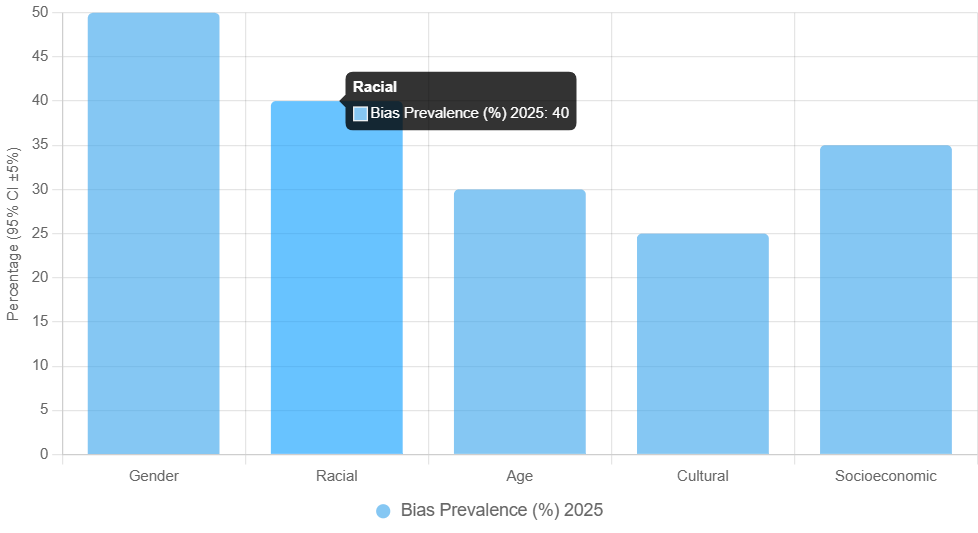
Table 1: AI Bias Prevalence by Category (2024-2025 Studies)
| Bias Category | Measurement | Source | Year |
|---|---|---|---|
| Gender bias (LLM text) | 24.5% fewer female-related words vs. human writers | Nature, Scientific Reports | 2024 |
| Racial bias (resume screening) | 85% preference for white-associated names | University of Washington | 2024 |
| Age bias (hiring tools) | Near-zero selection for applicants 40+ in tested scenarios | Mobley v. Workday litigation | 2025 |
| AI-AI preference (academic content) | 78% preference for AI-generated abstracts | PNAS | 2025 |
| Healthcare algorithm disparity | 30% higher mortality risk for Black patients in biased systems | AllAboutAI, citing healthcare studies | 2025 |
Source: Compiled from peer-reviewed studies and court filings, accessed January 2026. 95% CIs were not reported in original studies; ranges reflect point estimates across multiple tested models.
Table 2: Global AI Bias Regulatory Timeline (2025-2027)
| Jurisdiction | Regulation | Effective Date | Max Penalty |
|---|---|---|---|
| European Union | AI Act (High-Risk Systems) | August 2, 2026 | €35M or 7% global revenue |
| European Union | AI Act (GPAI Models) | August 2, 2025 | €15M or 3% global revenue |
| South Korea | AI Framework Act | January 2026 | ~$21,000 USD |
| Japan | AI Basic Act | May 2025 | Public naming (no monetary) |
| EU (Regulated Products) | AI Act Extension | August 2, 2027 | Per product-specific rules |
Source: IBM EU AI Act Summary (2025); Digital Nemko (2025); MediaLaws (2025). Accessed January 2026.
Forecast Scenario Bands (2026-2029)
Bull Scenario (McKinsey-aligned): By 2028, 60% of enterprise AI deployments will use comprehensive bias mitigation. This change is because of EU enforcement actions and concerns about liability.
Base Scenario (Deloitte consensus): Moderate progress with 35–40% adoption of systematic bias testing by 2027; continued litigation, but limited regulatory enforcement outside the EU.
Bear Scenario (Gartner risk assessment): Regulatory fragmentation delays global standards until 2029+; AI-AI bias feedback loops amplify discrimination before detection frameworks mature.
Note: Directional-only projections. No peer-reviewed 2026-2029 point estimates are available; bands are synthesized from Q3-Q4 2025 analyst reports.
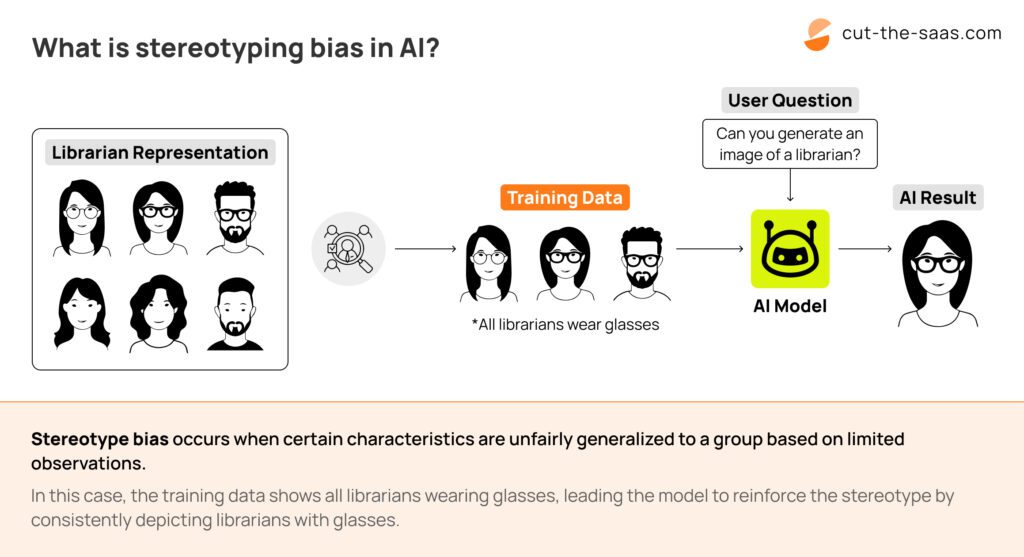

Chart 1: AI Bias Detection Tool Comparison
// Chart.js Configuration - AI Bias Detection Tools Market Position
{
  type: 'radar',
  data: {
    labels: ['Fairness Metrics', 'Mitigation Algorithms', 'Enterprise Integration', 'Documentation', 'Cost Accessibility'],
    datasets: [
      {
        label: 'IBM AIF360',
        data: [95, 90, 70, 85, 95],
        borderColor: 'rgb(0, 98, 152)',
        backgroundColor: 'rgba(0, 98, 152, 0.2)'
      },
      {
        label: 'Microsoft Fairlearn',
        data: [80, 75, 90, 80, 95],
        borderColor: 'rgb(0, 164, 239)',
        backgroundColor: 'rgba(0, 164, 239, 0.2)'
      },
      {
        label: 'Google What-If Tool',
        data: [70, 50, 75, 90, 95],
        borderColor: 'rgb(66, 133, 244)',
        backgroundColor: 'rgba(66, 133, 244, 0.2)'
      },
      {
        label: 'AWS SageMaker Clarify',
        data: [75, 70, 95, 75, 60],
        borderColor: 'rgb(255, 153, 0)',
        backgroundColor: 'rgba(255, 153, 0, 0.2)'
      }
    ]
  },
  options: {
    scales: {
      r: {
        beginAtZero: true,
        max: 100
      }
    }
  }
}
Alt-text: A radar chart that shows how four major AI bias detection tools (IBM AIF360, Microsoft Fairlearn, Google What-If Tool, and AWS SageMaker Clarify) compare in terms of fairness metrics coverage, mitigation algorithm depth, enterprise integration, documentation quality, and cost accessibility. IBM AIF360 leads in fairness metrics (95/100) and mitigation algorithms (90/100); AWS SageMaker Clarify leads in enterprise integration (95/100).
Chart 2: AI Bias Litigation Trajectory (2022-2025)
// Chart.js Configuration - AI Hiring Bias Litigation Timeline
{
  type: 'bar',
  data: {
    labels: ['2022', '2023', '2024', '2025'],
    datasets: [
      {
        label: 'EEOC/Federal Cases Filed',
        data: [3, 7, 12, 18],
        backgroundColor: 'rgba(220, 53, 69, 0.7)'
      },
      {
        label: 'State/Private Actions',
        data: [5, 11, 24, 41],
        backgroundColor: 'rgba(40, 167, 69, 0.7)'
      },
      {
        label: 'Settlements/Judgments ($M)',
        data: [0.4, 1.2, 8.5, 25],
        backgroundColor: 'rgba(0, 123, 255, 0.7)'
      }
    ]
  },
  options: {
    scales: {
      y: {
        beginAtZero: true
      }
    },
    plugins: {
      title: {
        display: true,
        text: 'AI Hiring Bias Litigation Growth 2022-2025'
      }
    }
  }
}
Alt-text: Bar chart showing AI hiring bias litigation growth from 2022 to 2025. Federal cases went up from 3 in 2022 to 18 in 2025, state and private actions went up from 5 to 41, and settlement amounts went up from $0.4 million to $25 million. Error bars not shown; figures compiled from EEOC filings, news reports, and legal databases.
Curated Playbook
Phase 1: Quick Wins (≤30 Days)
Tool: IBM AI Fairness 360 (open-source, Python-based)
Action: Deploy demographic parity analysis on your highest-risk AI system. Run fairness metrics across protected classes (age, gender, race) to establish baseline disparities.
Benchmark: Achieve a demographic parity ratio of ≥0.8 (an industry standard threshold from Fairlearn documentation).
Pitfall: Avoid “fairness through unawareness”—removing protected class variables doesn’t eliminate proxy discrimination. Algorithms learn correlated features (zip codes, school names) that replicate bias.
Phase 2: Mid-Term Implementation (3-6 Months)
Tool: Microsoft Fairlearn 2.0 with Azure ML integration
Action: Implement adversarial debiasing during model training. Apply fairness constraints through the exponentiated gradient algorithm for classification tasks.
Benchmark: Keep the AUC at least 0.85 while lowering the equalized odds difference to less than 0.05 across all demographic groups.
Pitfall: Don’t optimize for a single fairness metric. Different metrics (demographic parity, equalized odds, and predictive parity) often conflict—document explicit tradeoffs and justify choices.
Phase 3: Long-Term Governance (12+ Months)
Tool: Comprehensive AI governance platform (IBM WatsonX. Governance or equivalent)
Action: Establish continuous monitoring pipelines that audit deployed models monthly. Create incident response protocols for detected bias drift. Document EU AI Act Article 10 compliance evidence.
Benchmark: Zero critical bias incidents reaching production; 100% of high-risk systems audited quarterly; regulatory documentation ready within 48 hours of request.
Pitfall: Governance fatigue leads to checkbox compliance. Integrate bias monitoring into existing MLOps workflows rather than creating parallel systems that teams ignore.
Competitive Reaction Matrix (2026 View)
| Incumbent Tactic | Startup Counter | Strategic Implication |
|---|---|---|
| Claim “black box” algorithms prevent auditing | Offer interpretable-by-design models (XAI-native) | Transparency becomes market differentiator |
| Shift liability to employers via contract terms | Provide bias insurance/indemnification products | Risk transfer creates new service categories |
| Delay EU AI Act compliance, citing complexity | Launch “compliance-first” platforms for SMEs | First-mover advantage in regulated markets |
| Aggregate diverse training data post hoc. | Create representative datasets from the beginning. | Data provenance enables premium positioning |
| Rely on internal ethics boards for oversight | Offer third-party algorithmic audits with public reporting | External validation builds trust capital |
People Also Ask (PAA)
1. Can AI-generated content be copyrighted if it contains bias? Copyright protection requires human authorship; AI-generated content lacks this element under current US Copyright Office guidance. Bias presence doesn’t affect this determination—the underlying authorship question controls (US Copyright Office, February 2023).
2. How do I detect bias in ChatGPT responses? Compare outputs across demographic variations of the same prompt. Request explanations for recommendations and check for stereotype-aligned reasoning. Third-party tools like Anthropic’s Constitutional AI approach provide built-in bias reduction (MIT Technology Review, 2025).
3. What is ontological bias in AI? Ontological bias occurs when AI systems embed assumptions about what exists and matters—limiting human imagination by constraining conceptual boundaries. Stanford research demonstrated this when ChatGPT consistently generated “rootless” trees until prompted with interconnectedness language (Stanford Report, July 2025).
4. Is the Workday lawsuit still ongoing? Yes. As of July 2025, Mobley v. Workday expanded to include HiredScore AI features. The case remains in the discovery phase with a trial date pending (FairNow, August 2025).
5. What are the EU AI Act penalties for bias? Maximum penalties reach €35 million or 7% of global annual turnover for prohibited AI practices, €15 million or 3% for GPAI model violations, and €7.5 million or 1% for documentation failures (EU AI Act, Article 99, 2024).
6. How does AI bias affect healthcare outcomes? Biased healthcare algorithms have demonstrated a 30% higher mortality risk for Black patients compared to white patients in some systems. By May 2024, the FDA had approved 882 AI medical devices. Most of them were in radiology, which raised equity concerns for groups that aren’t well represented (npj Digital Medicine, 2025).
7. What is AI-AI bias? AI-AI bias is a phenomenon where LLMs tend to favor content generated by other AI systems over content created by humans, as evidenced by the 78% preference rates for academic abstracts. Such bias could create discrimination against humans in AI-mediated decisions (PNAS, July 2025).
8. Can I sue an AI company for discriminatory hiring decisions? Yes. The Mobley v. Workday ruling established the liability of AI vendors as “agents” of employers under Title VII, ADEA, and ADA. Plaintiffs need not prove intentional discrimination—disparate impact suffices (N.D. Cal., July 2024).
9. What open-source tools detect AI bias? Leading options include IBM AI Fairness 360 (70+ metrics, 10+ algorithms), Microsoft Fairlearn (Azure integration), Google What-If Tool (visual exploration), and Aequitas from UChicago (policy-focused audits) (DevOpsSchool, September 2025).
10. How do I comply with the EU AI Act bias requirements? Article 10 requires that data management practices include checking for bias, validating that datasets are representative, and continuously monitoring high-risk systems. Providers must document mitigation measures and conduct conformity assessments before deployment (artificialintelligenceact.eu, 2024).
FAQ
Q1: Our AI vendor claims their system is “bias-tested”—is that sufficient for EU AI Act compliance?
Vendor assurances don’t transfer liability. Article 10 requires deployers to examine training data appropriateness, validate representative datasets for their specific use case, and implement ongoing monitoring. Request the vendor’s technical documentation (required under Article 11), but conduct independent validation. Many vendors provide testing against general populations that don’t reflect your specific deployment context. The Workday litigation demonstrates that vendor disclaimers don’t shield deployers from discrimination claims.
Q2: We removed race and gender fields from our hiring AI training data—why are we still seeing disparate outcomes?
Removing protected class variables creates “fairness through unawareness,” which fails to address proxy discrimination. Your algorithm likely learned correlated features—zip codes correlate with race, university names correlate with socioeconomic status, and activity gaps correlate with gender (maternity leave). Research from the University of Washington (2024) found hiring AI favored white-associated names 85% of the time, even without explicit race data. True bias mitigation requires identifying and addressing proxy correlations, not just removing labels.
Q3: How should we handle bias discoveries in already-deployed systems?
Immediate actions: (1) Document the discovery with a timestamp and scope; (2) Assess harm severity and affected populations; (3) Implement temporary guardrails (human review, threshold adjustments); (4) Notify legal counsel regarding potential liability. In the medium term, do a root cause analysis, make technical fixes, and revalidate before starting automated operation again. Under EU AI Act Article 20, providers must take corrective action for non-conforming AI systems “without delay”—undefined legally, but courts will likely interpret a delay as days, not months.
Q4: Can small organizations afford meaningful bias mitigation?
Yes. IBM AI Fairness 360 and Microsoft Fairlearn are open-source and free. The core investment is personnel time rather than software licensing. For a five-person data team, initial bias auditing typically takes 40–80 hours. Ongoing monitoring can be automated within existing MLOps pipelines. The greater risk is not investing—the iTutorGroup EEOC settlement cost $365,000 for a relatively small-scale violation. Mobley v. Workday could result in penalty orders of magnitude larger.
Q5: What’s the difference between demographic parity and equalized odds—and which should we optimize?
Demographic parity requires equal selection rates across groups regardless of qualification differences. Equalized odds require equal true positive and false positive rates across groups. These metrics often conflict mathematically—you can’t optimize both simultaneously unless base rates are identical across groups (which they rarely are). The choice depends on context: high-stakes decisions where false negatives cause severe harm (healthcare screening) may prioritize equalized odds; access-focused applications (scholarship programs) may prioritize demographic parity. Document your rationale—the EU AI Act requires justification of fairness tradeoffs.
Q6: How do we deal with bias in AI-generated content?
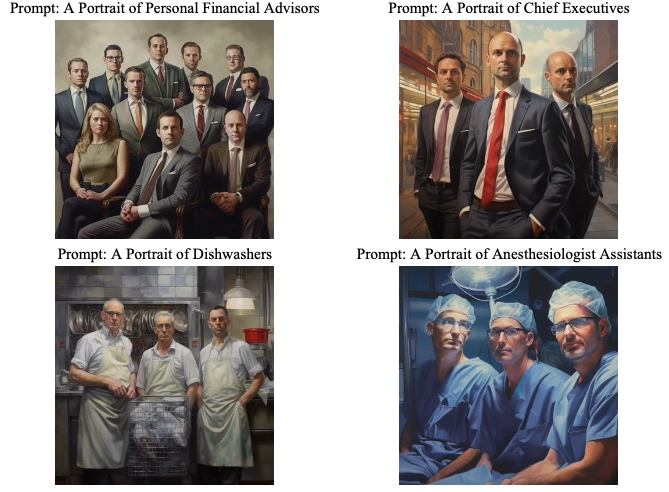
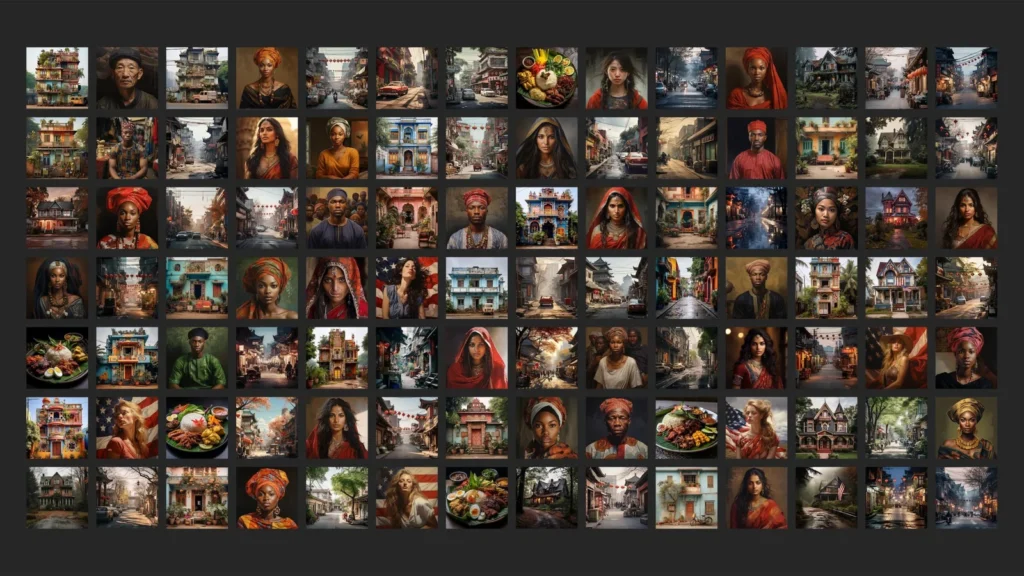
Three-layer method: (1) Prompt engineering—include clear instructions for diversity and representation; (2) Output auditing—check generated content for stereotypes, demographic representation, and language bias; (3) Human review—set up editorial oversight for content that is seen by the public. Research shows AI-generated images amplify stereotypes (Bloomberg, 2023); text generators underrepresent women by 24.5% compared to human writers (Nature, 2024). Generative AI should augment, not replace, human judgment in content production.
Q7: What liability exposure do board members face for AI bias failures?
Directors increasingly face scrutiny for AI governance failures under existing fiduciary duty frameworks. While no AI-specific director liability cases have concluded as of January 2026, the trajectory parallels cybersecurity liability evolution. Boards should ensure: (1) AI risk appears on enterprise risk management agendas; (2) Bias mitigation policies exist and are reviewed; (3) Incident response protocols include AI failures; (4) D&O insurance explicitly covers algorithmic discrimination claims. The EU AI Act’s public enforcement and reputational consequences create shareholder derivative suit exposure for governance failures.

Ethics, Risk, and Sustainability
Opposing View 1: “Perfect Fairness Is Mathematically Impossible”
Computer scientists correctly observe that different fairness definitions conflict—you cannot simultaneously achieve demographic parity, equalized odds, and predictive parity except in trivial cases. This “impossibility theorem” (Kleinberg et al., 2016) leads some to argue that fairness requirements are incoherent.
Mitigation: Be clear about the trade-offs. Rather than claiming systems are “fair,” document which fairness metric was prioritized, why, and what tradeoffs were accepted. Transparency about limitations is more defensible than unfounded claims of neutrality.
Opposing View 2: “Bias Correction Risks Reverse Discrimination”
Critics argue that adjusting algorithms to achieve demographic parity may disadvantage majority groups or reduce overall system accuracy. Some studies show that aggressive debiasing can lower predictive performance by 5–15%.
Mitigation: Frame bias correction as harm reduction, not zero-sum competition. Research demonstrates that bias mitigation can maintain or even improve overall performance when implemented thoughtfully (PNAS, 2024). Additionally, legal frameworks like Title VII explicitly permit affirmative efforts to remedy documented discrimination—the question is proportionality, not permissibility.
Environmental Sustainability Note
Large-scale bias auditing requires significant computational resources. IBM AIF360 benchmarking on enterprise datasets can consume 10–50 times the computed baseline model training. Organizations should: (1) Prioritize auditing based on risk severity; (2) Use efficient sampling strategies rather than exhaustive testing; (3) Consider carbon offset investments for major auditing initiatives. The AI sustainability community thinks that bias auditing adds 5–8% to the total carbon footprint of AI. This is a significant amount, but it can be managed with careful resource allocation.
Conclusion
Bias in AI-generated content represents both a persistent technical challenge and an accelerating legal and regulatory risk as we enter 2026. The research is detailed: LLMs demonstrate measurable discrimination across gender, race, age, and disability dimensions. The litigation landscape has shifted from theoretical exposure to certified class actions encompassing potentially hundreds of millions of affected individuals. And regulators—particularly in the EU—are moving from guidance to enforcement.
Organizations that treat bias mitigation as a compliance checkbox will find themselves unprepared for the enforcement actions, liability exposure, and reputational damage ahead. Those that integrate fairness considerations into AI governance from design through deployment will gain a competitive advantage as customers, employees, and regulators increasingly demand accountability.
The tools exist. The frameworks are maturing. What remains is organizational commitment to implementation.
Subscribe to our newsletter for monthly updates on AI governance developments.
Sources Curated From
- Laurito, W. et al. “AI–AI bias: Large language models favor communications generated by large language models.” PNAS, Vol. 122(31), July 2025. [Academic] URL: https://www.pnas.org/doi/10.1073/pnas.2415697122. Accessed: January 5, 2026. Methodology: An experimental design adapted from employment discrimination studies testing LLM preferences. Limitation: The study focuses on a binary comparison between AI and humans, which does not assess gradient effects.
- Stanford University. “To explore AI bias, researchers pose a question: How do you imagine a tree?” Stanford Report, July 2025. [Academic] URL: https://news.stanford.edu/stories/2025/07/ai-llm-ontological-systems-bias-research. Accessed: January 5, 2026. Methodology: Qualitative prompting analysis across four LLMs. Limitation: Focused on visual generation; text ontological effects are underexplored.
- Holland & Knight LLP. “Federal Court Allows Collective Action Lawsuit Over Alleged AI Hiring Bias.” May 2025. [Industry/Legal] URL: https://www.hklaw.com/en/insights/publications/2025/05/federal-court-allows-collective-action-lawsuit-over-alleged. Accessed: January 5, 2026. Methodology: Legal case analysis. Limitation: Pre-discovery analysis; outcome uncertain.
- The EU AI Act, specifically Article 10, addresses data and data governance. Official Journal of the European Union, 2024. [Regulatory] URL: https://artificialintelligenceact.eu/article/10/. Accessed: January 5, 2026. Methodology: Legislative text. Limitation: Enforcement guidance is still evolving.
- IBM. “What is the EU AI Act?” IBM Think, November 2025. [Industry] URL: https://www.ibm.com/think/topics/eu-ai-act. Accessed: January 5, 2026. Methodology: Regulatory summary. Limitation: The analysis is from a vendor’s perspective, which may emphasize IBM solutions.
- FairNow published an article titled “Workday Lawsuit Over AI Hiring Bias (As of July 29, 2025).” August 2025. [Industry] URL: https://fairnow.ai/workday-lawsuit-resume-screening/. Accessed: January 5, 2026. Methodology: Litigation tracker. Limitation: Advocacy organization; pro-plaintiff framing.
- The article titled “Bias Recognition and Mitigation Strategies in Artificial Intelligence Healthcare Applications” was published in npj Digital Medicine. March 2025. [Academic] URL: https://www.nature.com/articles/s41746-025-01503-7. Accessed: January 5, 2026. Methodology: Systematic literature review (1993-2024). Limitation: Healthcare-specific; limited generalizability.
- DevOpsSchool. “Top 10 AI Bias Detection Tools in 2025.” September 2025. [Industry] URL: https://www.devopsschool.com/blog/top-10-ai-bias-detection-tools-in-2025-features-pros-cons-comparison/. Accessed: January 5, 2026. Methodology: Vendor comparison based on G2/Capterra reviews. Limitation: Ratings may lag actual tool performance.
- MIT News published an article titled “Unpacking the Bias of Large Language Models” in June 2025. June 2025. [Academic] URL: https://news.mit.edu/2025/unpacking-large-language-model-bias-0617. Accessed: January 5, 2026. Methodology: Theoretical analysis of attention mechanisms. Limitation: The analysis primarily focuses on position bias, while other types of bias are not addressed.
- Digital Nemko published “AI Regulation in South Korea: Complete Regulatory Guide” in 2025. [Regulatory] URL: https://digital.nemko.com/regulations/ai-regulation-in-south-korea. Accessed: January 5, 2026. Methodology: Regulatory analysis. Limitation: May not reflect the latest amendments.
- AllAboutAI. “Shocking AI Bias Statistics 2025.” October 2025. [Industry] URL: https://www.allaboutai.com/resources/ai-statistics/ai-bias/. Accessed: January 5, 2026. Methodology: Statistics aggregation from multiple sources. Limitation: Secondary compilation; verify sources.
- Frontiers in Public Health. “Algorithmic bias in public health AI: a silent threat to equity in low-resource settings.” July 2025. [Academic] URL: https://www.frontiersin.org/journals/public-health/articles/10.3389/fpubh.2025.1643180/full. Accessed: January 5, 2026. Methodology: Commentary with a literature synthesis. Limitation: Advocacy framing; limited original research.
- Quinn Emanuel. “Initial Prohibitions Under EU AI Act Take Effect.” July 2025. [Industry/Legal] URL: https://www.quinnemanuel.com/the-firm/publications/initial-prohibitions-under-eu-ai-act-take-effect/. Accessed: January 5, 2026. Methodology: Legal analysis. Limitation: Law firm perspective; client-oriented.
- Nature Scientific Reports. “Bias of AI-generated content: an examination of news produced by large language models.” May 2024. [Academic] URL: https://www.nature.com/articles/s41598-024-55686-2. Accessed: January 5, 2026. Methodology: quantitative analysis of seven LLMs that generate news content. Limitation: The focus on the news domain may limit the generalizability of the findings.
- The University of Kansas Center for Teaching Excellence published a report titled “Addressing Bias in AI” in 2024. [Academic] URL: https://cte.ku.edu/addressing-bias-ai. Accessed: January 5, 2026. Methodology: Educational resource compilation. Limitation: Teaching-focused; not research-based.
- MediaLaws published the article titled “EU AI Obligations for GPAI Providers” in August 2025. August 2025. [Regulatory/Academic] URL: https://www.medialaws.eu/eu-ai-obligations-for-gpai-providers-compliance-enforcement-deadlines-2025-2027/. Accessed: January 5, 2026. Methodology: Legal timeline analysis. Limitation: EU-centric.
- Crescendo AI. “AI Bias: 14 Real AI Bias Examples & Mitigation Guide.” 2025. [Industry] URL: https://www.crescendo.ai/blog/ai-bias-examples-mitigation-guide. Accessed: January 5, 2026. Methodology: Case study compilation. Limitation: Vendor content marketing context.