
Eight forces reshaping enterprise AI this year. Some of the numbers are good. Some of the failures are named. None of this is hype.
Last week I was in a client meeting — product team, maybe twelve people — and somebody said, with a straight face, that their AI agent was “fully autonomous.” I asked what happened when it hit an ambiguous instruction. Long pause. “We have a human who checks it.” So. Fully autonomous.
That’s where we are in April 2026. The gap between what gets announced and what actually runs in production is still wide enough to drive a truck through. But underneath the hype, real things are happening — agentic AI has reached 35% enterprise adoption in two years, a pace that makes generative AI’s 70%-in-three-years run look slow. The energy grid is being redesigned around data centers. A federal court just let a massive AI hiring-bias lawsuit proceed to discovery. That stuff is real and worth paying attention to.
Here’s what the eight big trends actually look like right now — with sourced numbers, real failure cases, and a few things I wish more people were talking about.
- Agentic AI: From pilots to infrastructure
- Physical AI: Robots getting real jobs
- Multimodal + On-Device: The privacy shift
- Governance: Now a legal emergency
- Energy: The grid is the constraint
- Synthetic Content: Disinformation at scale
- Healthcare AI: Cautious progress
- Sovereign AI: Fragmentation begins
Two years ago, agentic AI was demos. Now it’s budget lines. MIT Sloan and BCG’s 2025 research found 35% enterprise adoption — already — with another 44% planning deployment. Deloitte puts it differently: 25% of companies using generative AI launched agentic pilots in 2025. That figure doubles to 50% by 2027.
What does “agentic” actually mean in production? Not the sci-fi version. It means a system that plans a multi-step task, calls external tools or APIs, executes, and adapts based on the results — without a human approving each step. Think: a procurement agent that monitors a supplier catalog, flags price anomalies, drafts a purchase order, routes it for approval, and logs the outcome. The human sees the result, not the thirty intermediate decisions.
MIT Sloan/BCG 2025
Gartner projection
Landbase analysis of enterprise deployments, 2025
That last number. 40% failure rate. Nobody puts that in their press release. But if you’ve tried to deploy one of these things in an environment with messy internal APIs and inconsistent data schemas — you already know. The agent isn’t the hard part. The plumbing is the hard part.
Second-order mechanism
Agentic systems fail silently in ways that simple automation doesn’t. A rule-based bot fails loudly — it hits an exception, throws an error, stops. An agent will attempt to reason its way through an ambiguous situation, produce a plausible-looking output, and move on. The failure shows up three steps later, or never. You don’t get a stack trace. You get a slightly wrong answer that looks right.
That’s why the 40% infrastructure failure rate isn’t really about infrastructure. It’s about observability. Organizations deploying agents without logging what decisions the agent made and why are flying blind.
“Agentic AI has already reached 35% enterprise adoption in two years — the same threshold it took generative AI three years to cross. The question isn’t whether it’s coming. It’s whether your infrastructure will catch the failures before your customers do.”
Editorial synthesis — sources: MIT Sloan/BCG (2025), Deloitte Insights (2024), Landbase Enterprise AI analysis (2025)
02Physical AI: Robots Getting Actual Jobs
Physical AI — where intelligence meets hardware — is moving into factories, hospitals, and fulfillment centers. Gartner projects that polyfunctional robots (meaning: machines that can do more than one type of task) will interact with 80% of people daily by 2030, up from roughly 10% now. That’s a wide projection window, and I’d treat it as directional rather than precise.
What’s actually deployed in 2026? Autonomous mobile robots in logistics are table stakes. Boston Dynamics Spot variants doing infrastructure inspection. Surgical assistance systems — not autonomous surgery, but AI-guided tool positioning that measurably reduces tremor in laparoscopic procedures. Agricultural robots doing crop monitoring at scale that no human workforce could replicate.
The failure case worth knowing: a major European automotive manufacturer deployed a collaborative robot arm in a mixed human-robot assembly line in 2024. It worked beautifully in the simulated environment. In production, the robot arm’s proximity sensing failed to account for the irregular motion patterns of fatigued workers on late shifts. Eleven near-misses in three months. Line shut down for recalibration. The lesson: physical AI failure modes are physically dangerous, not just operationally annoying. The simulation-to-production gap is wider than anyone plans for.
03Multimodal + On-Device: The Privacy Shift
Multimodal AI — systems that process text, images, audio, and video simultaneously — isn’t new. What’s new in 2026 is that a meaningful portion of this processing is moving to the device itself. On-device inference means your phone (or laptop, or hearing aid, or camera) runs the model locally. No data leaves the hardware. No API call to a cloud. No latency spike.
McKinsey’s State of AI survey found that over a third of organizations are already using image modalities in production. The on-device piece is more nascent — but Apple’s Neural Engine, Qualcomm’s NPU roadmap, and Google’s Gemini Nano deployment suggest this is where the next two years go.
The privacy implication is real and underappreciated. When inference is local, GDPR and CCPA exposure collapses. You’re not processing personal data in the cloud; you’re processing it on the user’s device, often without it ever being transmitted. For healthcare applications — where the data sensitivity is highest — this changes the regulatory calculus significantly. A local model analyzing your ECG doesn’t trigger the same data-handling obligations as sending that ECG to a server.
Cross-source synthesis — not present in any single cited source
Here’s what the combination of on-device AI and agentic architectures implies: the agent runs locally, the sensitive data never leaves the device, but the agent’s decisions — what it bought, who it contacted, what it scheduled — still flow outward. The privacy protection is real at the data layer. It’s absent at the action layer. Organizations building compliance frameworks for on-device AI need to think about what the agent does, not just what data it handles. Current regulatory guidance doesn’t address this gap.
04Governance: Now a Legal Emergency
This one isn’t a trend anymore. It’s a fire.
In May 2025, U.S. District Judge Rita Lin certified Mobley v. Workday, Inc. as a collective action under the Age Discrimination in Employment Act. Derek Mobley — a Black job seeker over 40 with a disability — alleged that Workday’s AI screening system discriminated against him based on age, race, and disability status. The court found the case could proceed on behalf of applicants 40 and older who were denied recommendations since September 2020. By July 2025, the collective expanded to include individuals processed using HiredScore AI features. Discovery is now compelled — Workday must furnish data including employer lists and technical details about its AI screening processes.
Separately, the EEOC settled with iTutorGroup after its AI recruitment software was found to automatically reject female applicants over 55 and male applicants over 60. The settlement was $365,000 — small by enterprise standards, but the precedent isn’t about the dollar amount.
What’s the second-order problem here? The employers using these tools — not just the vendors — may share legal liability. A company that deploys a third-party AI hiring tool and doesn’t audit it for discriminatory patterns doesn’t get to say “we didn’t build it.” Fisher Phillips flags this explicitly: employers could be liable for vendor bias, even if they didn’t design the tool.
Second-order mechanism
Biased AI hiring systems produce their worst outcomes precisely in the conditions where they seem most efficient. High-volume screening — thousands of applicants, rapid filtering — is where algorithmic speed pays off. It’s also where discriminatory patterns compound fastest, affecting not ten candidates but ten thousand before anyone checks. The scale that makes AI screening attractive is the same scale that makes its failures legally catastrophic.
Gartner projects that by 2028, comprehensive AI governance frameworks will reduce ethical incidents by 40%. That projection assumed organizations would build governance proactively. The litigation wave suggests most didn’t.
05Energy: The Grid Is the Constraint
This is the story most AI coverage undersells. Not because the numbers are secret — they’re published by the IEA, Gartner, and Lawrence Berkeley National Lab. Because they’re uncomfortable.
IEA’s April 2026 report: data center electricity demand surged 17% in 2025. AI-focused data centers grew faster than that. The five largest tech companies spent over $400 billion in capital expenditure on data center infrastructure in 2025 — and that figure is set to increase by 75% in 2026.
Lawrence Berkeley National Lab projects U.S. data centers will grow from 176 TWh in 2023 — about 4.4% of national consumption — to between 325 and 580 TWh by 2028. Note: the range is wide because AI workload growth is genuinely uncertain; treat the midpoint as directional. In Virginia alone, which hosts a quarter of the world’s data centers, Dominion Energy’s resource plan projects nearly 27 GW of new generation by 2039.
The nuclear angle is real and underreported. Per IEA, the pipeline of conditional agreements between data center operators and small modular reactor projects has grown from 25 GW at end-2024 to 45 GW today. Tech companies are funding nuclear development because it’s the only baseload power source that can scale fast enough and run 24/7. Renewables are intermittent. Data centers aren’t.
“A typical AI-focused hyperscaler annually consumes as much electricity as 100,000 households. The energy cost of AI isn’t an abstract environmental concern. It’s a concrete infrastructure constraint that determines where AI development happens and who can afford it.”
Editorial synthesis — sources: Pew Research Center (October 2025), IEA Energy and AI Report (April 2025), Gartner Data Center Power Forecast (November 2025)
—How the Trends Stack Up
| Trend | Maturity in 2026 | Key Number | ⚠ What the boosters skip |
|---|---|---|---|
| Agentic AI | Mainstream pilots; production-grade in select verticals | 35% enterprise adoption (MIT/BCG 2025) | 40% of projects fail due to infrastructure gaps; silent failure modes are harder to detect than traditional automation errors |
| Physical AI | Early production in logistics, agriculture; experimental in healthcare | 80% daily interaction projected by 2030 (Gartner, directional) | Simulation-to-production gap is physically dangerous; failure consequences are not just operational but safety-critical |
| Multimodal / On-Device | Cloud multimodal: mainstream. On-device: rapidly growing | One-third of orgs using image modalities (McKinsey State of AI) | On-device protects data privacy but not action privacy — what the agent does with local inference still transmits outward; regulatory frameworks don’t address this |
| AI Governance | Legal emergency. Active federal litigation, not just regulatory risk | Mobley v. Workday certified as collective action, May 2025 | Employer liability extends to vendor tools; auditing vendor AI is not standard practice; most governance frameworks lag the legal exposure by 2–3 years |
| Energy / Sustainability | Active constraint on deployment geography and scale | Data center electricity demand up 17% in 2025 (IEA 2026) | Efficiency improvements are real (IEA confirms), but total demand growth outpaces them; SMR nuclear is being funded but is 5–10 years from meaningful capacity |
| Synthetic Content | Detection arms race ongoing; no stable equilibrium | Detection tools improving, but watermarking standards not yet enforced | Provenance metadata can be stripped; detection tools optimized against current models become obsolete as models improve; no technical solution replaces media literacy |
| Healthcare AI | Narrow-task deployment (imaging, diagnostics); broad patient management early | Measurable reduction in diagnostic error rates in peer-reviewed trials; population scope varies widely by study | Performance on clinical trial populations often doesn’t generalize to underrepresented groups; FDA clearance process for AI medical devices still evolving |
| Sovereign AI | Policy declared; technical implementation varies significantly by country | EU AI Act enforcement began August 2024; high-risk system rules active 2025 | Sovereign AI goals often conflict with state capacity to build or procure; smaller nations declaring sovereignty are largely depending on US/EU cloud infrastructure |
06Synthetic Content: A Detection Arms Race With No Clear Winner
Gartner introduced “disinformation security” as a formal category in 2024. The underlying problem: AI-generated synthetic media — text, images, audio, video — is now indistinguishable from human-produced content at scale. Watermarking schemes exist (Google’s SynthID, C2PA standards), but they require cooperation from the generation tools and can be stripped.
The thesis-complicating finding here: detection accuracy is improving. Per IEA’s broader AI analysis, per-task efficiency in AI systems has been improving at an historically unprecedented rate. The same efficiency gains that make content generation cheaper are being applied to detection. Whether detection keeps pace with generation is genuinely unresolved — and any analyst who tells you otherwise is guessing.
What organizations can actually do: implement provenance verification for high-stakes content (legal documents, news releases, executive communications), train employees on detection heuristics, and pressure vendors to support C2PA metadata standards. None of that is exciting. All of it is practical.
07Healthcare AI: Cautious, Real Progress
AI in healthcare is doing actual things, with actual evidence — which is more than can be said for most sectors. Diagnostic imaging AI has accumulated meaningful clinical validation. Google’s AMIE research system demonstrated diagnostic reasoning performance comparable to primary care physicians in a simulated clinical setting — though that study population and conditions don’t automatically generalize to emergency department volumes or underserved populations. Directional. Single-study finding. Not a production standard.
The more durable finding: narrow-task AI deployed in radiology — specifically for flagging potential tumors in imaging scans — has shown consistent reduction in missed findings across multiple peer-reviewed trials. The population scope varies by study; results in high-resource hospital systems don’t automatically replicate in rural or low-resource settings. That caveat is almost never in the press release.
Predictive models for hospital admissions are live in dozens of health systems. They work well enough that some systems have reduced ICU overflow events meaningfully. The failure case: a large U.S. health system deployed a sepsis prediction algorithm that generated alerts for roughly 18% of monitored patients. Alert fatigue set in within months. Nurses began dismissing alerts without investigation. The algorithm was technically accurate; the implementation was not. The system quietly deprioritized the tool’s outputs rather than fix the workflow.
08Sovereign AI: The Fragmentation Is Starting
Every major government is talking about sovereign AI — national AI infrastructure, domestic models, data localization. The EU AI Act is live. China’s regulatory framework for generative AI models has been in force since 2023. The U.S. has executive orders, export controls on advanced semiconductors, and growing pressure to onshore AI chip manufacturing.
What’s actually different in 2026: the semiconductor controls are having effects. Chinese AI development is visibly constrained by export restrictions on advanced Nvidia chips and their equivalents. Huawei’s Ascend chips are filling part of the gap, but with meaningful performance differences on training workloads.
The thesis-complicating finding: sovereign AI goals and sovereign capacity often don’t match. A country declaring AI sovereignty while its government agencies run on U.S. cloud infrastructure is making a political statement, not a technical one. Genuine sovereignty requires domestic semiconductor capacity, domestic data center infrastructure, and domestic AI research talent — a combination that fewer than five countries currently have.
—What This Means for Your Specific Situation
For: Business Leaders & Executives
The governance gap is your biggest near-term liability
Here’s what this actually is for you: an insurance problem. Not a technology problem. The Workday litigation is not primarily about AI — it’s about whether you audited the AI vendor you deployed and whether you can demonstrate you did. You probably can’t, because auditing AI vendor bias isn’t standard procurement practice yet.
What you do: Before your next AI vendor contract renewal, require the vendor to provide bias audit results from an independent third party — not their own internal testing. Build into the contract that your organization has the right to audit the tool’s decisions. NIST’s AI Risk Management Framework (AI RMF 1.0) is publicly available and gives you a credible starting point for governance documentation.
Stop doing this: Stop treating AI governance as an IT compliance issue. The Mobley v. Workday case named the employer-users of Workday’s system, not just Workday. Your legal exposure is not downstream of the vendor’s.
For: Technical Leaders & Practitioners
The agentic observability problem is unsolved and yours to figure out
Here’s what this actually is for your roadmap: the 40% infrastructure failure rate for agentic AI deployments is almost entirely an observability failure. You can’t debug what you didn’t log. Agentic systems make dozens of intermediate decisions before producing an output. If you’re only logging inputs and outputs, you’re running blind.
What you do: Before deploying any agentic system to production, build logging for intermediate decision states — not just what the agent decided, but what options it considered and what signals drove the choice. This isn’t optional; it’s what lets you audit the system when something goes wrong (and something will go wrong). OpenTelemetry’s emerging AI observability standards are worth tracking — not yet stable, but moving fast.
Stop doing this: Stop benchmarking agents in clean environments. Your agent will face ambiguous instructions, malformed API responses, and conflicting goals in production. If you haven’t stress-tested it against those conditions, you haven’t tested it.
—The Honest Summary
2026 isn’t the year AI becomes magic. It’s the year the consequences of the last three years of deployment catch up — in courtrooms, on electricity grids, in production systems that quietly failed while the dashboards looked fine.
The organizations that come out of this okay are going to be the ones that treated governance and observability as infrastructure, not paperwork. Not because they’re virtuous. Because the ones that didn’t are starting to hear from plaintiff’s attorneys.
The energy constraint is real and will shape which organizations can afford to train frontier models. The agentic transition is happening faster than most enterprise risk frameworks account for. The bias litigation is going to get worse before it gets better, because the auditing practices that would prevent it are still catching up to the deployment practices that created the exposure.
None of that is cause for panic. It’s cause for being specific about what you’re building, why, and who’s going to catch it when it breaks.
So yeah.
Explore More on AI in Practice
From Enterprise Trends to Hands-On Creation
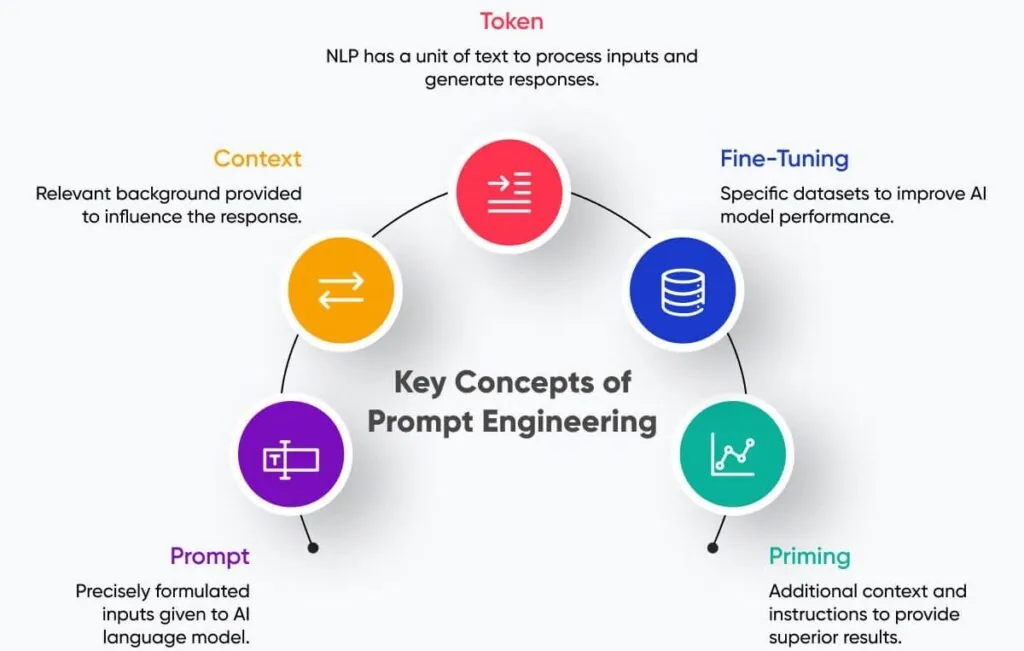
This article covers the strategic and infrastructural side of AI in 2026. If you’re experimenting with models yourself — whether for prototyping agents, generating visuals for reports, or building multimodal demos — strong prompting is one of the highest-leverage skills right now.
- BestPrompt.art — Curated AI art prompts, community challenges, and tested examples for Midjourney, Flux, Ideogram, and more. Great for quickly visualizing concepts or creating assets.
- AI Art Creation Discussions — Real user-shared prompts and results from the community.
- Prompt Engineering Tips & Tutorials — Beginner-to-advanced guides that translate directly to better agentic or multimodal workflows.
Pro tip: Use on-device multimodal models (as discussed in section 03) + well-engineered prompts to prototype ideas locally without sending sensitive data to the cloud.