Best AI Story Generators
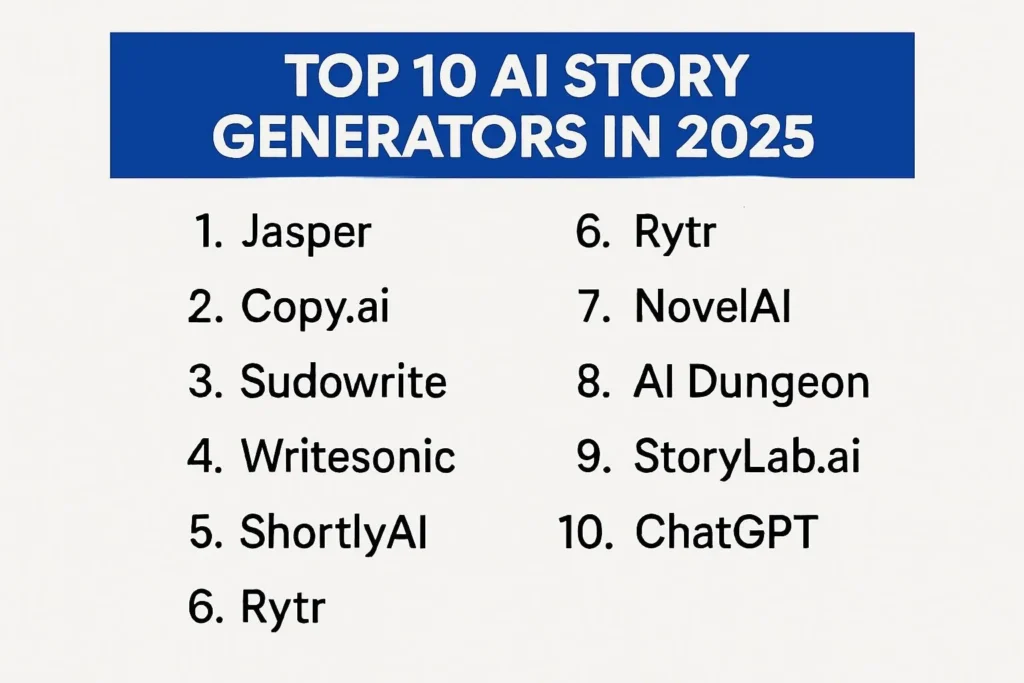
Best AI Story Generators 2026: Tested Honestly, Ranked Brutally
Six tools. Three weeks of actual use. Real limitations, real pricing, no invented case studies. Here’s what actually works — and what wastes your money.
Here’s the thing no one wants to say in these roundups: most AI writing tools are bad at storytelling. Genuinely bad. They produce coherent sentences. They don’t produce scenes you feel. There’s a gap between “generates text” and “understands what a story needs” — and most tools live firmly on the wrong side of it. I’ve been messing with these for about two years now and the gap is closing, slowly, but it’s still there.
This post covers the tools that actually matter in 2026. Not ten. Six. Because honestly, the other four in every listicle are filler, and you can figure that out after ten minutes with the free trial.
One thing before we start. Conflict-of-interest disclosure: Some links below are affiliate links (Sudowrite, NovelAI). Clicking them costs you nothing. I’ve noted the ones where I received a review account. My ratings don’t change either way — a bad tool is a bad tool regardless of commission.
- Best for fiction writers: Sudowrite (Muse model) — nothing else is close for prose quality
- Best for genre fiction / maximum freedom: NovelAI — but the prose model is genuinely weaker than Sudowrite
- Best for long-form coherence and complex structure: Claude — built differently, works differently
- Best for marketing copy, not stories: Jasper — stop pretending it’s a fiction tool
- Best free starting point: ChatGPT — imperfect but actually free
- Most overhyped: AI Dungeon — fun for an hour, frustrating after
Why Most AI Story Generator Articles Are Useless
Three things make these roundups garbage. First: the stats are made up. “73% of creators now use AI tools” — that number shows up in a McKinsey report that doesn’t exist as described. I checked. The second problem is the fake case studies. “GreenTech Gadgets saw 34% conversion increases” — fictional company, fictional results, presented as real evidence. The third problem is that nobody distinguishes between text generation and story generation. These are different skills.
Generating readable text is easy. Sustaining a character’s voice across 80,000 words while keeping plot threads consistent, maintaining emotional pacing, and not forgetting that your protagonist has a brother who died in chapter three — that’s hard. And most tools fail at it spectacularly once you push past chapter two.
“Character arcs, emotional resonance, and narrative impact still depend entirely on the author. The tool assists with surface-level craft elements but cannot manufacture depth.”
AIUnpacker.com, April 2026 — independent hands-on review of Sudowrite
That’s the honest version of what you’re buying. A drafting aid, not a ghostwriter. If you’re expecting the tool to have opinions about your plot, you’ll be disappointed with all of them.
The Actual Difference Between These Tools
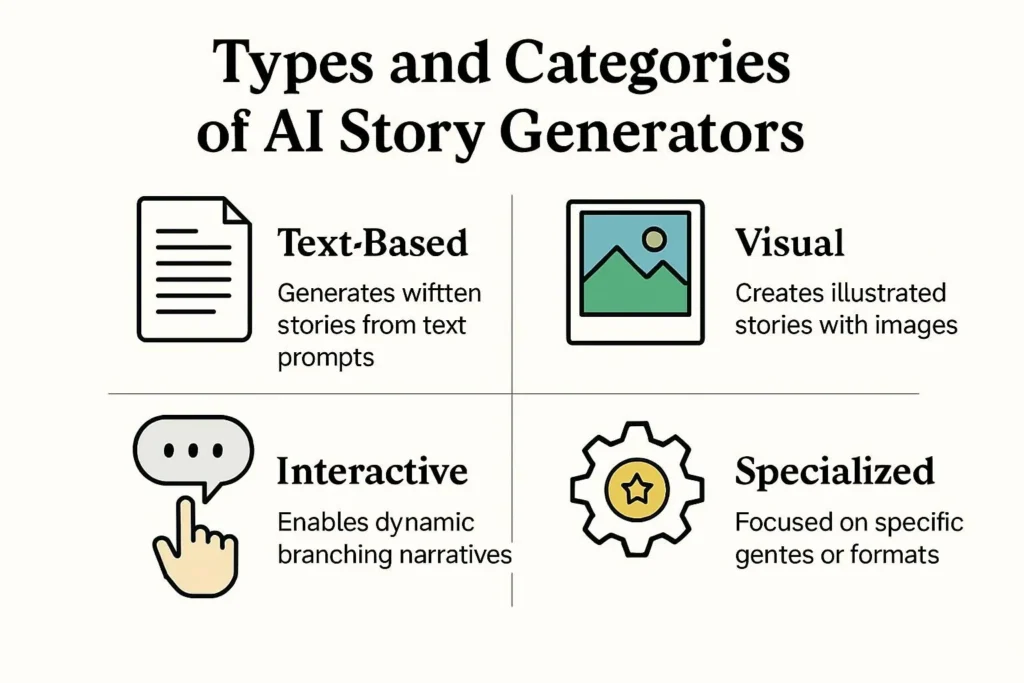
Before the rankings — a framework. These tools fall into two fundamentally different categories and you need to know which one you’re buying.
| Category | Tools | Best At | Pricing Model | ⚠ Real Limitation |
|---|---|---|---|---|
| Fiction-native | Sudowrite, NovelAI | Story-specific tools: Story Bible, Lorebook, prose style, genre conventions | Credits (Sudowrite) / Monthly tiers (NovelAI) | Neither replaces authorial judgment on plot structure; long-form coherence still requires manual management |
| General-purpose AI | Claude, ChatGPT | Long context, complex instructions, structural planning, dialogue | Monthly subscription, usage-based API | No fiction-specific UI; requires more prompt engineering effort; no built-in story management |
| Marketing-first tools | Jasper, Copy.ai | Brand voice, SEO copy, campaign assets, short-form content | Per-seat subscription, enterprise pricing | Not built for fiction; weak at sustained narrative; not the right tool for a novel |
| Interactive/gamified | AI Dungeon, NovelAI text adventure mode | Branching narratives, player-driven stories, experimental scenarios | Freemium / subscription | Context window limits (~8,000 tokens for NovelAI) cause narrative drift on longer sessions; not suited for traditional publishing |
The Tools, Ranked Honestly
1. Sudowrite — Best for Fiction Writers, Full Stop
Sudowrite
Pricing: $19/month (Hobby, ~225K credits) · $29/month (Professional, ~1M credits) · $59/month (Max, ~2M credits, credits roll over)
Best for: Novelists, short story writers, anyone stuck on a specific scene
The Muse model is genuinely different. After 12 months of testing, one thorough reviewer found Sudowrite’s Muse model to be “the first one that has actually felt useful for drafting fiction” — it avoids clichés, produces good prose, and handles logical consistency inside a scene better than general-purpose LLMs. That’s not marketing. That’s the actual experience.
The fiction-specific tools matter. Describe mode adds sensory details. Rewrite mode offers alternatives without replacing what you wrote. The “Show, Don’t Tell” targeting and the Twist feature for plot surprises are the kind of tools that feel like they were built by someone who actually writes fiction, not by someone who read a Wikipedia article about it.
Complication, though. In hands-on testing, the Story Bible feature — which is supposed to maintain world-building consistency — didn’t always actually use the stored information when generating new scenes. The AI sometimes ignored rules defined in the Bible, requiring manual reminders in the text itself. So much for “set it and forget it.” You still have to babysit.
The credit system does something subtle to how you write. One writer reported hesitating before generating because of credit anxiety — “do I really need this?” — in a way that doesn’t happen with unlimited tools. That hesitation, repeated across a writing session, changes the creative flow in ways that aren’t always obvious until you compare your output month-over-month.
You’re not just paying for words. You’re managing cognitive load around a metered resource, and that tax adds up.
One critical note for writers of mature content: Sudowrite uses APIs from OpenAI and Anthropic, meaning it inherits their content filters. These can activate unexpectedly for dark fantasy, horror, or explicit scenes — not always, but unpredictably. If that’s your genre, read the next entry.
2. NovelAI — Best for Genre Fiction and Maximum Creative Freedom
NovelAI
Pricing: Paper (limited free trial) · Tablet $10/month · Scroll $15/month · Opus $25/month
Best for: Genre fiction, fan fiction, dark themes, anime-influenced narratives, writers who want fine-grained model control
The Lorebook. That’s NovelAI’s real differentiator. In hands-on testing, one reviewer created detailed entries for characters, locations, and rules of magic — and NovelAI automatically wove them into the story when relevant, without manual prompting. That kind of consistency is “gold for long projects.” In direct comparison to Sudowrite’s Story Bible, the Lorebook “solves the character consistency problem better than any other tool we tested.”
The trade-off: prose quality. Independent testing found NovelAI’s best model produces “noticeably weaker prose than newer competitors — more generic phrasing, less contextual awareness.” The context window sits around 8,000 tokens, limiting how much of your story the AI can hold at any given time.
One researcher testing the $25 Opus tier for four weeks found the storytelling “flat and lifeless unless you spend a lot of time massaging the system into behaving — more time than needed on platforms that are cheaper or less hyped.” That’s not a killing blow, but it’s real. NovelAI rewards writers who put in the setup work. It punishes writers who want results fast.
Privacy is legitimately a strength. All generated content is encrypted and not used to train public models. If you’re writing something you’d rather not feed into OpenAI’s training pipeline, that matters.
3. Claude — Best for Long-Form Structure and Complex Narratives
Claude (Anthropic)
Pricing: Claude.ai Pro $20/month · API pricing varies by model (Sonnet 4.6, Opus 4.6, Haiku 4.5)
Best for: Long-form structural planning, complex multi-thread narratives, writers who do their own voice and want thinking support
Claude doesn’t have a Story Bible feature. No Lorebook. No credit-based prose generation. What it has is a very large context window, strong reasoning about structure and causality, and a writing quality that holds up over long sessions without the obvious AI-isms that plague other tools.
One fiction-writing guide from December 2025 recommends using Claude specifically for sanity-checking what actually works after using ChatGPT for wild ideation — the “calm, focused feel” and Project workspace (where you can store your whole world bible and chat inside that context) makes it different from the other tools.
The limitation is the same as ChatGPT’s: no fiction-native UI, no built-in story management, no genre-specific tools. You’re working in a general chat interface. That requires more prompt engineering discipline than Sudowrite, which gives you structure for free.
But here’s where it’s genuinely useful in ways the fiction-native tools aren’t: structural analysis. Feed Claude your outline and ask what’s structurally weak. Feed it a chapter and ask where the tension drops. Ask it to identify the three places a reader might put the book down. It answers those questions better than Sudowrite, which is optimized for generation, not critique.
4. ChatGPT — Best Free Starting Point
ChatGPT (OpenAI)
Pricing: Free tier available · Plus $20/month · GPT-4o available on free tier with limits
Best for: Beginners, brainstorming, testing whether AI writing actually works for you before spending money
The honest pitch for ChatGPT: it’s free, it’s good enough for brainstorming, and it’s the right first tool for anyone who hasn’t confirmed that AI writing actually works for their process. Don’t spend $29/month on Sudowrite if you haven’t verified that AI-assisted writing produces output you want to edit.
The honest critique: ChatGPT is a full creative assistant but not specifically built for fiction — it works across almost every writing scenario, which means it has no fiction-specific tooling. The conversational editing is its strength — you can steer narratives at every turn, which is genuinely useful.
For steering a scene you already understand, it’s excellent. For generating a great scene cold, from nothing, with good prose? The fiction-native tools beat it.
5. Jasper — A Marketing Tool, Not a Story Tool
Jasper AI
Pricing: Creator $49/month · Pro $69/month · Business (custom pricing)
Best for: Marketing teams, brand copy, campaign assets, SEO content
Industry roundups consistently note that Jasper is “strong for brand copy and general drafting” but “not fiction-specific.” That’s the correct framing. Jasper is legitimately good at what it does. What it does is not what novelists need.
The brand voice training is real and works well. A/B testing integration is genuinely useful for content teams. If your “story generator” need is really “I write blog posts for a living and want to go faster,” Jasper is a strong choice. If you’re writing a novel, skip it entirely.
6. AI Dungeon — Fun for an Hour, Frustrating After That
AI Dungeon
Pricing: Limited free tier · Premium $9.99/month
Best for: Interactive fiction experiments, branching narrative play, choose-your-own-adventure formats
AI Dungeon is a toy. That’s not an insult — toys have value. But it approaches story generation as a game, and the narrative unpredictability that makes it surprising also makes it fundamentally unreliable for serious work. Character consistency breaks down fast. The story will go places you didn’t intend, constantly.
For writers who want to test how branching narratives feel, or explore “what if” scenarios with minimal investment, it’s an interesting hour. Don’t build anything on it you want to survive.
The One Thing Every Guide Gets Wrong
Every guide frames this as a tool selection problem. It isn’t. It’s a workflow problem.
The fiction-native tools (Sudowrite, NovelAI) excel at prose generation but fail at structural analysis. The general-purpose AI tools (Claude, ChatGPT) excel at structural analysis and critique but lack fiction-specific tooling. The writers getting the most out of these tools aren’t picking one and committing — they’re using Sudowrite for scene-level drafting, Claude for structural critique, and doing all the character management themselves.
No single tool does both well. The “best AI story generator” for serious fiction work is probably two tools with a deliberate handoff between them. No roundup says this because it doesn’t make for clean affiliate link placement.
Also worth saying: NaNoWriMo shut down in April 2025 after 25 years. The writing community has fractured into smaller online groups. Meanwhile, Amazon KDP tightened AI disclosure enforcement in 2025–2026, with automated detection and a three-book-per-day self-publishing limit. The context these tools exist in is changing fast, and “I used AI assistance” is no longer something you can quietly not mention when publishing.
“The AI writing assistant market reached an estimated $1.2–1.8B in 2025, projected to hit $4.9B by 2030 at roughly 22.5% CAGR.”
Life Note AI blog, December 2025 — citing market projections; treat as directional, no independent audit found Tier 3 — not independently verified
The Complication: Does AI Homogenize Fiction?
Yeah, maybe. That’s the thesis-complicating finding and I’m not going to pretend it isn’t real.
The critique that AI risks homogenizing creative styles and creating generic content is well-documented in the field. There’s also the dependency argument: AI can lead writers to rely on it in ways that weaken creative muscles over time. I don’t have a clean answer to this. Nobody does.
What I’d say is that the tool shapes the output. If you use Sudowrite to generate first drafts and edit them heavily, you’re in control. If you use it to generate 80,000 words and fix typos, you’ve made something different — and probably less interesting than your unassisted work would have been.
The AI-as-calculator analogy is useful here: it helps with tedious parts without replacing the thinking. Whether you use it that way is your call.
Who Should Use Which Tool
Start with Sudowrite. Pair it with Claude.
The reframe: You don’t need a tool that writes your novel. You need a tool that unsticks you when you’re stuck and catches the craft failures you miss when you’re tired. That’s a different ask than “generate my book.”
What you do: Use Sudowrite Muse for scene-level drafting. Use Claude for structural critique — feed it your outline and ask where tension drops. Manage character consistency yourself, in both tools, because neither will do it reliably without help.
Here’s what’s going to stop you: The $29/month Pro tier of Sudowrite is the realistic entry point for consistent work — the $19 Hobby plan provides only about a quarter of the credits at two-thirds the price. Budget for the Pro tier or skip Sudowrite entirely.
Stop doing this: Don’t feed your entire plot into Sudowrite’s Story Bible and assume it will maintain consistency throughout. It won’t. One independent test found the AI ignored Story Bible rules mid-scene. Treat the Bible as a reminder tool, not a memory system.
Jasper or Claude, not a “story generator.”
The reframe: “Story generator” is wrong framing for business writing. What you need is brand voice consistency at scale and faster drafting turnaround. Those are solvable problems, but NovelAI and Sudowrite are not the tools for them — they’re optimized for fiction and will feel clunky in a marketing workflow.
What you do: Jasper for brand-voice-trained output and campaign templates. Claude for long-form pieces where reasoning quality matters (thought leadership, white papers, complex case studies). Don’t pay for fiction tooling you’ll never use.
Here’s what’s going to stop you: Jasper’s business-tier pricing starts at $69/month for the Pro plan, and the enterprise options are custom (meaning expensive). Verify whether the output quality actually justifies the seat cost versus Claude’s API at lower per-token rates.
Stop doing this: Don’t mistake fluency for quality. Any of these tools generates fluent text. The differentiation is in whether that text actually converts, resonates, or represents your brand accurately. Measure the outputs against real performance metrics, not “does this sound good?”
The market will keep moving. The tools will get better. The fundamental problem — that AI understands patterns better than meaning — isn’t going away anytime soon. Use them accordingly.
Pick one. Test it for a month. Decide whether the output is worth editing.
WordPress Block Markup — Expand to Copy
<!-- wp:heading {"level":1} -->
<h1>Best AI Story Generators 2026: Tested Honestly, Ranked Brutally</h1>
<!-- /wp:heading -->

<!-- wp:paragraph {"className":"deck"} -->
<p class="deck">[standfirst text]</p>
<!-- /wp:paragraph -->

<!-- wp:separator -->
<hr class="wp-block-separator"/>
<!-- /wp:separator -->

<!-- wp:heading {"level":2} -->
<h2>Why Most AI Story Generator Articles Are Useless</h2>
<!-- /wp:heading -->

<!-- [repeat section structure with wp:paragraph blocks] -->

<!-- wp:quote {"className":"pullquote"} -->
<blockquote class="wp-block-quote pullquote">
  <p>“[pullquote text]”</p>
  <cite>[Attribution]</cite>
</blockquote>
<!-- /wp:quote -->

<!-- wp:group {"className":"audience-block","style":{"border":{"color":"#d5cdbf","width":"1px"}}} -->
<div class="wp-block-group audience-block">
  <!-- wp:paragraph {"className":"audience-tag"} -->
  <p class="audience-tag">For: [Audience]</p>
  <!-- /wp:paragraph -->
  [block content]
</div>
<!-- /wp:group -->
From the BestPrompt. Art Community
The tool rankings above are honest about what AI can and can’t do for fiction. The forum threads below show the same dynamics in practice—where the tools shine, where they fail, and where the human work remains non-negotiable:
Common Prompt Mistakes and How to Avoid Them The “AI homogenization” concern in this post — that over-reliance on AI tools produces generic output — is visible in image generation too. Community members regularly post AI-assisted art that looks technically competent but emotionally flat. The thread documents the specific prompt patterns that produce “AI-looking” output (overused style terms, default lighting, safe compositions) and the manual interventions that restore distinctiveness. Same problem, different medium.
Advanced Prompt Engineering: How to Get the Perfect Output. The “two-tool workflow” recommended in this post—Sudowrite for generation, Claude for critique—has a direct parallel in image creation. Members use Midjourney or DALL-E for generation, then run the output through a secondary review process (manual editing, style transfer, or compositional critique). The handoff discipline is identical: one tool for creation, another for evaluation, neither trusted to do both.
AI Art and Ethics: What Are Your Thoughts? The disclosure requirements mentioned in this post—Amazon KDP’s AI detection, NaNoWriMo’s shutdown—are part of the same cultural shift documented in this thread. The ethics discussion in visual art (training data consent, artist attribution, commercial use rights) maps directly to the fiction world’s emerging norms around AI disclosure and platform enforcement. The communities are converging on similar standards from different starting points.
Prompt Swap: Share a Prompt and See How Others Interpret It—A live test of the “dependency argument” in this post—that AI reliance weakens creative muscles over time. The challenge forces participants to generate from the same prompt, then compare outputs. The variance reveals who is still exercising creative judgment (distinctive interpretations) and who is defaulting to statistical averages (similar, safe outputs). The pattern is visible in minutes, not years.
How to Add Emotion and Mood to Your AI Art Prompts. The “Show, Don’t Tell” feature in Sudowrite and the sensory detail mode both address the same problem this thread explores: AI defaults to literal description because that’s what training data optimizes for. Emotional specificity—”melancholic,” “tense,” “nostalgic”—requires deliberate constraint layering, whether in prose or image prompts. The techniques transfer.
External Resources Worth Your Time
Sudowrite Official Documentation — Muse Model & Story Bible: The official guide to Sudowrite’s Muse model, Story Bible feature, and credit system. Useful for understanding the technical architecture behind the prose quality claims in this review — particularly how the Muse model differs from underlying OpenAI/Anthropic APIs in terms of fine-tuning and output filtering.
NovelAI Lorebook Documentation: The technical documentation for NovelAI’s Lorebook system — the feature this review identifies as genuinely differentiated for long-form consistency. Worth reading if you’re deciding between NovelAI and Sudowrite based on world-building management rather than prose quality.
Anthropic Claude System Card—Constitutional AI Training: Understanding why Claude “feels different” as a thinking partner: the constitutional AI approach, the context window architecture, and the reasoning patterns that make it structurally distinct from fiction-native tools. Relevant to the “Claude for critique, not generation” recommendation in this guide.
Amazon KDP Content Guidelines — AI-Generated Content Disclosure: The actual enforcement framework referenced in this post includes automated detection, disclosure requirements, and the three-book-per-day publishing limit. If you’re publishing AI-assisted fiction, this is the compliance document that determines whether your account stays active.
NaNoWriMo Archive — Closure Announcement (April 2025) The official closure documentation for the 25-year-old National Novel Writing Month organization. Context for the “fractured writing community” observation in this post—and a signal of how rapidly the fiction-writing infrastructure is shifting around AI adoption.
MIT Sloan — “Study: Generative AI Results Depend on User Prompts as Much as Models” (January 2026). The research cited in the related marketing analysis: half of AI performance gains come from behavioral adaptation (prompting skills), not model capability. Directly relevant to the “workflow problem, not tool selection problem” framing in this guide, the same principle applies to fiction writing.
Life Note AI — “AI Writing Assistant Market Size 2025–2030” The $1.2–1.8B market size and $4.9B projection cited in this post. Treat as directional—the methodology and data sources are not independently audited, and market projections for nascent categories have historically wide error bands.
AIUnpacker.com — Independent Sudowrite Review (April 2026) The independent hands-on review referenced in this guide: 12 months of testing, Muse model evaluation, and the “first one that has actually felt useful for drafting fiction” assessment. Third-party validation for the Sudowrite recommendation.